Number of articles per page:
-
Chandra Shekhar
Corruption is everywhere. From senior politicians and bureaucrats to street-level bureaucrats, and from the richest countries to the poorest, corruption remains widespread, and efforts to fight it keep falling short. Global surveys show that corruption levels have not changed over the past decade, despite new laws, anti-corruption agencies, and public pressure. Politicians and bureaucrats come […]
Read More
-
Sender Dovchin
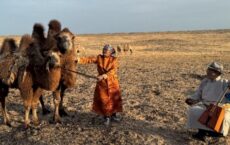
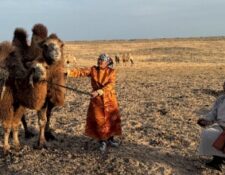
There is something deeply uncomfortable about admitting that you are not fully fluent in your own mother tongue. As a Mongolian born and raised in Mongolia, I grew up believing Mongolian was naturally “mine”: the language of my childhood, my homeland, my family, my memories. Yet after living in Australia for more than two decades, […]
Read More
-
Stanley Dubinsky , University of South Carolina
Like many books, this one has a biography worth telling. The first edition of Understanding Language through Humor (ULTH) emerged out of a conversation with Cambridge University Press (CUP) Linguistics Publisher Helen Barton. It is fair to say that ULTH would never have come to be – not the first edition nor this one – […]
Read More
-
Emmanuel Destenay
Several boys are standing at attention in the middle of the street during a parade in Kansas City, Missouri, May 18, 1918. Courtesy of the National Archives at College Park, Maryland. On May 18, 1918, fourteen thousand high school students from St. Louis, Missouri, public schools, accompanied by fourteen drum corps and seven professional bands, paraded […]
Read More
-
Samantha Balaton-Chrimes
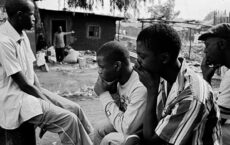
In July 2023, President Ruto stood in a marquee in Kilifi County and proclaimed that the Pemba people officially constituted an ethnic community of Kenya. The crowd was elated. Recognition as an ethnic group, it turns out, is understood by presidents and communities alike as a prerequisite for citizenship. His predecessor Uhuru Kenyatta did the […]
Read More
-
Emilia Simison, Alejandro Bonvecchi
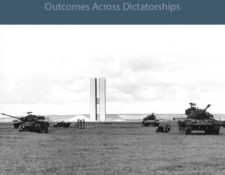
In March 1979, the government of dictator General Jorge Rafael Videla, submitted a law proposal to overhaul Argentina’s revenue-sharing regime. Following the rules of this regime, the bill was duly presented to the Legislative Advisory Commission, a legislative body created by the dictatorship and staffed by military officers. The provincial governors, who were also appointed […]
Read More
-
Christian R. Gelder
In 1915, Robert Chenault Givler published the results of his PhD thesis, which he had undertaken at the Harvard Psychological Laboratory. The work was entitled ‘The Psycho-physiological Effect of the Elements of Speech in Relation to Poetry’ and consisted of Givler strapping a series of readers to an early blood-pressure device in the hopes of […]
Read More
-
Astrid Van Oyen
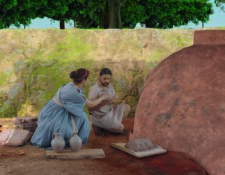
What the viral TikTok “how often do you think about the Roman empire” did not ask was what people imagine when they think of the Roman world. When I ask my first-year students to jot down three instant associations with the Roman world, the top three unmistakably includes marble, emperors, and war. We are conditioned […]
Read More
-
Chandra Shekhar
Corruption is everywhere. From senior politicians and bureaucrats to street-level bureaucrats, and from the richest countries to the poorest, corruption remains widespread, and efforts to fight it keep falling short. Global surveys show that corruption levels have not changed over the past decade, despite new laws, anti-corruption agencies, and public pressure. Politicians and bureaucrats come […]
Read More
-
Sender Dovchin
There is something deeply uncomfortable about admitting that you are not fully fluent in your own mother tongue. As a Mongolian born and raised in Mongolia, I grew up believing Mongolian was naturally “mine”: the language of my childhood, my homeland, my family, my memories. Yet after living in Australia for more than two decades, […]
Read More
-
Stanley Dubinsky , University of South Carolina
Like many books, this one has a biography worth telling. The first edition of Understanding Language through Humor (ULTH) emerged out of a conversation with Cambridge University Press (CUP) Linguistics Publisher Helen Barton. It is fair to say that ULTH would never have come to be – not the first edition nor this one – […]
Read More
-
Emmanuel Destenay
Several boys are standing at attention in the middle of the street during a parade in Kansas City, Missouri, May 18, 1918. Courtesy of the National Archives at College Park, Maryland. On May 18, 1918, fourteen thousand high school students from St. Louis, Missouri, public schools, accompanied by fourteen drum corps and seven professional bands, paraded […]
Read More
-
Samantha Balaton-Chrimes
In July 2023, President Ruto stood in a marquee in Kilifi County and proclaimed that the Pemba people officially constituted an ethnic community of Kenya. The crowd was elated. Recognition as an ethnic group, it turns out, is understood by presidents and communities alike as a prerequisite for citizenship. His predecessor Uhuru Kenyatta did the […]
Read More
-
Emilia Simison, Alejandro Bonvecchi
In March 1979, the government of dictator General Jorge Rafael Videla, submitted a law proposal to overhaul Argentina’s revenue-sharing regime. Following the rules of this regime, the bill was duly presented to the Legislative Advisory Commission, a legislative body created by the dictatorship and staffed by military officers. The provincial governors, who were also appointed […]
Read More
-
Christian R. Gelder
In 1915, Robert Chenault Givler published the results of his PhD thesis, which he had undertaken at the Harvard Psychological Laboratory. The work was entitled ‘The Psycho-physiological Effect of the Elements of Speech in Relation to Poetry’ and consisted of Givler strapping a series of readers to an early blood-pressure device in the hopes of […]
Read More
-
Astrid Van Oyen
What the viral TikTok “how often do you think about the Roman empire” did not ask was what people imagine when they think of the Roman world. When I ask my first-year students to jot down three instant associations with the Roman world, the top three unmistakably includes marble, emperors, and war. We are conditioned […]
Read More
Number of articles per page: