

Products and services

When Lucy Walker and I began work on Elizabeth Maconchy in Context, we were motivated by a simple conviction: Maconchy’s music and career demand a fuller account than she has usually been granted. She was one of the most prominent and successful twentieth-century composers, yet she is still too often reduced to a few familiar labels: ‘woman composer’, quartet composer, British modernist, outsider. None is sufficient. Maconchy wrote chamber operas, choral and orchestral works, songs, chamber music, and operas for children, while negotiating Irish and British identities, institutional pressures, modernist currents, and the persistent realities of sexism. To understand the achievement, one must understand the worlds through which it moved.
That is what made the Composers in Context series such an apt home for this project. The premise of the series is that music becomes more intelligible when we place it within the professional, political, intellectual, social, and cultural environments in which it was made. In Maconchy’s case, that approach is especially fruitful. Her life touches questions of national belonging, study abroad, illness and interruption, broadcasting, festival culture, patronage, censorship, gendered reception, archival survival, and the changing afterlives of works. Context, here, is not decorative background. It is part of the story of composition itself.
From the outset, we wanted the volume to resist two temptations. The first was to tell a merely celebratory story of unjust neglect finally corrected. Maconchy unquestionably faced barriers, but she was also formidable, strategic, witty, and deeply committed to the practical business of sustaining a career. The second temptation was to isolate the music from the institutions, friendships, rivalries, and material conditions that shaped it. We therefore organized the collection in three broad parts: ‘Environments’, ‘Intersections’, and ‘Works and Legacy’. That structure allowed us to move from biography and milieu to broader cultural encounters, and then to sustained discussions of the compositions themselves.
The first section establishes the richness of Maconchy’s formation. It begins with Anna Dunlop’s personal recollections and Philip Reed’s chronology, then moves into questions of Irish history and national identity, the Royal College of Music, study in Prague and Europe, tuberculosis during the interwar years, the Composers’ Guild of Great Britain, and the networks of women around her. Taken together, these chapters show that Maconchy was never simply a solitary genius. She emerged from overlapping communities: familial, educational, professional, national, and transnational.
The middle section, ‘Intersections’, explores the points at which Maconchy’s work meets wider institutions and discourses. Here readers encounter the Mercury Theatre, censorship and The Sofa, the BBC, Vaughan Williams and British pastoralism, interwar Irish and British musical life, Bartók, European modernism, gendered reception, festival culture, and the history of audiences and concert-going. Maconchy comes into view not as a peripheral figure who occasionally brushed against the mainstream, but as a composer embedded in, and sometimes resisting, the very structures that defined musical life in the century around her.
What value is context devoid of a real knowledge of a lesser-known composer’s musics? It was equally important, then, that the book devote real attention to the works themselves, and to the full range of those works. Maconchy’s string quartets are rightly central to any account of her output, and the volume includes sustained consideration of their developmental phases. But the later section also turns to genre more broadly, commissioned works, choral music, songs, chamber music, orchestral music, operatic transformations, and the archives through which this repertoire is preserved and reinterpreted. We wanted the book to reflect the breadth of Maconchy’s catalogue rather than allowing one celebrated repertory to stand in for the whole.
One chapter of special importance to us is the discussion of Maconchy’s operas for children. These works are too easily treated as marginal or secondary to the quartets and larger concert works. In fact, they open onto some of the most pressing questions in her output: how she imagined audience, how she handled dramatic compression, how she wrote for distinct communities of listeners and performers, and how she engaged with the cultural meanings of childhood. To take these operas seriously is not to indulge a footnote to the career; it is to recognize a crucial part of the composer’s imagination. More broadly, the volume insists that Maconchy’s dramatic and vocal writing belongs near the centre of any future account of her music.
Another feature of the collection that mattered greatly to us was the inclusion of voices shaped by intimate, lived knowledge of Maconchy’s world. The book is dedicated to her daughters, Anna Dunlop and Nicola LeFanu, and it includes chapters by both of them: one recalling Maconchy as mother, the other reflecting on the curation of her legacy since 1994. Those contributions sit alongside essays by established and emerging scholars, and the effect is not a flattening of perspective, but a richer polyphony of viewpoints. Scholarship is strengthened when it remains alert to memory, inheritance, and stewardship, especially in a case where the archive and the afterlife of the music are themselves so important.
What, then, do we hope readers will find in Elizabeth Maconchy in Context? Certainly, a deeper understanding of a major composer. But we also hope for something larger: a model for thinking about twentieth-century music history without relying on the old, narrowing hierarchies that separate centre from margin, ‘major’ genres from supposedly minor ones, or biography from analysis. Maconchy’s life and work cut across those divisions. She was an Irish-English composer, a modernist with strong institutional ties, a composer of formidable abstract argument and vivid dramatic instinct, a figure shaped by adversity who nonetheless refused the romance of defeat. If the book succeeds, it will help readers hear her not as an exception waiting to be inserted into a pre-existing canon, but as a composer through whom the century can itself be more clearly understood.
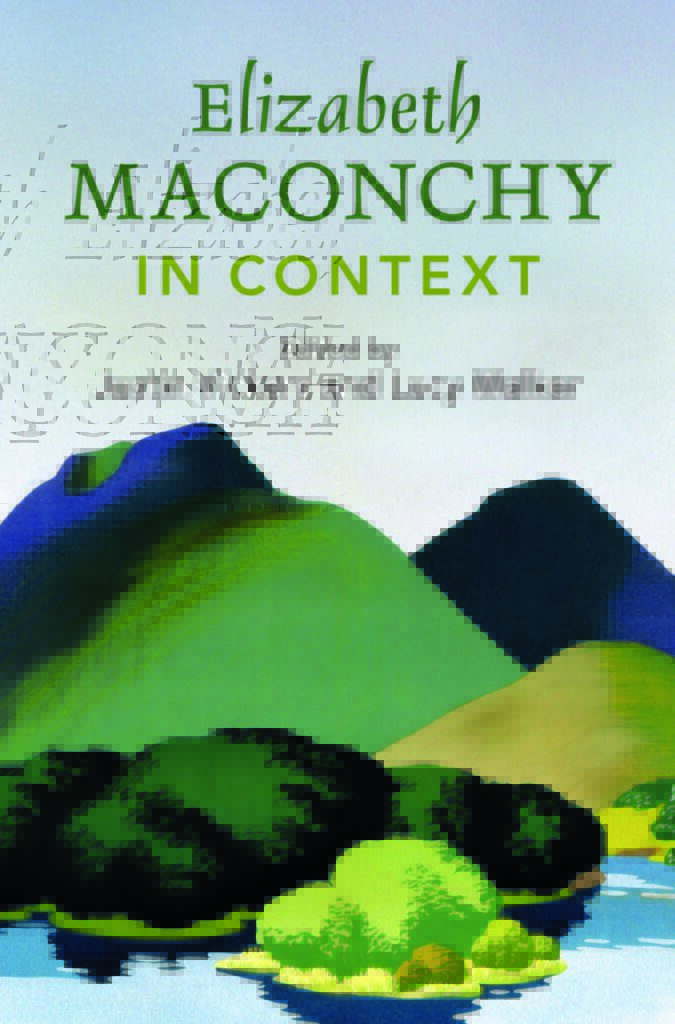
Elizabeth Maconchy in Context
edited by Justin Vickers and Lucy Walker

Justin Vickers is Distinguished Professor of Music at Illinois State University. He is the author of The Aldeburgh Festival: A History of the Britten and Pears Era, 1948–1986 (fo...
View profile >
Lucy Walker is an independent scholar, speaker, and writer on classical music of the twentieth and twenty-first centuries. Her recent research activities have focussed on the cultu...
View profile >Keep up with the latest from Cambridge University Press on our social media accounts.



Latest Comments
Have your say!