Products and services


When historians write about Jews in the Soviet Union during Stalin’s final years, the story is often framed almost entirely through repression. The destruction of the Jewish Anti-Fascist Committee, the campaign against “cosmopolitans,” and the Doctors’ Plot have come to define what many scholars describe as the darkest chapter of Soviet Jewish history. My book, […]
Read More
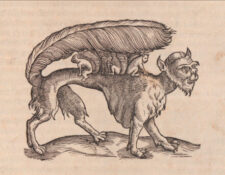
Everyone who discovers a new species nowadays has the right to name it. This name has to conform to rather intricate rules established by international professional associations. These conventions can be traced back to the eighteenth century, when Carl Linnaeus (1707–1778) introduced a taxonomic nomenclature based on a binomial system: every species receives a two-part […]
Read More
Nashville is often associated with music; it is home to the Grand Ole Opry and claims to have the most recording studios of any American city. But its most iconic building may be a full-scale replica of the Parthenon, the most famous temple from 5th-century-BCE Athens. So you might ask: why is there a Parthenon […]
Read More
If the last year of geopolitical upheaval has taught us anything, it is that the international order is far more fragile than we cared to imagine. When established alliances like NATO fracture under the weight of internal tensions, or when a US President casually proposes treating a sovereign territory as an asset in a real […]
Read More
Our book’s eighteen authors investigate eight major applications of economic warfare and sanctions, set out in a common framework. We cover the Anglo-French wars of the long eighteenth century, the American Civil War, Britain versus Germany in two World Wars, the interwar sanctions on Italy, interwar sanctions followed by economic warfare against Japan, trade and […]
Read More
Look in most eighteenth-century newspapers and you will be struck by the number of notices for lost dogs, absconding apprentices and missing bank notes. The range of lost ‘things’ included in such notices might astound you. People advertised all sorts of missing items, from anchors to monkeys, keys, walking sticks and lumps of timber. They […]
Read More
On 10 May 1570, at the chateau of Dieppe in Normandy, a cloth-merchant was interrogated about the contents of a basket he was carrying, including thirty notes and letters ‘concealed in a bed of straw under cheeses’. This chance interception piqued my curiosity about the wider context of this episode, from where and to where, […]
Read More
In the mid-tenth century ce, two Muslim scholars were having a chat in Baghdad. One of them, called Ibn al-Jiʿābī, was well known to contemporaries as a fairly prolific author and historian, even if none of his works survive today. While these two scholars were chatting, a group of Shiʿa approached them and handed Ibn […]
Read MoreKeep up with the latest from Cambridge University Press on our social media accounts.










































































































































































































































.jpg)