

Products and services

Look in most eighteenth-century newspapers and you will be struck by the number of notices for lost dogs, absconding apprentices and missing bank notes. The range of lost ‘things’ included in such notices might astound you. People advertised all sorts of missing items, from anchors to monkeys, keys, walking sticks and lumps of timber. They did so in the hope that someone, somewhere would return them. Lost notices also regularly featured people who had run away, gone missing or left. Advertisements told of apprentices, servants, spouses, soldiers and enslaved people who had all gone.
When I first saw and read these notices they made me deeply curious. What were these notices? Who placed them and why? The notices also prompted multiple questions about ownership and loss in the eighteenth century. In a period where it was possible to own a watch, a banknote, a dog and even a person, what did it mean to own some thing or someone and why were eighteenth-century Britons so determined to reclaim their ‘property’? Keeping Hold: A Cultural and Social History of Possession in Eighteenth-Century Britain looks to watches, bank notes, dogs and people and examines what it meant to possess in this period.
It was certainly difficult to keep hold of ‘possessions’ in the eighteenth century and became more so. The legal frameworks surrounding property were ambiguous, meaning that sustaining claims to ownership was often an active and ongoing process. At the same time, the expanding cities of the eighteenth century increasingly created spaces and interactions which undermined the stability of ownership. All the hustle and bustle could result in theft or sometimes, simply, forgetfulness. Changes to urban life not only impacted people’s ability to keep hold of personal items such as watches and banknotes, they also effected their ability to retain servants and apprentices. People working in these occupations had options. They could up and leave before the end of their hiring and find new work with relative ease. For those who were enslaved in Britain, cities also acted as spaces that might provide anonymity, or the networks needed to support freedom seeking.
When eighteenth-century Britons forgot their watch in a Hackney Carriage, suspected their banknote had been stolen near Cornhill, lost their dog in Green Park, or had their servant run away, they often placed newspaper notices. Analysing these notices alongside handbills, court cases, diaries and letters, Keeping Hold shows not only their conventions and complexities but also the levels of knowledge they demanded. To advertise you had to understand the intricacies of the system itself, but you also needed to be able to describe your item (and know which details were pertinent, and which were not).
In seeing the lengths people went to to reclaim their ‘property’ – keeping records, advertising in newspapers, printing and distributing handbills – we might ask why. Obviously, there was the economic value of these ‘things’. Watches, bank notes and dogs could be hugely valuable. There were also other values, that we might understand as sentimental. Dogs were not just working animals in this period, they were increasingly understood as ‘favourites’ and as pets. At the same time, watches were not just stores of wealth but were often heirlooms passed down within families. Alongside these values, Keeping Hold explores another set. It argues that keeping hold of certain forms of ‘property’ over time was also important to people’s sense of self. In other words, keeping a watch, or a dog, or even a servant over time, allowed people to retain a sense of coherence and self-possession. It also allowed them to display a coherent sense of self to others. While the eighteenth century is often understood as a period that increasingly valued novelty and newness, here we see how familiarity and stability could also be important.
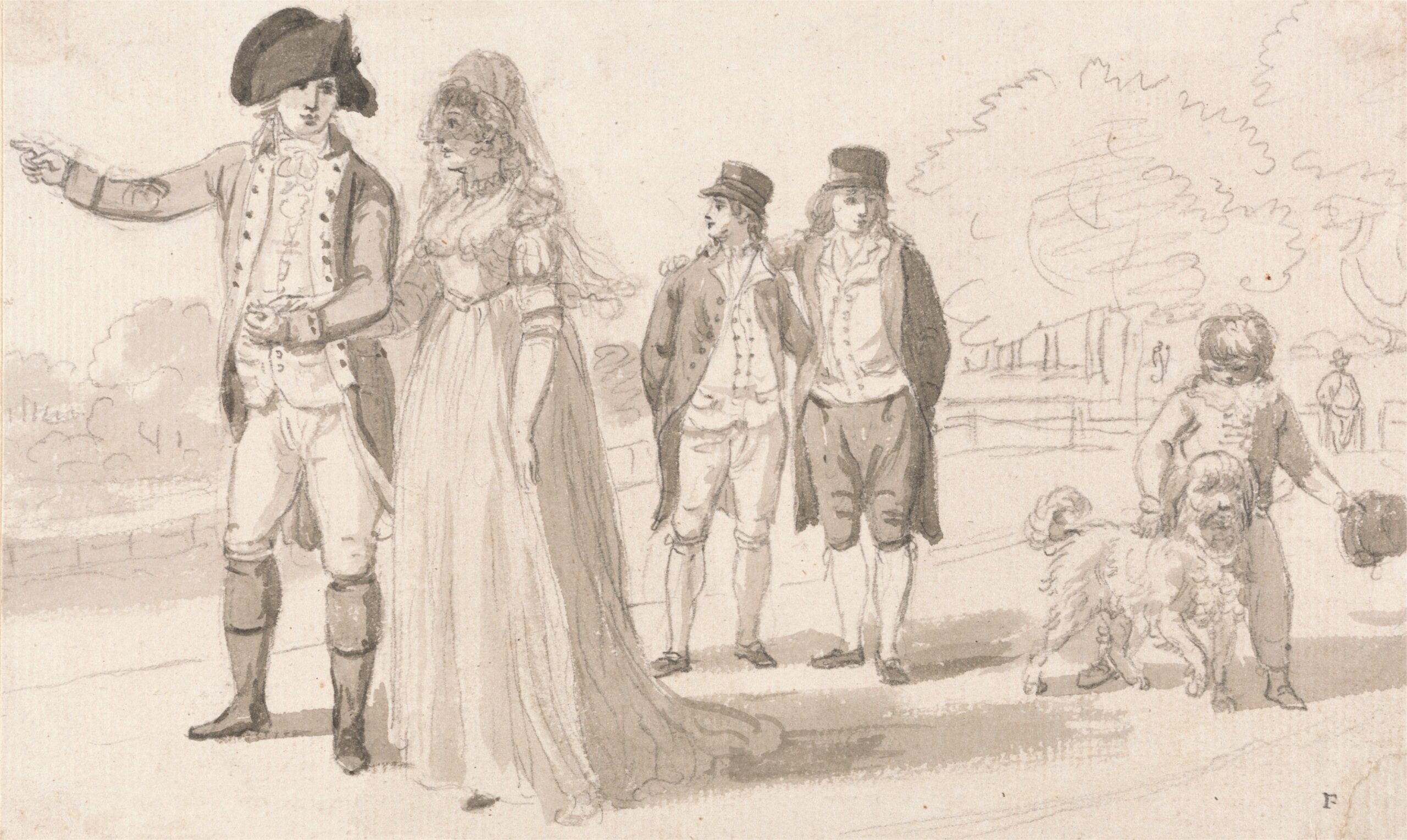
Image: Paul Sandby, ‘A Family in Hyde Park’, undated. Yale Center for British Art, Paul Mellon Collection.
By exploring loss and losing, Keeping Hold shows how important claims to ownership and possession could be, but also how difficult they were to achieve.
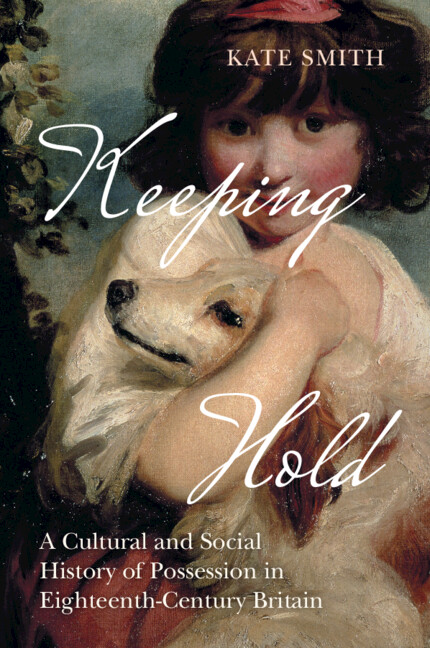
Keeping Hold by Kate Smith

Kate Smith is an associate professor in eighteenth-century history at the University of Birmingham. Her work explores how people related to the material world in the past. Her othe...
View profile >Keep up with the latest from Cambridge University Press on our social media accounts.




Latest Comments
Have your say!