

Products and services

When historians write about Jews in the Soviet Union during Stalin’s final years, the story is often framed almost entirely through repression. The destruction of the Jewish Anti-Fascist Committee, the campaign against “cosmopolitans,” and the Doctors’ Plot have come to define what many scholars describe as the darkest chapter of Soviet Jewish history.
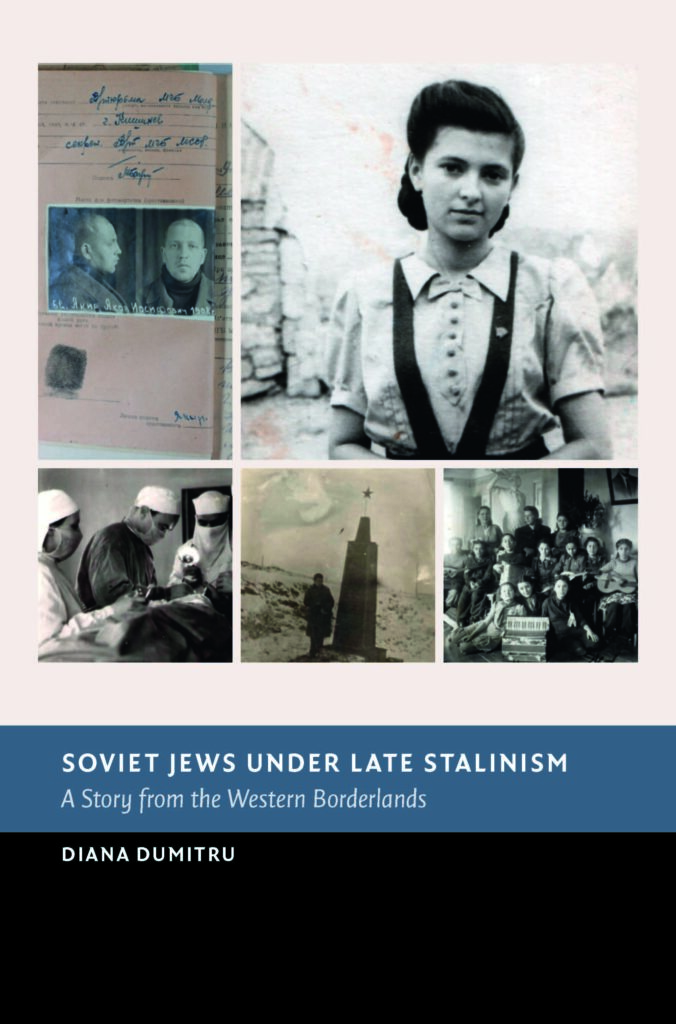
My book, Soviet Jews under Late Stalinism, approaches this period from a different angle. Rather than asking only what the Stalinist regime did to Jews, it asks how Jews themselves acted within the political, social, and institutional structures of the postwar Soviet state. By focusing on Soviet Moldavia, a western borderland shaped by war, shifting borders, and massive population upheavals, the book reveals a far more complex picture of Jewish life after 1945.
The Moldavian Soviet Socialist Republic provides a particularly revealing setting for such a study. After the Holocaust, this small republic had the highest proportion of Jews among the fifteen Soviet republics. Jews made up roughly 3.3 percent of the population, numbering more than ninety thousand people. Many were survivors who had endured deportations to Transnistria under Romanian rule, while others returned from evacuation in the Soviet interior or from service in the Red Army. Together they rebuilt a community in a territory profoundly transformed by war, shifting borders, and Sovietization.
One of the central findings of the book is that Jewish experiences in this western borderland complicate the idea that the late Stalinist period was defined solely by exclusion and persecution. In postwar Moldavia, Jews achieved remarkable upward mobility. They became highly visible in professional and administrative life, occupying positions in ministries, educational institutions, and the republic’s intelligentsia. Jewish students made up more than fifteen percent of university enrollments at one point in the early postwar years. Such developments challenge the widespread assumption that Jews were systematically removed from important sectors of Soviet society during this period.
At the same time, Jewish life unfolded within a landscape shaped by trauma, political constraints, and social tension. Survivors rebuilt families and careers while coping with the loss of relatives murdered during the Holocaust. They also confronted resentment from parts of the non-Jewish population, particularly as Jews became increasingly prominent in the republic’s professional and administrative structures.
One arena where Jewish agency was particularly visible was the pursuit of justice after the Holocaust. Many survivors actively sought out those responsible for wartime crimes. Some reported perpetrators to Soviet authorities and testified in court, confronting former collaborators face to face. Others undertook their own searches, sometimes traveling long distances to locate individuals who had escaped prosecution. In these cases, Jewish survivors were not merely witnesses to the postwar trials. Their testimony and persistence were often crucial in bringing local perpetrators to justice.
The book also examines how Jews responded to antisemitism in the postwar years. Many expected the Soviet state to enforce a strict stance against anti-Jewish hostility and were prepared to challenge officials when they believed the authorities were failing to do so. At the same time, the establishment of the State of Israel in 1948 introduced new tensions. Soviet leaders increasingly feared the emergence of Jewish national loyalties beyond the Soviet state, leading to arrests of Yiddish cultural figures and growing anxiety within Jewish communities.
Taken together, these developments challenge the dominant narrative that portrays the late Stalinist period exclusively as an era of unrelieved darkness for Soviet Jews. Without denying the presence of repression or antisemitism, Soviet Jews under Late Stalinism shows that Jewish individuals were not merely passive subjects of Stalinist policies. They were active participants in shaping their own lives and the societies in which they lived.
By shifting attention from Moscow to a western borderland, the book invites us to rethink what we think we know about Jewish life in the Soviet Union after the Holocaust.
Diana Dumitru is Ion Ratiu Professor in Romanian Studies at Georgetown University. Her research explores the entangled histories of violence, ideology, and identity in Eastern Euro...
View profile >Keep up with the latest from Cambridge University Press on our social media accounts.


Latest Comments
Have your say!