

Products and services

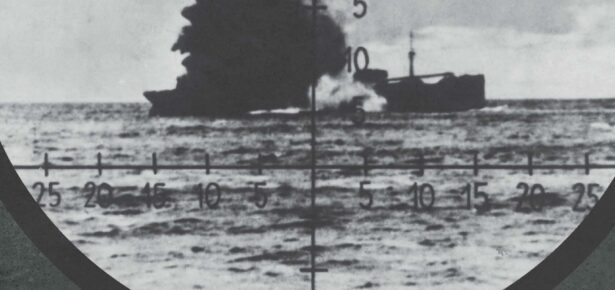
Our book’s eighteen authors investigate eight major applications of economic warfare and sanctions, set out in a common framework. We cover the Anglo-French wars of the long eighteenth century, the American Civil War, Britain versus Germany in two World Wars, the interwar sanctions on Italy, interwar sanctions followed by economic warfare against Japan, trade and technology restrictions on the Soviet bloc in the Cold War, and sanctions on the white minority regimes of South Africa and Rhodesia.
Economic warfare and sanctions, as practiced over three centuries and four continents, are distinct. In principle, sanctions that restrict an adversary’s access to foreign trade and credit aim to coerce an adversary into changing its behaviour. They are implemented by peaceful, legal means. Economic warfare aims to defeat the adversary. It uses guns, bombs, and torpedoes. The use of violence is governed, if at all, by the laws of war.
Historically, economic warfare and sanctions were bound by common roots. Modern sanctions grew out of the experience of economic warfare and belief in the power of economic warfare. If economic sanctions work to similar effect by peaceful means, it was hoped they could provide a peaceful alternative to combat, avoiding the human and material costs of war.
In practice, despite such hopes, sanctions often failed to avoid war. When war broke out, moreover, even if economic warfare was powerful, it was not all-powerful. Economic warfare alone did not win wars.
Under what conditions did economic warfare and sanctions work? Three hundred years of experience suggest two requirements. First, time was needed for economic measures to be effective. During this time, the adversary could always find ways to persevere under economic restrictions. It was commonplace to underestimate the capacity of the adversary to bear or mitigate the costs, at least up to a limit of endurance. Until that point was reached, there might be few or even no results.
By implication, it tempted fate to rely on economic measures to manage a sudden crisis. Whether peaceful or violent, economic measures required time, patience, and commitment to have any desired effect.
A second requirement was for complementary force or credible threat of force. Economic measures alone were never sufficient to contain the adversary’s responses, which could range from ingenious adaptation and belt-tightening to defensive measures and violent escalation. Thus, economic measures were best applied in a package, combined with fighting power or war readiness. In the absence of fighting power, economic warfare and sanctions were like one hand clapping.
Keep up with the latest from Cambridge University Press on our social media accounts.





Latest Comments
Have your say!