Products and services


This book brings together two vibrant academic discourses that have rarely interacted beforehand: religious epistemology and comparative hagiography. Inspired by Austin Farrer’s provocative claim that ‘the saint is our evidence’, it presents what I propose we call the ‘hagiological argument for the existence of God’- that is, the idea that human lives of remarkable holiness […]
Read More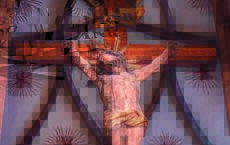
Uly Anders first pulled me into the puzzle The Reformation of Liturgy: Matter and Time Reconceived seeks to unravel. He was executed in 1520. His crime? Blasphemy, which the law defined as an affront against God. Anders had broken up and thrown out a window a small crucifixion scene carved in wood. The image had […]
Read More
The epistle of 2 Peter is not merely a polemic against false teachers; it is founded upon a compelling theological vision of life with God. In my commentary on 2 Peter, I argue that the letter’s ethical foundation lies in the concept articulated in 1:3-4: that believers “become sharers of the divine nature.” This principle, […]
Read MoreOne of the outcomes of my examination of 2 Peter is challenging the widely held scholarly designation of this letter as a “testament.” This genre classification has been profoundly influential, particularly following the work of Richard Bauckham, which often leads to the conclusion that 2 Peter is a “transparent fiction”—a pseudonymous work whose lack of […]
Read More
What makes someone a heretic? In the canon law of the Roman Catholic Church, heresy is ‘the obstinate denial or obstinate doubt after the reception of baptism of some truth which is to be believed by divine and Catholic faith’.[1] It is about people within the community being judged to have deviated from a core […]
Read More
I am now sitting in front of my laptop and staring at a text on the screen. In other words, I have a perception of it. My perception is from a particular perspective. However, I can easily switch from one perspective to another. Thus, at one moment, I am zooming in on single words and […]
Read More
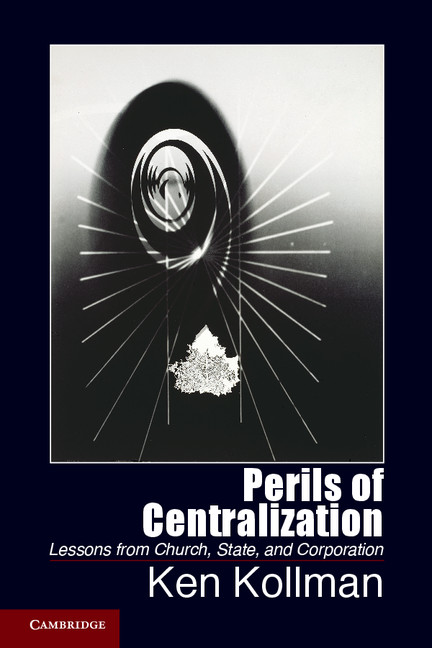
Let me describe the activities of an organization leading advocacy for liberal democracy in Zambia in recent years. When politicians spoke of changing the country’s constitution to end presidential term limits, it organized a civil society coalition to protest. When the police threw the opposition leader in jail for four months on charges of treason, […]
Read More
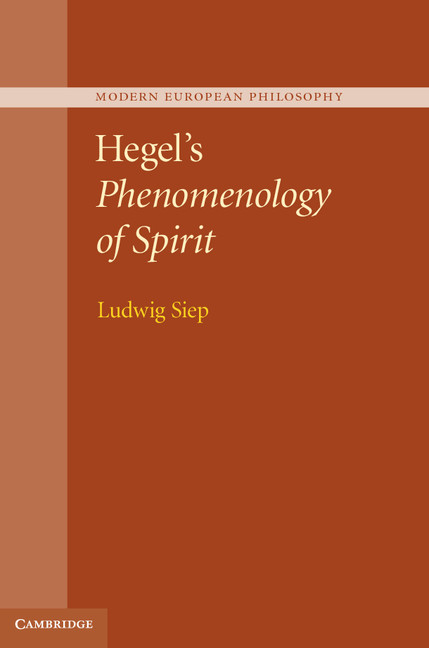
Our current understanding of philosophy is a relatively recent invention. It took shape in late eighteenth-century Germany, when a small group of scholars redefined what philosophy was and how its history should be told. In his “What Counted as Philosophy in the Italian Renaissance?” (2013), Christopher Celenza mentions Johann Brucker, who, in his Historia Critica […]
Read MoreKeep up with the latest from Cambridge University Press on our social media accounts.