

Products and services

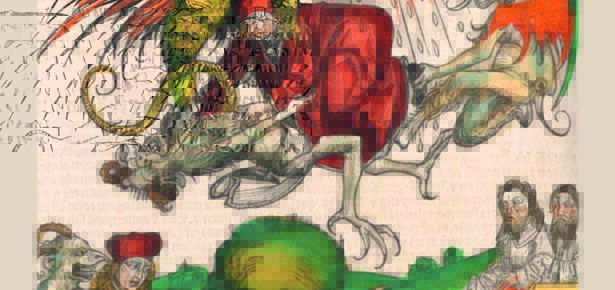
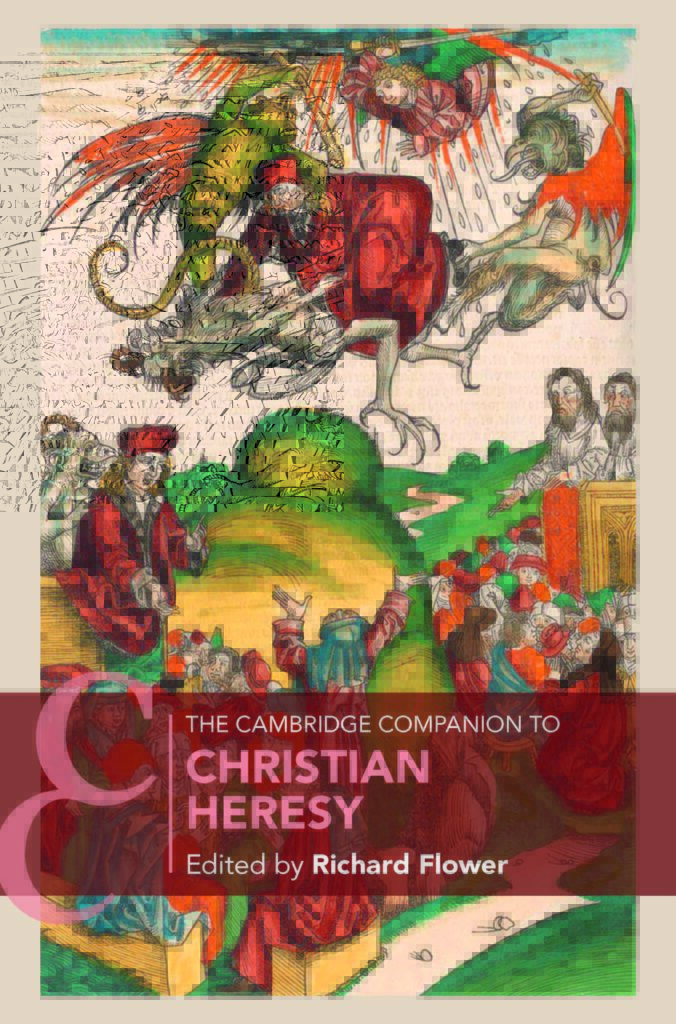
What makes someone a heretic? In the canon law of the Roman Catholic Church, heresy is ‘the obstinate denial or obstinate doubt after the reception of baptism of some truth which is to be believed by divine and Catholic faith’.[1] It is about people within the community being judged to have deviated from a core belief, rather than about condemning those who had never been members in the first place. In the popular imagination, heresy is probably most associated with medieval stories of the Inquisition and the idea of a powerful institution stamping out dissent. It did not, however, start out like that. In Roman society, hairesis was a neutral Greek word meaning a particular school of thought, such as the Stoics and Platonists in philosophy or the groupings of doctors known as ‘Methodists’ and ‘Rationalists’. They might disagree with each other, sometime vehemently, but they had no concept akin to heresy, nor did ancient paganism.
A change came with early Christ-followers, who sought ways to demarcate the boundaries between legitimate and illegitimate ideas and practices. There is much debate about when the notion of heresy as we know it first appeared, and when hairesis came to have a pejorative connotation, but the second century is usually regarded as key. Authors such as Justin Martyr and Irenaeus of Lyon argued that certain people who called themselves ‘Christians’ were not entitled to do so on account of their beliefs. While some variations in doctrine and practice were to be tolerated, these writers accused their opponents of crossing a line and placing themselves firmly outside the community. Instead of being ‘Christians’, they were assigned new names such as ‘Valentinians’, ‘Simonians’ or ‘Gnostics’, often based on the supposed founders of their heresies or particular aspects of their beliefs. The Christians who performed this labelling and rejecting were mostly successful, going on to be remembered and celebrated as ‘orthodox’ by later generations. They were, however, not speaking from a position of power in a widely-recognised church structure but rather competing with other views about what it meant to be Christian. Their concept of ‘heresy’ was not shared by everyone, but it became a key tool in these conflicts and contributed to their ultimate success.
With the Roman emperor Constantine providing official support to Christianity in the early fourth century, heresy became a concern for the imperial government. This involved emperors summoning church councils and endorsing their decisions, including condemnations of individuals and their views. One of the most influential took place exactly seventeen centuries ago: the Council of Nicaea in 325, which condemned the presbyter Arius and ‘Arianism’. Over time, Roman emperors came to include penalties for heresy in secular legislation, as did the rulers of medieval kingdoms who followed them, and the identification and elimination of heresy became a responsibility for both churches and governments. At the same time, however, individual Christians continued to argue over who deserved to be called a heretic and what the limits of acceptable Christianity were. Accusations of heresy flourished, including against local variations in practice and between members of what we would now call different denominations of the religion. Some authors such as Epiphanius of Salamis and John of Damascus even tried to expand the term to encompass other groups and beliefs, including paganism, Judaism and Islam. While these attempts were unsuccessful, they are testament to the flexibility of the concept of heresy and its enduring power across almost two millennia.
[1] https://www.vatican.va/archive/cod-iuris-canonici/eng/documents/cic_lib3-cann747-755_en.html#BOOK_III (Canon 751).
Keep up with the latest from Cambridge University Press on our social media accounts.


Latest Comments
Have your say!