

Products and services

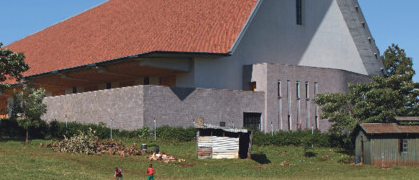
Let me describe the activities of an organization leading advocacy for liberal democracy in Zambia in recent years. When politicians spoke of changing the country’s constitution to end presidential term limits, it organized a civil society coalition to protest. When the police threw the opposition leader in jail for four months on charges of treason, it acted as a liaison, mediating between the president and the jailed leader until his release. When the government introduced a legislative bill that reduced the constitution’s checks on presidential power, it lobbied Members of Parliament to oppose it.
What organization took these actions? We might think of the country’s law society or opposition parties, as well as international human rights NGOs or diplomats. But the organization was in fact the Catholic Church in Zambia, sometimes alone and sometimes in partnership with Protestant churches in the country.
This activism by churches in Zambia is not a unique case. In my new book, Faith in Democracy: The Logic of Church Advocacy for Liberal Democratic Institutions in Africa, I draw on evidence from 34 countries to demonstrate that churches in sub-Saharan Africa are regularly at the forefront of advocacy for liberal democratic institutions, defined as political institutions that ensure political leaders are both popularly elected and checked in their power once in office. But the book also shows that there is significant variation among churches in whether they choose to engage in this type of advocacy, with some churches speaking out in support of democracy and others staying silent or supporting autocratic actions.
Faith in Democracy takes up the challenge of explaining this choice. From some perspectives, any pro-democratic advocacy by churches is surprising, with secular government institutions assumed to be peripheral to churches’ core focus on evangelization. From other points of view, churches should be natural advocates for human rights per their doctrinal teaching, including potentially liberal democratic rights. I show that churches are contingent advocates, depending on the degree to which their core activities are threatened by an unchecked autocrat.
I argue that liberal democratic institutions – autonomous legislatures, independent judiciaries and legal limits on the power of rulers – offer protection against all-powerful rulers using the state apparatus to control church activities. These protections are especially valued by churches whose core activities are more at risk of state regulation. Specifically, states can more easily take charge of church social service activities, including education, than they can assert control over congregational worship. As a result, churches that have invested in church education systems are more likely to advocate for liberal democracy as a means of protecting their schools from excessive state intervention. This is especially the case when church schools are financed in part by parents, rather than wholly dependent on state transfers.
My book focuses on cases in sub-Saharan Africa. Here numerous churches have bet on liberal democratic institutions over alliances with political parties to advance their interests. Elsewhere in the world, churches have made different choices, trying to secure their goals through party politics. But these partisan alliances are often brittle and may not be sufficient to protect church autonomy from the state in contexts of democratic backsliding. The experiences of churches in sub-Saharan Africa hold broader lessons for religious institutions and civil society in countries where democracy is weak.
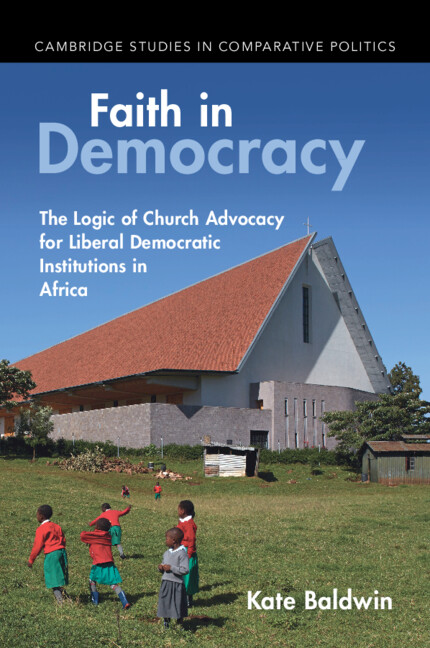

Kate Baldwin is Associate Professor of Political Science and Global Affairs at Yale University. She is the author of The Paradox of Traditional Chiefs in Democratic Africa (2016), ...
View profile >Keep up with the latest from Cambridge University Press on our social media accounts.



Latest Comments
Have your say!