Esperanto, Klingon, Na’vi … these are examples of invented or constructed languages (conlangs for short). Unlike ‘natural’ languages such as English, Swahili, or Navajo, which arise and change organically, conlangs are consciously created; Esperanto by Ludwik L. Zamenhof, Klingon by Marc Okrand, Na’vi by Paul Frommer. Like natural languages, many conlangs boast rich vocabularies in […]
Read MoreA new book that reveals the sound-painted secrets of 124 languages. Boom… plop! Woof! Vroom! Sound familiar? Like something out of a comic book, baby talk, or a cartoon? Not quite! These “funny little noises” are actually a serious linguistic topic – and they have a lot to tell us about how languages work, how […]

Read MoreHave you ever heard someone say: I hate it when people say ‘___’? When a sociolinguist hears that kind of comment, they take it as a good indication there’s something interesting going on. This book shows you how to uncover the hidden patterns in the way people speak. It demonstrates how to study language phenomena […]
Read MoreIn today’s rapidly globalizing world, multilingual education is no longer a niche interest—it is an essential approach to preparing learners for the linguistic realities they will face locally and globally. But what exactly is multilingual education? How does it differ from bilingual education, and why is it becoming such a vibrant field of study and […]
Read MoreIt is rare that a television show becomes truly ubiquitous, but since its release, Adolescence has been talked of almost everywhere in the UK – even Parliament (March 22nd, 2025). Indeed, the series was eventually deemed so important that it was made free to view in all schools. Adolescence is chilling on many levels, but […]
Read MoreIn July 2024, amidst the global attraction of a Paris 2024 Olympics with eugenicist roots historically designed in part to prove the athletic superiority of Europeans racialized as white, Aya Nakamura, the then most streamed female Francophone pop artist in the world, found herself “at the center of France’s culture wars.” A single-parent immigrant mother […]
Read MorePeople will always do what they want to do. Right? Well, not exactly. We can easily think about situations in which we tried to change someone else’s mind: begging parents for a toy, asking a reluctant friend to come to a dinner party, or making a case for your boss to grant you a few […]
Read MoreTo become a better writer, stop imitating published writing—and follow the science If only writers knew the unnecessary effort their texts inflict on hapless readers, they would change the way they put together sentences, paragraphs, and entire documents. Bizarrely, despite decades of data on the reading brain, teachers and books on writing still talk about […]
Read MoreEsperanto, Klingon, Na’vi … these are examples of invented or constructed languages (conlangs for short). Unlike ‘natural’ languages such as English, Swahili, or Navajo, which arise and change organically, conlangs are consciously created; Esperanto by Ludwik L. Zamenhof, Klingon by Marc Okrand, Na’vi by Paul Frommer. Like natural languages, many conlangs boast rich vocabularies in […]
Read MoreA new book that reveals the sound-painted secrets of 124 languages. Boom… plop! Woof! Vroom! Sound familiar? Like something out of a comic book, baby talk, or a cartoon? Not quite! These “funny little noises” are actually a serious linguistic topic – and they have a lot to tell us about how languages work, how […]
Read MoreHave you ever heard someone say: I hate it when people say ‘___’? When a sociolinguist hears that kind of comment, they take it as a good indication there’s something interesting going on. This book shows you how to uncover the hidden patterns in the way people speak. It demonstrates how to study language phenomena […]
Read MoreIn today’s rapidly globalizing world, multilingual education is no longer a niche interest—it is an essential approach to preparing learners for the linguistic realities they will face locally and globally. But what exactly is multilingual education? How does it differ from bilingual education, and why is it becoming such a vibrant field of study and […]
Read MoreIt is rare that a television show becomes truly ubiquitous, but since its release, Adolescence has been talked of almost everywhere in the UK – even Parliament (March 22nd, 2025). Indeed, the series was eventually deemed so important that it was made free to view in all schools. Adolescence is chilling on many levels, but […]
Read MoreIn July 2024, amidst the global attraction of a Paris 2024 Olympics with eugenicist roots historically designed in part to prove the athletic superiority of Europeans racialized as white, Aya Nakamura, the then most streamed female Francophone pop artist in the world, found herself “at the center of France’s culture wars.” A single-parent immigrant mother […]
Read MorePeople will always do what they want to do. Right? Well, not exactly. We can easily think about situations in which we tried to change someone else’s mind: begging parents for a toy, asking a reluctant friend to come to a dinner party, or making a case for your boss to grant you a few […]
Read MoreTo become a better writer, stop imitating published writing—and follow the science If only writers knew the unnecessary effort their texts inflict on hapless readers, they would change the way they put together sentences, paragraphs, and entire documents. Bizarrely, despite decades of data on the reading brain, teachers and books on writing still talk about […]
Read MoreKeep up with the latest from Cambridge University Press on our social media accounts.
University of British Columbia, Vancouver
N David Mermin, Author of \\\'Why Quark Rhymes with Pork\\\'
Speaking Shakespeare Today
The Reader\\\\\\\\\\\\\\\'s Brain
Emotive Language in Argumentation
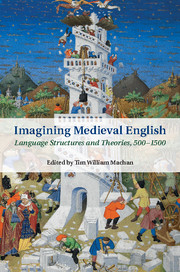
Imagining Medieval English
Language and the Law
David R. Olsen is University Professor Emeritus at the University of Toronto and the author of The Mind on Paper.

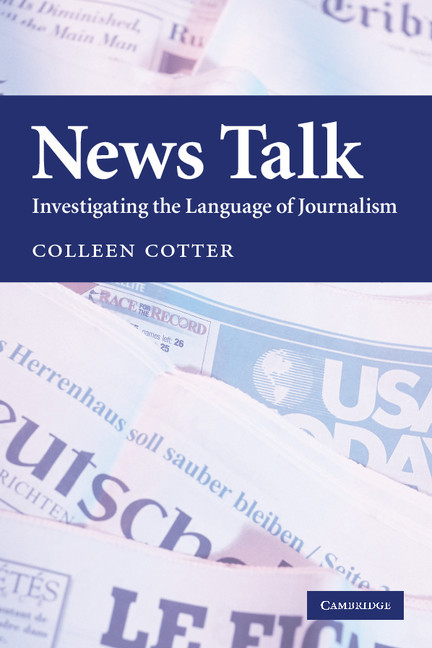
News Talk: Investigating the Language of Journalism
Words at Work and Play
Magistracy and the Historiography of the Roman Republic
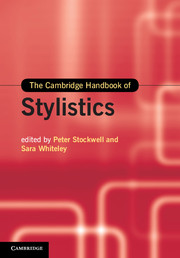
The Cambridge Handbook of Stylistics
A Reference Grammar of French
Early Social Interaction
The Hammer of Witches
To receive updates on Language & Linguistics news from Cambridge University Press and Fifteen Eighty Four, please join our email list below. We will not disclose your email address to any third party