Number of articles per page:
-
Gabriel Cepaluni
We live through a strange paradox. Liberal democracy and the market economy produced the greatest expansion of prosperity in history — yet faith in both is fraying at once, pressed by authoritarianism, populism, and a sense that the economy works only for those at the top. The question behind Capitalism and Development: Steering Markets Toward […]
Read More
-
Giulia Valpione
A few years ago, I started to question the role and status of the human being in the natural realm. Although we know very well that we are animals, we feel that we occupy a special place in nature—at least, so it is in the Western culture. We are part of nature, even though the […]
Read More
-
Hallie G. Meredith
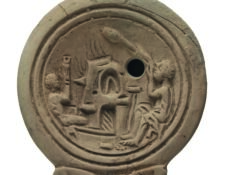
While a university student, by chance I took an elective course in glassblowing. One of the first things I remember is learning how to hold the heavy metal blowpipe. Against the soundtrack of a loud and blisteringly hot furnace – similar to what the ancient Romans who invented glassblowing likely experienced – I was introduced […]
Read More
-
Yasmin Solomonescu
Have the courage of your convictions. Be a person of conviction. Carry conviction. Stand tall in your conviction. As these idioms attest, we have a strong cultural conviction that conviction is a virtue and that anything less betrays weakness—or as W. B. Yeats put it more dramatically, that civilization itself is at stake when “[t]he […]
Read More
-
Natalia I. Kucirkova
For years, the EdTech ecosystem has been moving towards greater maturity. Researchers are producing stronger evidence about what supports learning. Governments are formalising procurement and demanding greater accountability. Educators are asking harder questions about educational value. Investors and philanthropies are increasingly recognising that scale alone is not impact. For the first time, the scientific community, […]
Read More
-
Jesse Mirotznik
In a moment, I’m going to tell you about my book. But before I do that, I’d like to ask you to perform a quick intellectual exercise: think of something that, in your view, is really terrible. It could be a movie, or a song, or a political outlook, or even a person-as long as […]
Read More
-
Cass R. Sunstein
Can money buy happiness? What is the value of things? How do people measure that value, whether we are speaking of consumer products, health, activities, or time? Free markets have a simple answer: willingness to pay (WTP). The value of a cell phone, a pencil, or a puppy is people’s WTP to pay for it. […]
Read More
-
Randall S. Abate
“With all the bad news on climate science and climate governance lately, how do you find hope to persevere?” In the past decade, I have been asked this question with increasing frequency in my climate governance lectures. It usually comes from a disillusioned student struggling to process new developments about climate science projections or climate […]
Read More
-
Gabriel Cepaluni
We live through a strange paradox. Liberal democracy and the market economy produced the greatest expansion of prosperity in history — yet faith in both is fraying at once, pressed by authoritarianism, populism, and a sense that the economy works only for those at the top. The question behind Capitalism and Development: Steering Markets Toward […]
Read More
-
Giulia Valpione
A few years ago, I started to question the role and status of the human being in the natural realm. Although we know very well that we are animals, we feel that we occupy a special place in nature—at least, so it is in the Western culture. We are part of nature, even though the […]
Read More
-
Hallie G. Meredith
While a university student, by chance I took an elective course in glassblowing. One of the first things I remember is learning how to hold the heavy metal blowpipe. Against the soundtrack of a loud and blisteringly hot furnace – similar to what the ancient Romans who invented glassblowing likely experienced – I was introduced […]
Read More
-
Yasmin Solomonescu
Have the courage of your convictions. Be a person of conviction. Carry conviction. Stand tall in your conviction. As these idioms attest, we have a strong cultural conviction that conviction is a virtue and that anything less betrays weakness—or as W. B. Yeats put it more dramatically, that civilization itself is at stake when “[t]he […]
Read More
-
Natalia I. Kucirkova
For years, the EdTech ecosystem has been moving towards greater maturity. Researchers are producing stronger evidence about what supports learning. Governments are formalising procurement and demanding greater accountability. Educators are asking harder questions about educational value. Investors and philanthropies are increasingly recognising that scale alone is not impact. For the first time, the scientific community, […]
Read More
-
Jesse Mirotznik
In a moment, I’m going to tell you about my book. But before I do that, I’d like to ask you to perform a quick intellectual exercise: think of something that, in your view, is really terrible. It could be a movie, or a song, or a political outlook, or even a person-as long as […]
Read More
-
Cass R. Sunstein
Can money buy happiness? What is the value of things? How do people measure that value, whether we are speaking of consumer products, health, activities, or time? Free markets have a simple answer: willingness to pay (WTP). The value of a cell phone, a pencil, or a puppy is people’s WTP to pay for it. […]
Read More
-
Randall S. Abate
“With all the bad news on climate science and climate governance lately, how do you find hope to persevere?” In the past decade, I have been asked this question with increasing frequency in my climate governance lectures. It usually comes from a disillusioned student struggling to process new developments about climate science projections or climate […]
Read More
Number of articles per page: