Tag Archives: political science
Number of articles per page:
-
Fabrice Lehoucq
Why do governments get overthrown? Why are many political systems chronically unstable? The Coup Trap in Latin America answers these questions by explaining why political systems fall prey to endless cycle of golpes and contra golpes. It provides an innovative explanation of why officers and civilians (“the coup coalition”) overthrow presidents – and will be […]
Read More
-
James L. Huffman
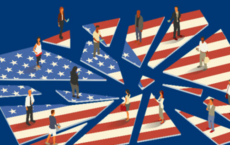
American politics is characterized by extreme partisanship and government stalemate. The two dominant political parties marshal reliably partisan interest groups with the objective of controlling both houses of Congress and the Presidency. Embracing the simplistic idea that the majority rules, the prevailing party then governs with little regard for the interests of the minority party […]
Read More
-
Jae-Hee Jung
Political arguments often appeal to fundamental moral intuitions about right and wrong. Politicians highlight the moral basis of their views and positions. For example, in the context of the recent U.S. and Israeli attacks on Iran, Senator Steve Daines explicitly appealed to morals in his post on X saying that he “support[s] President Trump’s actions […]
Read More
-
Yuval Feldman
Every policymaker knows the dilemma: should governments trust people to do the right thing, or make sure they do it? The safer option has usually been enforcement. Write the rules, monitor behavior, punish violations. Citizens obey because they have to. Yet most regulators also know something they rarely act on: people tend to follow rules […]
Read More
-
Daniel B. Rodriguez
The constitutions of the fifty states in the United States create by their authority as fundamental law the structure of government and the means and mechanisms of governance for state, local, and special purpose governments. Moreover, it is within the constitutions – their design, their interpretation by courts, and ultimately in their performance – that […]
Read More
-
Christopher Chambers-Ju
Mobilizing Teachers is a book that shows how teachers’ unions have turned into powerful labor organizations that developed different roles in the political arena. Teachers’ unions lie at the juncture of two global changes that are playing out in countries around the world. First, with labor unions in decline (because of changes including automation and […]
Read More
-
Joseph P. Tomain, Sidney A. Shapiro
Market favoritism has been aggressively supported for more than 50 years by the Right and adopted by many on the Left. The emphasis has been on the priority of markets over government for solution to policy problems and for enhancing political liberties. Our book, How Government Built America, flips the script by arguing the strength […]
Read More
-
Miles M. Evers, Eric Grynaviski
Beginning in the 1850s, the United States took its first, incautious steps toward developing an overseas empire in the Pacific. In the end, the empire would help defeat Japan during World War II. The bloodiest and most infamous battles of the Pacific War were fought on possessions gained by American imperialists. The first American shots […]
Read More
-
Fabrice Lehoucq
Why do governments get overthrown? Why are many political systems chronically unstable? The Coup Trap in Latin America answers these questions by explaining why political systems fall prey to endless cycle of golpes and contra golpes. It provides an innovative explanation of why officers and civilians (“the coup coalition”) overthrow presidents – and will be […]
Read More
-
James L. Huffman
American politics is characterized by extreme partisanship and government stalemate. The two dominant political parties marshal reliably partisan interest groups with the objective of controlling both houses of Congress and the Presidency. Embracing the simplistic idea that the majority rules, the prevailing party then governs with little regard for the interests of the minority party […]
Read More
-
Jae-Hee Jung
Political arguments often appeal to fundamental moral intuitions about right and wrong. Politicians highlight the moral basis of their views and positions. For example, in the context of the recent U.S. and Israeli attacks on Iran, Senator Steve Daines explicitly appealed to morals in his post on X saying that he “support[s] President Trump’s actions […]
Read More
-
Yuval Feldman
Every policymaker knows the dilemma: should governments trust people to do the right thing, or make sure they do it? The safer option has usually been enforcement. Write the rules, monitor behavior, punish violations. Citizens obey because they have to. Yet most regulators also know something they rarely act on: people tend to follow rules […]
Read More
-
Daniel B. Rodriguez
The constitutions of the fifty states in the United States create by their authority as fundamental law the structure of government and the means and mechanisms of governance for state, local, and special purpose governments. Moreover, it is within the constitutions – their design, their interpretation by courts, and ultimately in their performance – that […]
Read More
-
Christopher Chambers-Ju
Mobilizing Teachers is a book that shows how teachers’ unions have turned into powerful labor organizations that developed different roles in the political arena. Teachers’ unions lie at the juncture of two global changes that are playing out in countries around the world. First, with labor unions in decline (because of changes including automation and […]
Read More
-
Joseph P. Tomain, Sidney A. Shapiro
Market favoritism has been aggressively supported for more than 50 years by the Right and adopted by many on the Left. The emphasis has been on the priority of markets over government for solution to policy problems and for enhancing political liberties. Our book, How Government Built America, flips the script by arguing the strength […]
Read More
-
Miles M. Evers, Eric Grynaviski
Beginning in the 1850s, the United States took its first, incautious steps toward developing an overseas empire in the Pacific. In the end, the empire would help defeat Japan during World War II. The bloodiest and most infamous battles of the Pacific War were fought on possessions gained by American imperialists. The first American shots […]
Read More
Number of articles per page: