

Products and services


American politics is characterized by extreme partisanship and government stalemate. The two dominant political parties marshal reliably partisan interest groups with the objective of controlling both houses of Congress and the Presidency. Embracing the simplistic idea that the majority rules, the prevailing party then governs with little regard for the interests of the minority party and its constituents.
The Framers of the United States Constitution understood from their own experience that democratic governance risks such majoritarian tyranny unless “ambition . . . [is] made to counteract ambition,” in the words of James Madison in Federalist 51. Although the founding generation spoke often of a need for republican virtue, they came to accept that human nature leads to the formation of political factions intent on commandeering the powers of government in service to private ends – what present day political economists call rent seeking.
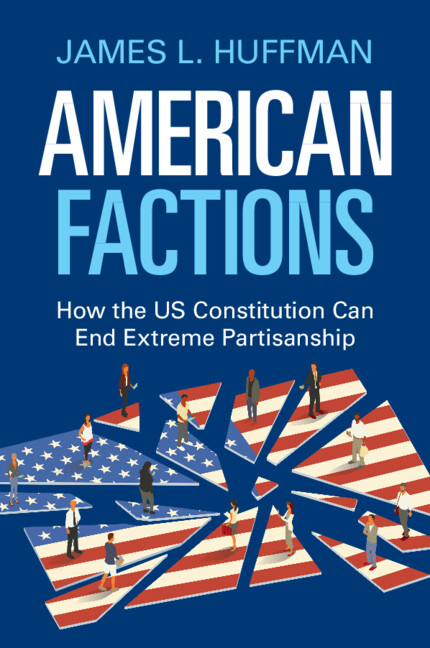
In my book American Factions: How the U.S. Constitution Can End Extreme Partisanship I describe and explain the partisan nature of present-day American politics, document the history of the Framers’ multiple efforts to control the corrupting influence of political factions, and examine how over two centuries the three branches of the federal government have distorted the Framers’ thoughtful design.
American politics have always been partisan, as the Framers anticipated. But with the exception of the Civil War, in which the South rejected the constraining influence of union, the Constitution of divided and limited powers has forced compromise on most matters of public concern. That is no longer the case. Congressional inaction and avoidance of responsibility, growth in federal power at the expense of the states, emergence of an ever more powerful executive, and judicial deference to legislative abdication and executive overreach have combined to empower minority and majority factions.
The Constitution proposed by the Philadelphia Convention and ratified by the states included several structural devices intended to limit the influence of factions: union of thirteen very different states; vertical separation of authority between a national government of enumerated powers and state governments of traditional police powers; horizontal separation between the legislative, executive and judicial functions of government; a bicameral legislature in which one branch represents the states and the other represents the people; executive veto of measures enacted by Congress; a judiciary with life tenure and authority to void unconstitutional actions of the other branches; a president elected not by popular vote but by a system giving slightly greater influence to less populous states; removal of a president by impeachment in the House and conviction in the Senate; and amendment of the Constitution not by popular vote but by three-fourths of the states. To be sure, all these institutional arrangements were the product of compromise among the delegates. But with few exceptions, Federalists and Anti-federalists agreed that their compromises would help control the corrupting influence of factions.
Erosion over time of some of these limits on direct democracy has contributed to the extreme partisanship that characterizes present-day American politics. The best hope for ending extreme partisanship lies not in more virtuous representatives or a more democratic Constitution but rather in restoring and reinforcing the Constitution’s original constraints on political factions and majority rule.

James L. Huffman has taught constitutional law for over forty years. He is the author of Private Property and State Power (2013) and Private Property and the Constitution (2013). H...
View profile >Keep up with the latest from Cambridge University Press on our social media accounts.




Latest Comments
Have your say!