Number of articles per page:
-
Karin Zotzmann, Jérémie Bouchard
In the 1950s, research on language learning was dominated by behaviourism, which viewed language as a system of linguistic rules and patterns. Learners were encouraged to imitate and memorise words and sentences heard or read, and received reinforcement from their environment—rewards for correct responses and punishment for errors. Language acquisition was thus explained as a […]
Read More
-
Paula Rautionaho, Mikko Laitinen
English linguistics is in the middle of a transformation. That’s nothing new. This field has always been quick to adapt, but the current shift may be different in scale. It mirrors the broader digitalization that is shaping science, education, and everyday life. It’s driven not only by new AI‑based tools that have changed how we […]
Read More
-
Nathan Derejko
A Non-International Armed Conflict (NIAC) is a limited manifestation of the broader concept of armed violence. The factual and legal criteria for determining when a situation of armed violence reaches the of NIAC threshold remain complex and contested. The absence of a definition of NIAC in international law, coupled with the lack of any formal […]
Read More
-
Allan Hepburn
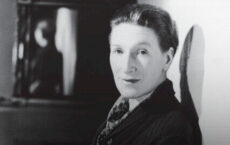
Thirty years ago, I planned to write a book about Elizabeth Bowen, the Anglo-Irish novelist and short story writer. With a monograph in mind, I assembled Bowen’s essays and reviews scattered across various magazines and newspapers. What started as a few items retrieved from obscurity quickly snowballed into hundreds. I began visiting archives and fitting […]
Read More
-
Ross Cole
The fourth track on Bob Dylan’s Bootleg Series Volume 1 is a song called ‘No More Auction Block’. The melody is simple, rising and falling in hymn like steps over acoustic guitar. The song’s lyrics are also simple and adamantly clear—a call to end the horrifying spectacle of Black humans being sold as slaves, objects […]
Read More
-
Katherine G. Charles
When is interruption an art form? Short answer: the eighteenth-century novel. Interrupting another speaker gets a bad rap: common charges lodged against listeners who jump the queue maintain that interrupters are pushy, rude, impatient, or, at the least, distracting. Certainly, the first generation of emerging novel theorists directed similar rhetoric against the cacophony of tale-tellers […]
Read More
-
Dominik Berrens
Everyone who discovers a new species nowadays has the right to name it. This name has to conform to rather intricate rules established by international professional associations. These conventions can be traced back to the eighteenth century, when Carl Linnaeus (1707–1778) introduced a taxonomic nomenclature based on a binomial system: every species receives a two-part […]
Read More
-
Christopher R. Mooney
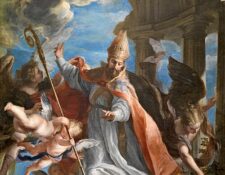
Other than Paul, no writer has had greater influence on the theology of justification than Augustine. In the preface to his Latin works, Martin Luther famously narrated his discovery of the justifying righteousness of God: first he says he read Paul’s Letter to the Romans, but the very next author he turned to for confirmation […]
Read More
-
Karin Zotzmann, Jérémie Bouchard
In the 1950s, research on language learning was dominated by behaviourism, which viewed language as a system of linguistic rules and patterns. Learners were encouraged to imitate and memorise words and sentences heard or read, and received reinforcement from their environment—rewards for correct responses and punishment for errors. Language acquisition was thus explained as a […]
Read More
-
Paula Rautionaho, Mikko Laitinen
English linguistics is in the middle of a transformation. That’s nothing new. This field has always been quick to adapt, but the current shift may be different in scale. It mirrors the broader digitalization that is shaping science, education, and everyday life. It’s driven not only by new AI‑based tools that have changed how we […]
Read More
-
Nathan Derejko
A Non-International Armed Conflict (NIAC) is a limited manifestation of the broader concept of armed violence. The factual and legal criteria for determining when a situation of armed violence reaches the of NIAC threshold remain complex and contested. The absence of a definition of NIAC in international law, coupled with the lack of any formal […]
Read More
-
Allan Hepburn
Thirty years ago, I planned to write a book about Elizabeth Bowen, the Anglo-Irish novelist and short story writer. With a monograph in mind, I assembled Bowen’s essays and reviews scattered across various magazines and newspapers. What started as a few items retrieved from obscurity quickly snowballed into hundreds. I began visiting archives and fitting […]
Read More
-
Ross Cole
The fourth track on Bob Dylan’s Bootleg Series Volume 1 is a song called ‘No More Auction Block’. The melody is simple, rising and falling in hymn like steps over acoustic guitar. The song’s lyrics are also simple and adamantly clear—a call to end the horrifying spectacle of Black humans being sold as slaves, objects […]
Read More
-
Katherine G. Charles
When is interruption an art form? Short answer: the eighteenth-century novel. Interrupting another speaker gets a bad rap: common charges lodged against listeners who jump the queue maintain that interrupters are pushy, rude, impatient, or, at the least, distracting. Certainly, the first generation of emerging novel theorists directed similar rhetoric against the cacophony of tale-tellers […]
Read More
-
Dominik Berrens
Everyone who discovers a new species nowadays has the right to name it. This name has to conform to rather intricate rules established by international professional associations. These conventions can be traced back to the eighteenth century, when Carl Linnaeus (1707–1778) introduced a taxonomic nomenclature based on a binomial system: every species receives a two-part […]
Read More
-
Christopher R. Mooney
Other than Paul, no writer has had greater influence on the theology of justification than Augustine. In the preface to his Latin works, Martin Luther famously narrated his discovery of the justifying righteousness of God: first he says he read Paul’s Letter to the Romans, but the very next author he turned to for confirmation […]
Read More
Number of articles per page: