

Products and services


Other than Paul, no writer has had greater influence on the theology of justification than Augustine. In the preface to his Latin works, Martin Luther famously narrated his discovery of the justifying righteousness of God: first he says he read Paul’s Letter to the Romans, but the very next author he turned to for confirmation was Augustine. In the history of the Christian theology of justification, Augustine is also found prominently in the medieval Glossa Ordinaria, the writings of Thomas Aquinas, John Calvin, John Henry Newman, and more. In his landmark Iustitia Dei: A History of the Christian Doctrine of Justification, Alister McGrath calls Augustine simply “the fountainhead.” For scholars and theologians interested in this topic historically or systematically, Augustine is a key figure. This book is the first of its kind to offer a comprehensive study of Augustine’s theology of justification.
But there is a further and deeper lacuna which this book aims to fill, which is a treatment of Augustine’s theology of justification through another, more foundational lens: his theology of faith. In a letter written later in his life, Augustine says, “But if faith were emptied of its meaning, what righteousness would remain for a human being, since the ‘righteous lives by faith’ (Rom. 1:17)?” (ep. 177.11). Faith and the category of the “righteousness of faith” is central to Augustine’s theology of justification for several reasons. First, it provides the exegetical basis for Augustine’s lifelong interest in justification throughout the New Testament, not just in the few Pauline passages in which the term appears. For Augustine, wherever faith is commended in Scripture, justification is implied.
Second, focusing on faith grounds Augustine’s understanding of the relevance of justification in his work as a bishop, since justification then provides a theologically interpretive lens for understanding the concrete experience of faith. As a bishop, Augustine oversaw the annual initiation of catechumens through baptism and followed a widespread tradition of teaching initiates the invisible theological significance of the visible rites. His theology of justification by faith simply explains this invisible reality: the believing catechumen, by faith, receives in baptism forgiveness and renewal from God, which is justification.
Third, and most significant, this book argues that Augustine came to differentiate three distinct senses of faith, based on whether faith is motivated by fear, hope, or love. While faith fails to justify when motivated by fear, it will obtain justification when motivated by hope, and already possesses the essential features of righteousness when animated by love. These three motivations result in very different accounts of justification, offer an innovative approach to understanding Augustine’s thought, and explain the complexity of his theology of justification.
This book offers a developmental reading of Augustine, from his earliest to his latest writings, with special focus on justification, faith, hope, baptism, biblical exegesis, the Pelagian controversy, humility, and Christology. It is written for those interested in Augustine’s thought specifically, the history of this doctrine, and the theology of faith and justification in itself.
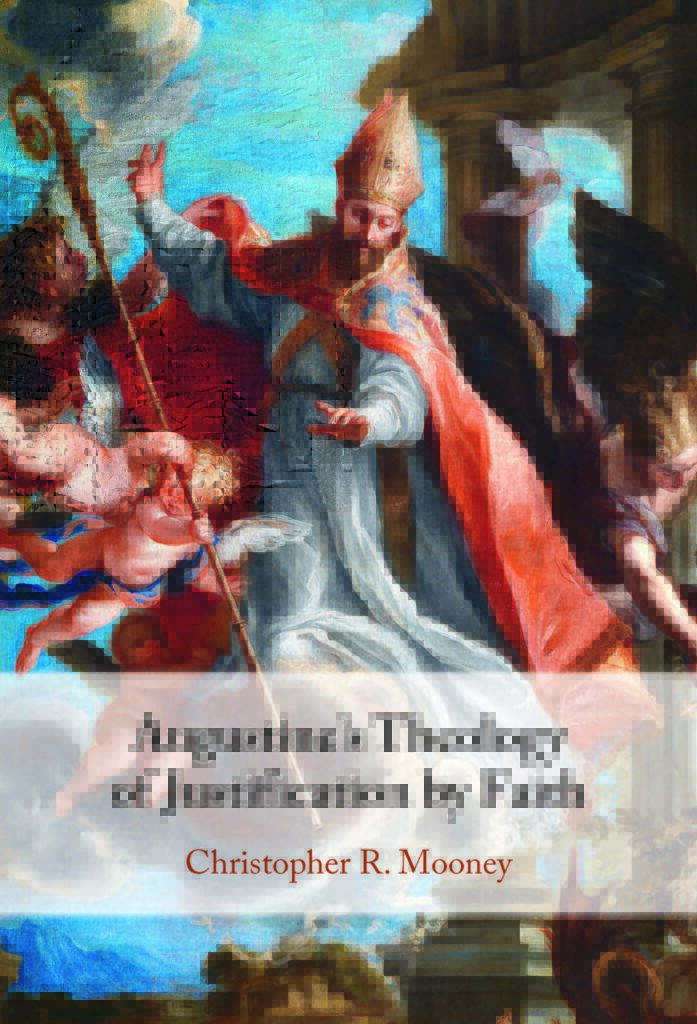
Augustine’s Theology of Justification
by Faith by Christopher R. Mooney

Christopher R. Mooney is Assistant Professor of Theology at the Augustine Institute Graduate School....
View profile >Keep up with the latest from Cambridge University Press on our social media accounts.


Latest Comments
Have your say!