We’ve all received what used to be called a “left-handed compliment,” a comment or judgement that seems positive on the surface, but holds a thinly veiled insult. Parisian composer Louise Farrenc (1804-1877) found herself on the receiving end of that sort of compliment throughout her career as a composer, pianist, and teacher at the famous […]
Read MoreI have been writing about Cuban music and popular culture for some time, as an outsider. It is a fraught position: being based in the United States, strongly attracted to Cuban heritage, trying to undertake rigorous research and pursue sensitive topics while frequently being perceived as someone who may have an ax to grind as […]
Read MoreThe idea of the “Czech lands” has never been simple. These regions have carried many titles in various languages throughout history and sometimes held radically different meanings, including “the Czech Republic,” “Czechia,” “Bohemia, Moravia, and Silesia,” “Čechy, Morava, a Slezsko,” “Böhmen, Mähren, und Schlesien,” and “the Bohemian crownlands,” among other possibilities. In his landmark essay […]
Read MoreGaetano Donizetti’s 1835 tragic opera Lucia di Lammermoor is known for a lot of things: its Scottish setting, its beautiful bel canto melodies, its tale of forbidden love and a final lover’s suicide. But for most opera lovers, one thing stands above all others-the iconic, show-stopping mad scene, which showcases a blood-soaked newly-minted bride convulsing on stage. […]

Read MoreCompared with [J. S. Bach’s] six sonatas for violin without accompaniment these violoncello solos are light and unpretending. Nevertheless, they are interesting, because they are Bach’s. The first and last (in C major) are little better than exercises for the acquirement of mechanical facility, more suitable to the studio than to the concert-room, for which […]
Read MoreIn the twelfth through fourteenth centuries, at the height of the cult of the Virgin Mary, a rare and rich conflux of past and present events, both authentic and legendary, catapulted Orvieto into the spotlight as a political, religious, and intellectual center. First papal conflict with the encroaching Holy Roman Emperor and Cathar heresy were […]
Read MoreDuring the nineteenth century Western art music advanced towards a peak of sonorous magnificence, perhaps reached in 1848 at Paris when Hector Berlioz conducted an ensemble of 1,022 performers. The guitar, however, continued to sound at the level of a small continuo group for an Italian opera of the 1640s. In exile from the orchestra […]
Read MoreThe mythical siren song of Naples, which drew travelers to the shores, manifested itself centuries later in the reality of the Grand Tour. Generations came, lured by the urban expanse and broad culture of the city as well as the natural beauty of the surrounding paesi and regions further south. In his own Italienische Reise, […]
Read MoreWe’ve all received what used to be called a “left-handed compliment,” a comment or judgement that seems positive on the surface, but holds a thinly veiled insult. Parisian composer Louise Farrenc (1804-1877) found herself on the receiving end of that sort of compliment throughout her career as a composer, pianist, and teacher at the famous […]
Read MoreI have been writing about Cuban music and popular culture for some time, as an outsider. It is a fraught position: being based in the United States, strongly attracted to Cuban heritage, trying to undertake rigorous research and pursue sensitive topics while frequently being perceived as someone who may have an ax to grind as […]
Read MoreThe idea of the “Czech lands” has never been simple. These regions have carried many titles in various languages throughout history and sometimes held radically different meanings, including “the Czech Republic,” “Czechia,” “Bohemia, Moravia, and Silesia,” “Čechy, Morava, a Slezsko,” “Böhmen, Mähren, und Schlesien,” and “the Bohemian crownlands,” among other possibilities. In his landmark essay […]
Read MoreGaetano Donizetti’s 1835 tragic opera Lucia di Lammermoor is known for a lot of things: its Scottish setting, its beautiful bel canto melodies, its tale of forbidden love and a final lover’s suicide. But for most opera lovers, one thing stands above all others-the iconic, show-stopping mad scene, which showcases a blood-soaked newly-minted bride convulsing on stage. […]
Read MoreCompared with [J. S. Bach’s] six sonatas for violin without accompaniment these violoncello solos are light and unpretending. Nevertheless, they are interesting, because they are Bach’s. The first and last (in C major) are little better than exercises for the acquirement of mechanical facility, more suitable to the studio than to the concert-room, for which […]
Read MoreIn the twelfth through fourteenth centuries, at the height of the cult of the Virgin Mary, a rare and rich conflux of past and present events, both authentic and legendary, catapulted Orvieto into the spotlight as a political, religious, and intellectual center. First papal conflict with the encroaching Holy Roman Emperor and Cathar heresy were […]
Read MoreDuring the nineteenth century Western art music advanced towards a peak of sonorous magnificence, perhaps reached in 1848 at Paris when Hector Berlioz conducted an ensemble of 1,022 performers. The guitar, however, continued to sound at the level of a small continuo group for an Italian opera of the 1640s. In exile from the orchestra […]
Read MoreThe mythical siren song of Naples, which drew travelers to the shores, manifested itself centuries later in the reality of the Grand Tour. Generations came, lured by the urban expanse and broad culture of the city as well as the natural beauty of the surrounding paesi and regions further south. In his own Italienische Reise, […]
Read MoreKeep up with the latest from Cambridge University Press on our social media accounts.
Hélène Lecossois is Professor of Irish Literary Studies at Université de Lille, France. Specialising in Irish theatre and performance, Hélène is the author of Endgame de Samuel Beckett (2009), and of various essays in Beckett Today, Études irlandaises, Sillages critiques and the 2014 edited collection Ireland, Memory and Performing the Historical Imagination. She was 2014 recipient of the Moore Institute Fellowship (NUI Galway).
Manchester Metropolitan University
Holly Buttimore is a Humanities and Social Sciences Commissioning Editor for Academic Journals at Cambridge University Press
University of Chester
Heather Hirschfeld is a Professor of English at the University of Tennessee.
Associate Professor in English and Creative Writing, University of Reading
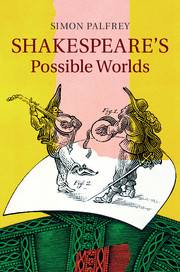
Shakespeare’s Possible Worlds
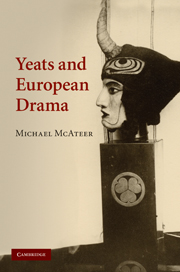
Yeats and European Drama
The History of the Erard Piano and Harp in Letters and Documents, 1785–1959
The Manual of Musical Instrument Conservation
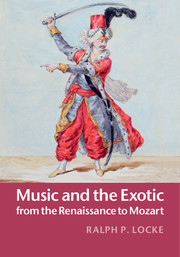
Music and the Exotic from the Renaissance to Mozart
The Cambridge Companion to Jewish Music
The Cambridge Introduction to Theatre and Literature of the Absurd
Michelangelo: The Artist, the Man, and His Times
Vocal Authority
A History of Singing
Opera
Publicist
Senior Inbound Marketing Executive
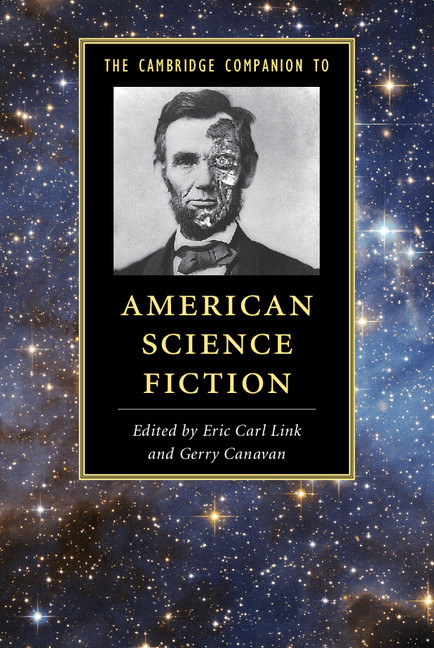
The Cambridge Companion to American Science Fiction
The Cambridge History of Magic and Witchcraft in the West
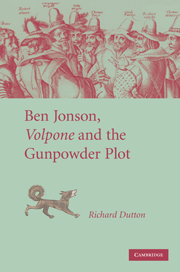
Ben Jonson, Volpone, and the Gunpowder Plot
Ovid and Hesiod
The Cambridge Wagner Encyclopedia
Viewing America
To receive updates on Music, Theatre & Art news from Cambridge University Press and Fifteen Eighty Four, please join our email list below. We will not disclose your email address to any third party