

Products and services

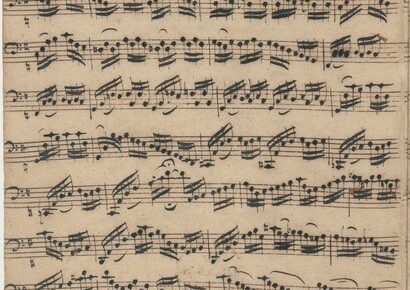
Compared with [J. S. Bach’s] six sonatas for violin without accompaniment these violoncello solos are light and unpretending. Nevertheless, they are interesting, because they are Bach’s. The first and last (in C major) are little better than exercises for the acquirement of mechanical facility, more suitable to the studio than to the concert-room, for which they were clearly never intended …
Thus was an anonymous critic’s take on an 1868 performance of three movements from Bach’s unaccompanied Cello Suites by the acclaimed soloist Alfredo Piatti at London’s Monday Popular Concerts. Although Bach had composed the Cello Suites around 1720, they were not published until a century later and only slowly began to enter the concert hall starting around the 1860s. The critical response was mixed. Some were puzzled by what seemed like odd historical curiosities; if Bach’s music was celebrated for its inventive harmony and intricate polyphony, what was one to make of music for a single cello playing alone? Some musicians added piano accompaniments to enrich Bach’s music and to appeal to contemporary musical tastes. The composer Robert Schumann, who deemed the Cello Suites “the most beautiful and important compositions ever written for violoncello” nevertheless held that Bach’s unaccompanied music for violin and cello “would be considerably improved by a piano accompaniment and thus accessible to a larger public.” His accompaniment to the Cello Suites is mostly lost today, but manuscript copies circulated during the nineteenth century as far as Adelaide (Australia) and San Francisco.
If the initial audience and critical response to the Cello Suites was uneven, the situation couldn’t be more different today. If concert reviewers had once questioned their suitability as concert repertoire, in 1995 a New York Times critic asserted as self-evident that the Cello Suites “are not only the greatest music written for the instrument but in the running for the greatest music ever written.” They have been recorded well over 300 cellists—two such albums have been awarded a Grammy—not to mention other albums with transcriptions of the Cello Suites for such wide-ranging instruments as marimba, flute, and banjo. A growing number of cellists have tackled the Herculean feat of performing all six Cello Suites either in a pair of concerts or a single marathon recital. Yo-Yo Ma performed the cycle at a 2015 BBC Prom in the Royal Albert Hall for a sold-out audience of over 5,000 people.
Beyond the concert hall, Bach’s Cello Suites have a wide impact on the broader cultural imagination. They have been covered or sampled in many popular styles, including Latin, J-pop, and jazz renditions. Dozens of film soundtracks feature them prominently, either in the underscore or in diegetic performances by characters. The resonant Prelude to Cello Suite No. 1 has been particularly popular. In Master and Commander (2003), the prelude represents the vastness of the ocean. David Bowie learned to perform the prelude for The Hunger (1983), in which he played a centuries-old vampire cellist. In the anime series Neon Genesis Evangelion (1995), the teenage protagonist Imari Shinji plays the Prelude to Cello Suite No. 1 to express nostalgia for the pre-apocalyptic world and to convey emotions that are otherwise difficult for him to express. Music drawn from or based on the Cello Suites has appeared in Netflix series such as Big Mouth, Bridgerton, and The Empress.
Perhaps the most influential cellist in the history of the Cello Suites is the Catalan Pablo Casals, whose complete recording from the late 1930s cemented the Cello Suites’ status in the instrument’s repertoire. Through his recordings, lessons, and master classes, his impact on the next generation is cellists would be difficult to underestimate. For instance, whereas nineteenth-century cellists performed the Prelude to Cello Suite No. 2 with a relatively brisk tempo, Casals’s recording adopts a much slower tempo and a ruminating character that has widely influenced how most cellists interpret the piece today.
Beyond the concert hall and recording studio, cellists who have used Bach’s Cello Suites to advocate for peace and an end to human suffering have followed a model established by Casals, whose fierce opposition to and self-imposed exile from Francoist Spain (and from all countries that recognized Franco’s government) significantly disrupted his concert career and established him as a humanitarian figure. Others who have used Bach’s Cello Suites in a similar spirit include the Russian cellist Mstislav Rostropovich, whose impromptu performance at Checkpoint Charlie, days after the Berlin Wall fell in 1989, is now commemorated with a statue. Yo-Yo Ma’s performance at a US–Mexico border crossing in 2019 is the subject of a children’s book. More recently, the Ukrainian cellist Denys Karachevtsev’s performance in the heavily bombarded streets of Kharkiv was the subject of a viral video used as a fundraiser for humanitarian aid. While my book on Bach’s Cello Suites traces their slow journey from North Germany across Europe and eventually around the globe, for many musicians the Cello Suites also represent a path leading inward, to better understand oneself and the relationship with one’s instrument. For many players, the Cello Suites are first learned in childhood and are revisited on a near-daily basis—sometimes to prepare for an upcoming concert or audition, but often just for personal practice to reconnect with one’s sound, to fine-tune the intonation, and to develop musical creativity—almost like a daily ritual. This sense of Bach’s Cello Suites as lifelong companions is emphasized in two recent memoirs by cellists: Miranda Wilson’s The Well-Tempered Cello: Life with Bach’s Cello Suites (2022) and Judith Glyde’s Under the Goddess of the Sky: A Journey through Solitude, Bach, and the Himalayas (2024). Since Bach’s Cello Suites can be played so many different ways, they offer an avenue for continual challenge, growth, and renewal for musicians who play them as well as for audiences who take the opportunity to listen anew with fresh ears.
Want to learn more? Here is a video trailer for Bach: The Cello Suites (New Cambridge Music Handbooks). You can also follow weekly “teasers” on Facebook or Instagram.
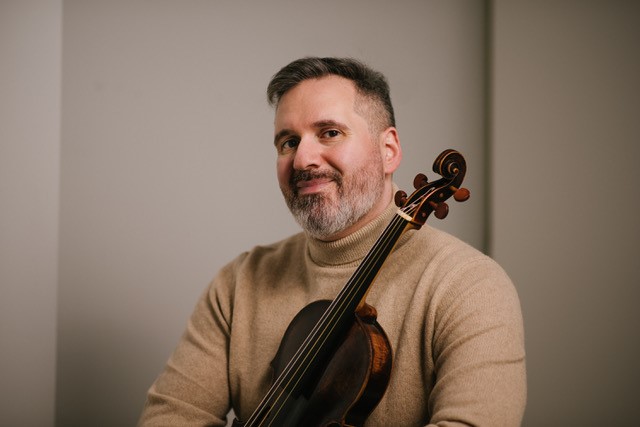
Edward Klorman is Associate Professor and Canada Research Chair at the Department of Music Research, McGill University having previously taught at The Juilliard School and Queens C...
View profile >Keep up with the latest from Cambridge University Press on our social media accounts.



Latest Comments
Have your say!