
Products and services

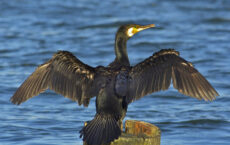
When we think about prejudice, we think about people. People who are prejudiced against us; people whom we may be prejudiced against (whether we admit it or not). Yet not all prejudice is directed against people. Sometimes it can be directed against an animal. Or a bird. The cormorant is one such bird. It has […]
Read More
Daoist philosopher Zhuangzi once wondered if he might be a dream that a butterfly was having. A couple of millennia later, a biologist asks a similar question in Greg Bear’s novel Vitals (2002). “Larger and older minds live inside our bodies and all around us,” Bear’s scientist declares. “Perhaps we are only a dream the […]
Read More
Thirty years ago, I planned to write a book about Elizabeth Bowen, the Anglo-Irish novelist and short story writer. With a monograph in mind, I assembled Bowen’s essays and reviews scattered across various magazines and newspapers. What started as a few items retrieved from obscurity quickly snowballed into hundreds. I began visiting archives and fitting […]
Read More
It’s another dull, grey Tuesday morning. A colleague asks you how you are. Reflecting on the seemingly endless flow of tedious meetings in the day ahead, you reply that you’re “losing the will the live”. Your co-worker chuckles and walks back to wherever they need to be. I think most people understand the context of […]
Read More
In the classic film Casablanca, the Frenchwoman Yvonne, one of the regulars of Rick’s Café, joins the other refugees assembled there to sing the Marseillaise, boldly defying the Nazi officers present. She concludes her national anthem with a shouted “Vive la France!”, tears streaming down her face. We now know that the tears were not […]
Read More
Nostalgia has become a defining emotion of twenty-first-century Western culture. From endless film franchise reboots, to the Eras Tour, to the 1980s world of Stranger Things, our media seems perpetually transfixed by the past. Nostalgia—the bittersweet yearning for an absent home—has a remarkable power to enchant us, for good or ill. It can, in the […]
Read More
“Your cattle are public enemies now,” a state veterinary scientist tells Homer Bannon, an aging cattle rancher in Larry McMurtry’s 1961 novel Horsemen, Pass By, shortly before he compels Homer to drive his livestock into a large pit to be slaughtered and buried. This haunting scene in the novel (and in its film adaptation, Hud) […]
Read More
On Friday 9 June 1458, a pirate ship swerved and fired on two Bristolian trading boats as they passed the coast of Malta, on their return from the Levant. I found the event transcribed in a legal document. I could see the inky vessels with their lost signatures, the Katherine Sturmy and the Marie, trapped […]
Read MoreKeep up with the latest from Cambridge University Press on our social media accounts.