
Products and services


A society’s true measure of success is its capacity to deal with failure. In the mid–seventeenth century, this is just what we can observe in the city of Amsterdam, at the time one of the world’s prime commercial hubs. In the early modern Dutch Republic, a set of legal, cultural, and institutional innovations resulted in […]
Read More
Among the many different ways that humans interact with the ocean, submarine operations are instrumental in furthering those activities. Submarines are deployed in scientific exploration, seabed exploitation, the development of critical infrastructure and criminal activities. Above all, submarines hold military and strategic significance for States and their navies. Yet the regulation of submarines under international […]
Read More
How do we prevent genocide? The modern world has been plagued with this ‘crimes of crimes’, that has claimed many millions of lives over the past century or more. In 1948, in the aftermath of the Holocaust, the international community committed to preventing genocide through the United Nations Convention on the Prevention and Punishment of […]
Read More
While infrastructure development has long been associated with social progress, economic development and advanced living standards, it has likewise given rise to challenges including disruption, environmental harm and inequity. On the one hand, infrastructure development has been described as presenting both ‘immaterial ideals and material notions necessary to change the world’.[1] It speaks to both […]
Read More
Calls to establish international administrations have been made in numerous contemporary contexts, including Afghanistan, the Congo, Haiti, Kosovo, Iraq, Liberia, Libya, Palestine, South Sudan, Syria, Timor-Leste or Yemen. More recently, they have been made in the context of the war in the Middle East (to “administer” Palestine) or in the Ukraine. Some of these projects […]
Read More
This year marks the 250th anniversary of the American Declaration of Independence. Few documents in world history have been as extensively studied and analyzed, and it is fair to ask if there is anything new to be said about the Declaration. There certainly is. Much of the scholarly and popular writing on the Declaration has […]
Read More
In March 1979, the government of dictator General Jorge Rafael Videla, submitted a law proposal to overhaul Argentina’s revenue-sharing regime. Following the rules of this regime, the bill was duly presented to the Legislative Advisory Commission, a legislative body created by the dictatorship and staffed by military officers. The provincial governors, who were also appointed […]
Read More
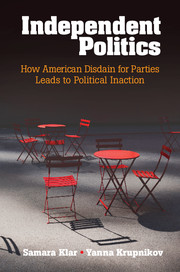
American politics is characterized by extreme partisanship and government stalemate. The two dominant political parties marshal reliably partisan interest groups with the objective of controlling both houses of Congress and the Presidency. Embracing the simplistic idea that the majority rules, the prevailing party then governs with little regard for the interests of the minority party […]
Read MoreKeep up with the latest from Cambridge University Press on our social media accounts.