

Products and services


When people imagine a courtroom, they tend to picture a judge in robes, wooden benches, towering shelves of paper files and a sense of solemn formality. But that world is already dissolving. Across the globe, justice systems are quietly undergoing one of the most profound transformations in their history — a shift from paper, people and physical presence to platforms, pixels and AI.
The shift is driven by necessity as much as innovation. Caseloads are rising, budgets are shrinking, and society expects services to be as fast as their smartphones. Courts that once struggled with backlogs now turn to AI tools that can read thousands of pages in minutes. Virtual hearings save time, travel, and cost. Digital evidence systems handle everything from CCTV footage to blockchain records. The promise is attractive: justice made faster, fairer, more consistent, and more accessible than ever before. However, technology is not just helping courts run more efficiently—it is reshaping how justice feels, how it is accessed, and how it is understood. The transformation is raising questions far more urgent and fascinating than most people realize.
Take the digital divide as an example. Online courts are convenient for some, but alienating for others. A rural resident without stable internet, an elderly person unfamiliar with apps, or someone with disabilities facing a poorly designed platform may find the digital shift more exclusive than empowering. True “equal access” remains fragile when technology itself becomes the gatekeeper.
Then there’s the paradox of transparency. Digital systems make court decisions easy to find and study—but they also expose sensitive data and amplify public pressure in unprecedented ways. When every ruling is instantly searchable and shareable, judges face scrutiny not just from peers, but from social media, interest groups, and political actors. What begins as openness can distort the very judicial independence it aims to protect.
And then there is the most profound question: who really decides?
AI already helps judges with research, identifies patterns, and even drafts judgments. It can suggest which cases are similar, which arguments appear stronger, and which precedents matter most. It helps courts move faster and stay consistent. But we must ask: if algorithms guide too much of the process, do judges remain independent decision-makers, or do they become supervisors of machine-generated logic? When a judge follows or overrules an AI’s recommendation, is the court still truly human?
Cross-border justice faces dilemmas of its own. Technology makes it theoretically easy to bring parties together from different countries. But sovereignty, incompatible laws, and strict data-transfer rules mean digital courts cannot simply operate “globally.” A virtual hearing may be global in appearance, but it’s anchored in a web of national politics and power defined by borders. The tools that connect us also highlight the deep-seated national divisions they cannot override.
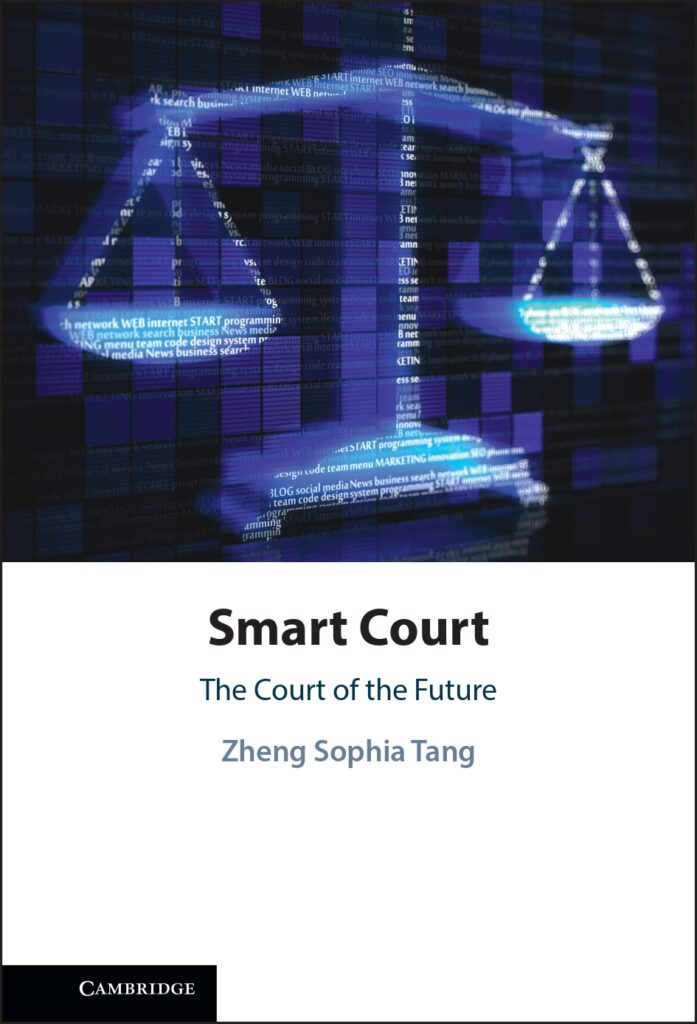
These themes—efficiency, access, AI, sovereignty, transparency, independence—form the heart of the debate about where technology will take justice next. And they are precisely what Smart Court: The Court of the Future examines in depth. The book examines the changes underway, and explores how technology will redefine the values at the heart of justice: fairness, independence, and human dignity.
The courts of tomorrow will not look like the courts of today. Whether that future is empowering or alarming depends on how societies respond to the challenges ahead. The debate is not about machines replacing judges; it is about how technology will reshape the values that define justice itself. For anyone interested in where law, technology, and society intersect, the transformation inside our courts may be the most critical revolution of the digital age. It’s a story still being written, and it falls to the legal community to fill the next chapter.

Zheng Sophia Tang is Professor at Wuhan University Institute of International Law. She is a barrister, mediator, arbitrator, and Editor-in-Chief of the Chinese Journal of Transnati...
View profile >Keep up with the latest from Cambridge University Press on our social media accounts.




Latest Comments
Have your say!