How to transition to a zero carbon economy in a timely and fair fashion is one of the greatest challenges the world faces. Bill Gates spelt out his vision of how to do it in his recent book How to Avoid a Climate Disaster. The answer for him is technological innovation and getting ideas to […]
Read MoreDealing with a warming world and providing enough food for a growing planet (and doing so in a sustainable fashion that is adapted to changing climate) is one of the key challenges humanity must face in coming decades. But what if some of the greatest resources for helping us deal with global warming already existed […]
Read MoreThere is overwhelming evidence that climate interactions among ocean basins provide key contributions to global climate variability in a wide range of time scales. For example, it is accepted that El Niño/Southern Oscillation (ENSO) events in the tropical Pacific Ocean have remote affects around the world, both on continents and on other ocean basins. This […]
Read MoreCombating climate change and transitioning to fossil-free energy systems are two central planetary challenges humanity faces today Combating climate change and transitioning to fossil-free energy systems are two central planetary challenges humanity faces today. The two challenges strongly overlap, both in their substance and in the political choices we have to address them. As a […]
Read MoreThe effects of climate change on ecological processes and biodiversity is globally recognized. The main causes of this change are the anthropogenic gas emissions. If the current level of emission continues, several studies predict an increase of global temperatures from 3.7 to 4.8°C by 2100. Global mean temperature rose about 0.8 °C between 1880-2012, resulting […]
Read MoreIt’s been hard to make sense of COVID-19. At least, I have found it hard. So many deaths. So many changes to everyday life. So much political strangeness. So much uncertainty about the future. This blog post was originally posted on “The Better Food Journey” and is cross-posted with permission. The blog builds on the […]
Read MoreCOVID-19 has confirmed some long-understood yet long-ignored truths about the economics of information, and has also highlighted deeply disturbing fractures in today’s information ecology COVID-19 has delivered an extraordinary shock to humanity. Advocates and researchers working on sustainability have rightly seized on the similarly extraordinary opportunity that the (eventual) recovery from this pandemic offers: to […]
Read More“Climate extremes cost human lives. They do harm to the economy. Examples are the Elbe flood in 2002, the European heatwave in 2003 or hurricane Katrina in 2005. The big question is how global climate change influences climate extremes. This plagues decision-makers as well as climate researchers.” This is how the preface starts. How to […]
Read MoreHow to transition to a zero carbon economy in a timely and fair fashion is one of the greatest challenges the world faces. Bill Gates spelt out his vision of how to do it in his recent book How to Avoid a Climate Disaster. The answer for him is technological innovation and getting ideas to […]
Read MoreDealing with a warming world and providing enough food for a growing planet (and doing so in a sustainable fashion that is adapted to changing climate) is one of the key challenges humanity must face in coming decades. But what if some of the greatest resources for helping us deal with global warming already existed […]
Read MoreThere is overwhelming evidence that climate interactions among ocean basins provide key contributions to global climate variability in a wide range of time scales. For example, it is accepted that El Niño/Southern Oscillation (ENSO) events in the tropical Pacific Ocean have remote affects around the world, both on continents and on other ocean basins. This […]
Read MoreCombating climate change and transitioning to fossil-free energy systems are two central planetary challenges humanity faces today Combating climate change and transitioning to fossil-free energy systems are two central planetary challenges humanity faces today. The two challenges strongly overlap, both in their substance and in the political choices we have to address them. As a […]
Read MoreThe effects of climate change on ecological processes and biodiversity is globally recognized. The main causes of this change are the anthropogenic gas emissions. If the current level of emission continues, several studies predict an increase of global temperatures from 3.7 to 4.8°C by 2100. Global mean temperature rose about 0.8 °C between 1880-2012, resulting […]
Read MoreIt’s been hard to make sense of COVID-19. At least, I have found it hard. So many deaths. So many changes to everyday life. So much political strangeness. So much uncertainty about the future. This blog post was originally posted on “The Better Food Journey” and is cross-posted with permission. The blog builds on the […]
Read MoreCOVID-19 has confirmed some long-understood yet long-ignored truths about the economics of information, and has also highlighted deeply disturbing fractures in today’s information ecology COVID-19 has delivered an extraordinary shock to humanity. Advocates and researchers working on sustainability have rightly seized on the similarly extraordinary opportunity that the (eventual) recovery from this pandemic offers: to […]
Read More“Climate extremes cost human lives. They do harm to the economy. Examples are the Elbe flood in 2002, the European heatwave in 2003 or hurricane Katrina in 2005. The big question is how global climate change influences climate extremes. This plagues decision-makers as well as climate researchers.” This is how the preface starts. How to […]
Read MoreKeep up with the latest from Cambridge University Press on our social media accounts.
University of California, San Diego
Wilfrid Laurier University
Kenneth S. Coles, co-author of The Atlas of Mars 2019
Bruce Rocheleau is a Professor Emeritus in the Department of Public Administration, Northern Illinois University.
Julian Cribb FRSA FTSE is an Australian author and science communicator.
Mike Berners-Lee consults, thinks, writes and researches on sustainability and responses to 21st century challenges.
Ecology, Evolution and Behaviour of Wild Cattle
Roger G. Barry, University of Colorado Boulder
Icebergs
Accounting for Carbon
The Crisis of Global Modernity
Of Limits and Growth
Climate Change: A Wicked Problem
Climate Change, Capitalism and Corporations
Arab Water Security
Energy Technology Innovation
The High-Mountain Cryosphere
Fred D. Singer Radford University, Virginia
Matt lloyd
Geomorphology in the Anthropocene
Climate Change in Practice
Toxic Loopholes: Failures and Future Prospects for Environmental Law
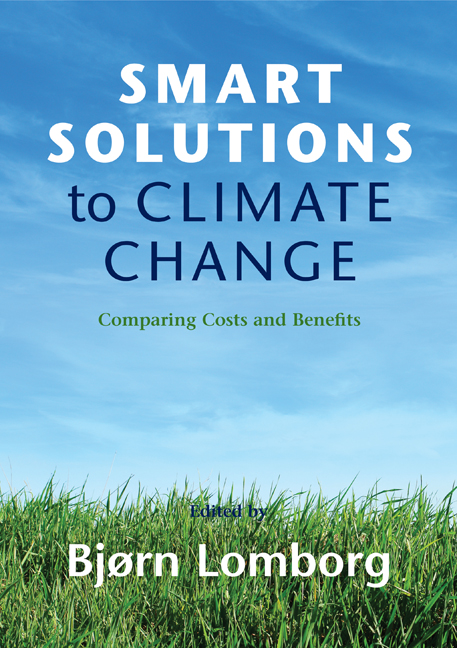
Smart Solutions to Climate Change
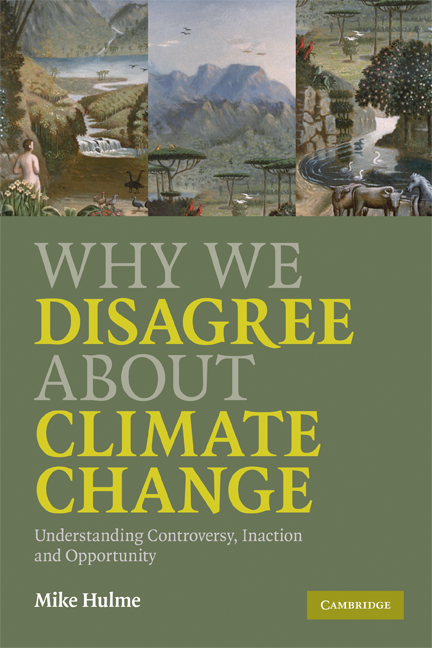
Why We Disagree About Climate Change
The Ecology of Oil
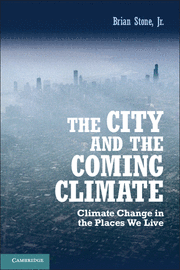
The City and the Coming Climate
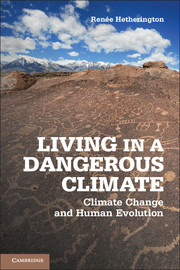
Living in Dangerous Climate
Eruptions that Shook the World
Climate Change and the Course of Global History
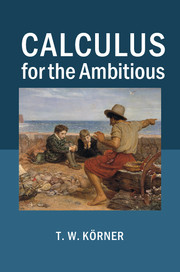
Calculus for the Ambitious
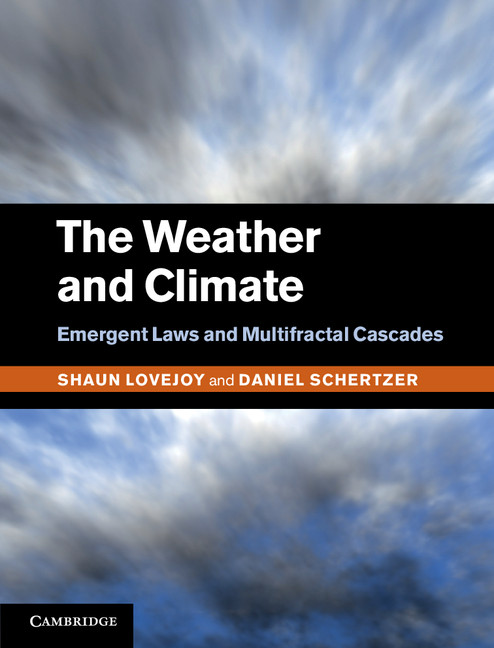
The Weather and Climate: Emergent Laws and Multifractal Cascades
Antarctica - Global Science from a Frozen Continent
To receive updates on Climate Change news from Cambridge University Press and Fifteen Eighty Four, please join our email list below. We will not disclose your email address to any third party