

Products and services

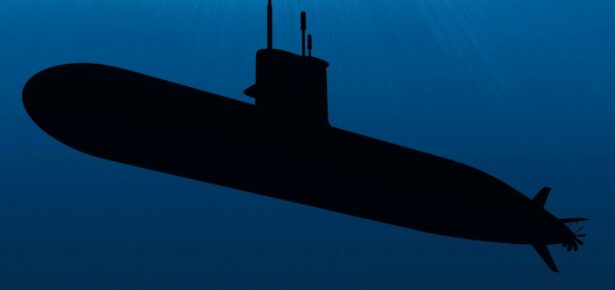
Among the many different ways that humans interact with the ocean, submarine operations are instrumental in furthering those activities. Submarines are deployed in scientific exploration, seabed exploitation, the development of critical infrastructure and criminal activities. Above all, submarines hold military and strategic significance for States and their navies. Yet the regulation of submarines under international law has rarely been examined. While submarines might operate as evasive objects in the ocean, they cannot and should not elude the reach of international law.
Submarines are foremost known as warships. Currently, Australia, South Korea and Brazil are looking to enhance their navies through the addition of nuclear-powered submarines. The legal status of a submarine as a warship and, potentially, its nuclear power or nuclear weaponry have implications for the application of different international laws. Yet the various exemptions and immunities that apply to warships do not preclude the impact of international law on warship operations. Furthermore, not every submarine is in fact a warship. These vessels may be bound by additional or different rules drawn from a variety of sources of international law.
While the UN Convention on the Law of the Sea creates a detailed framework for regulating ocean use, only one of its 300+ provisions explicitly refers to submarines. The Convention obliges submarines to surface when they are traversing the territorial sea of a coastal state. This rule evolved from laws of neutrality in place during World War I and was a critical element in decisions about contemporary rules on warship navigation in maritime areas closest to a State’s shores. The importance of the rule was apparent in the 1981 “Whiskey on the rocks” incident when a Soviet submarine was grounded on the Swedish coast. Sweden’s response allowing for the use of low-power depth charges remains an important legal benchmark for permissible coastal state responses to unlawful submarine intrusions.
International law impacts submarines across the range of their activities. Transnational criminal law and laws on the use of force are essential in assessing State efforts to suppress and prevent so-called narcosubs, which are increasingly used to further international drug trafficking. The deployment of underwater autonomous vehicles for intelligence gathering and scientific research re-enlivens longstanding debates on permissible activities in another State’s exclusive economic zone. The implosion of the Titan submersible in 2023 and tragic instances of submarine accidents causing all crew to be lost at sea demand closer scrutiny of rules on navigational safety, search and rescue and the legal status of wrecks at sea. The March 2026 sinking of the Iranian Navy frigate IRIS Dena by a US submarine, USS Charlotte, highlights how rules on targeting and the duty to rescue under international humanitarian law must be brought to bear in times of armed conflict.
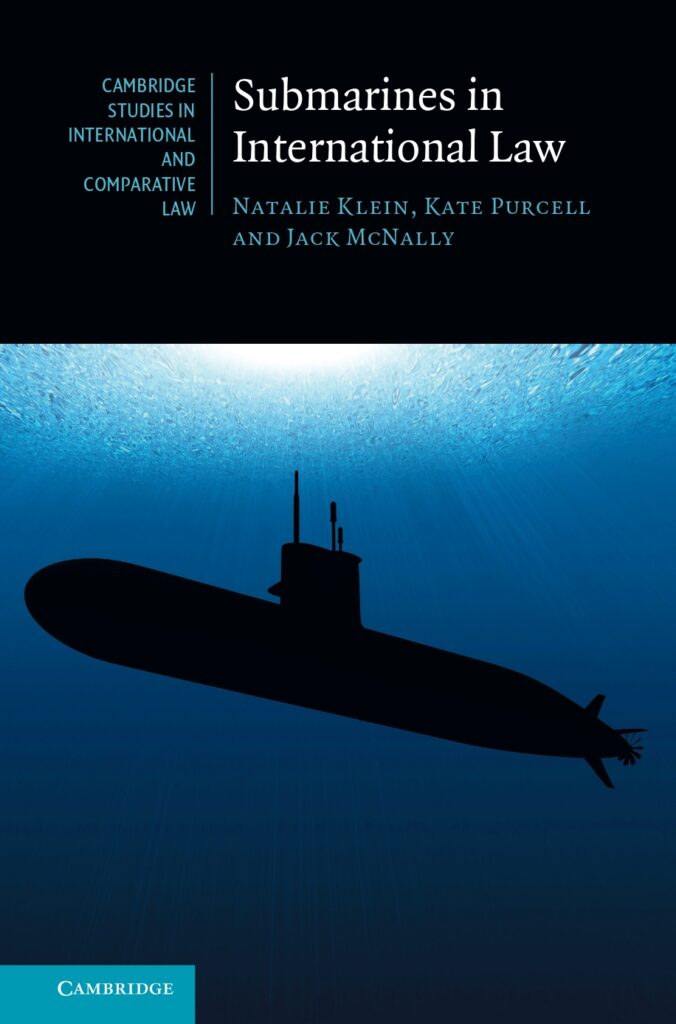
International law must occupy a place of importance in State decision-making about submarines rather than being obscured in the depths of ocean governance. Our new book, Submarines in International Law, provides the first in-depth treatment of this subject, examining both the legal history of submarines and contemporary laws regulating the many diverse submarine operations.

Dr. Natalie Klein is a Professor at University of New South Wales, Sydney's Faculty of Law & Justice, Australia. Australia has nominated Professor Klein as a conciliator under ...
View profile >
Dr. Kate Purcell is a Research Fellow at University of New South Wales, Sydney's Faculty of Law and Justice, Australia. Her previous publications include Geographical Change and th...
View profile >
Jack McNally is a Research Fellow at University of New South Wales, Sydney's Faculty of Law and Justice, Australia and a practising international lawyer. His practice and research ...
View profile >Keep up with the latest from Cambridge University Press on our social media accounts.




Latest Comments
Have your say!