

Products and services


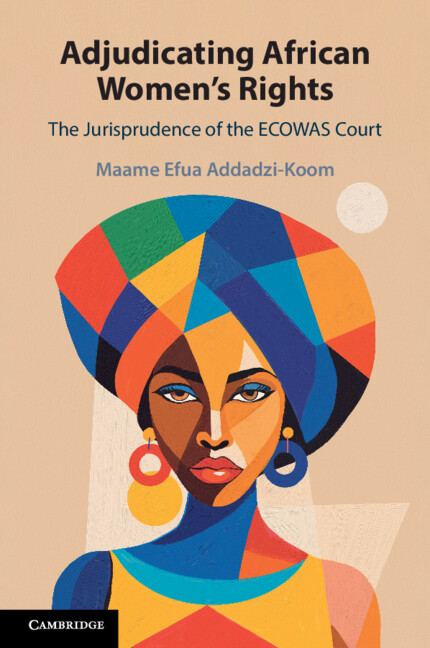
The Economic Community of West African States (ECOWAS) Community Court of Justice (ECOWAS Court)’s transformation from an economic tribunal into one of Africa’s leading regional human rights courts is nothing short of remarkable. Since 2005, when the ECOWAS Court was given a human rights mandate, nearly 90% of the cases it handles have been human rights-related. This transformative shift has made the Court an accessible forum for advancing women’s rights, with landmark decisions that have challenged discrimination and violence against women by holding states accountable for violations of women’s rights. As the Court’s women’s rights jurisprudence continues to develop, it offers valuable lessons about the potential of regional justice to improve the lives of women across West Africa and beyond. This potential is why the ECOWAS Court matters for African women’s rights and why I document its emerging women’s rights jurisprudence in Adjudicating African Women’s Rights.
The book, Adjudicating African Women’s Rights: The Jurisprudence of the ECOWAS Court, provides in-depth qualitative and quantitative insights into the women’s rights landscape in the ECOWAS region, shaped by the Court’s decisions from 2017, when it first pronounced on the African women’s bill of rights, the Maputo Protocol, to 2025. The burgeoning women’s rights jurisprudence of the ECOWAS Court is also diverse, covering multiple intersectional identities of women and girls, including victims of domestic violence, female sexual and rape victims in peace and conflict times, pregnant schoolgirls, widows, women in protest, women of faith, women accused of crimes, women in public or civil service, women in customary marriages, women of foreign or non-African descent, women subjected to female genital mutilation (FGM), and deceased women.
The book’s jurisprudential analysis relies on two frameworks: a normative one and an analytical one. I use the Maputo Protocol as the normative framework to examine how the ECOWAS Court has interpreted and applied its provisions in cases related to women’s rights. This is important because the Maputo Protocol is a specialised treaty designed specifically for the unique needs of African women. As a result, it is reasonable to expect that a regional court handling women’s rights cases would heavily rely on it to support its rulings. The analytical framework is based on the due diligence principle, which I explore by examining whether the ECOWAS Court explicitly or implicitly incorporated it in determining state responsibility for violations of women’s rights. Although the principle is not explicitly mentioned in the Protocol, it acknowledges the principle through its language, which implies obligations on states to prevent and protect women from such violations.
Through the lens of these two frameworks, I examine the selected cases to elicit the ECOWAS Court’s jurisprudence on women’s rights. I also explore the gaps within this jurisprudence and how the Court’s decisions influence gender equality efforts in West Africa and across the continent. The 20 cases discussed reflect real experiences of African women and demonstrate how the law interacts with their rights and how the Court’s decisions either protect or advance those rights. One key insight from the book, valuable to potential litigants and legal advocates, is that public interest litigation, particularly in cases of gender-based discrimination and violence, is a reliable route for securing systemic remedies from the ECOWAS Court, which has historically been cautious about granting such remedies. I believe that, if implemented effectively, the pursuit of strategic public interest litigation, together with the other recommendations in this book, will further enhance the Court’s already significant influence, strengthening its role across West Africa and beyond and continuing to empower women.

Maame Efua Addadzi-Koom is a Senior Lecturer of Law at Kwame Nkrumah University of Science and Technology (KNUST), Ghana where she also serves as the Vice Dean of the Faculty of La...
View profile >Keep up with the latest from Cambridge University Press on our social media accounts.




Latest Comments
Have your say!