

Products and services

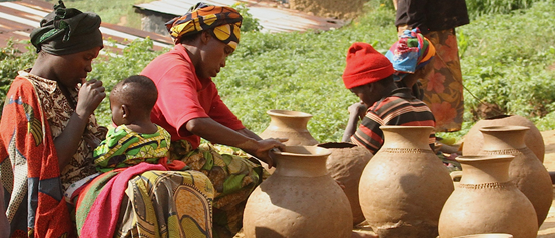
How does law – and, in particular, global law – structure the social space within which we live our lives? My new book, Twa in Rwanda: Situating Global Discourses of Indigeneity, Conservationism and Development in Daily Life, shifts focus from the top-down framing of global law to how legal power is enacted in everyday practices of living and governing.
The book explores the regulatory power of global discourses – of indigeneity, of development, of conservation – by focusing on a single group within one country: the Twa of Rwanda. By identifying these discourses as forms of jurisdictional orderings, it examines how they structure the social context within which Twa can negotiate their identity and imagine their future.
I demonstrate across the main body of the book how the three global discourses of indigeneity, development and conservation constitute the Twa as indigenous peoples, as development actors, or as poachers, thereby transforming them into subjects of global law. For example, when framed as global development actors, Twa are subjected to the moral imperative of progress (reshaped in the language of Rwandan development as acagiro or dignity) that is at the core of the global development discourse. A lack of progress, or poverty, can then be attributed to personal failings rather than structural neglect.
The Twa are an ethnic group spanning Great Lakes region in Africa and are one of the three communities that make up Rwanda’s population: Batwa, Batutsi and Bahutu. Twa are commonly identified as a forest indigenous people and as victims of deforestation and development processes, as well as of government policies on national unity. Based on four years of empirical data collection across Rwanda, I tell a different story, one that focuses on the voices of Twa themselves and their hopes for the future.
I detail how Rwandan Twa use global discourses and state policies to demand inclusion and material progress. For example, how they draw on the development rhetoric of positive thinking to position themselves as good development subjects (or good Rwandans), and thus as deserving of equal care and inclusion; at the same time, they push back against the suggestion that personal responsibility and hard work alone can transform their situation.
Importantly in this story, the Twa do not articulate their desire for inclusion as a political claim based on their ethnic distinctness or indigeneity but instead demand to be seen – by the state, by local authorities and by fellow citizens – as Rwandans rather than as Twa. In place of a return to an indigenous way of life, they want land. While this choice is conditioned in part by a post-genocide legal framework that prohibits the recognition of ethnic difference, including indigeneity, the data suggests that Twa are actively choosing to embrace the state’s message of self-improvement, progress and of Rwandan-ness.
The Twa are demanding equal care from the state and are negotiating their place in society through everyday participation in the community, in church and in government programmes. In recent years, counter-hegemonic studies have highlighted the dangers of de-politicising resistance, of being deaf to alternative voices and the knowledge and legal forms that they draw upon. However, there is also a risk that by focusing heavily on resistance, we overlook agency that may be co-operative or claims for equality that are based not on difference but on commonality.
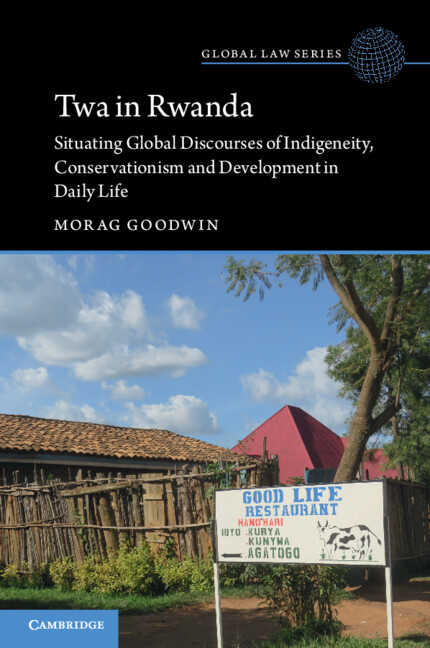

Morag Goodwin is a professor at Tilburg University, the Netherlands, and holds the chair in Global Law and Development. She was PI of a Dutch Research Council (NWO)-funded project ...
View profile >Keep up with the latest from Cambridge University Press on our social media accounts.




Latest Comments
Have your say!