

Products and services

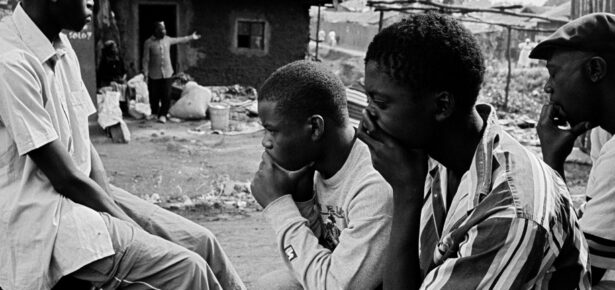
In July 2023, President Ruto stood in a marquee in Kilifi County and proclaimed that the Pemba people officially constituted an ethnic community of Kenya. The crowd was elated. Recognition as an ethnic group, it turns out, is understood by presidents and communities alike as a prerequisite for citizenship. His predecessor Uhuru Kenyatta did the same for the Makonde and Asian communities, bestowing on them codes as the “43rd” and “44th” “tribes of Kenya”.
But here is what my research revealed: there is no authoritative list of Kenya’s ethnic groups. The census has used a different list every decade. None of its lists are the same as that used by the National Registration Bureau for ID cards. Various other government agencies also use lists, and they all contradict each other. Furthermore, no law or regulation defines what it actually means to “have a code.” The famous “42 tribes” is not a settled account of the Kenyan nation. In fact, it never has been. So why does it persist? And what are these “codes” doing?
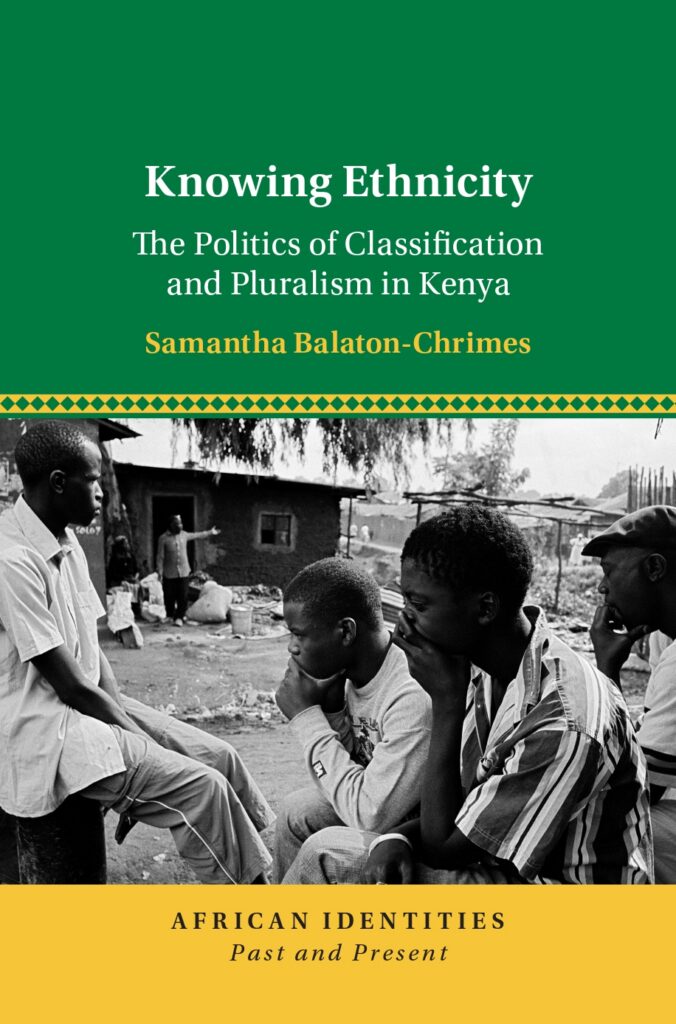
This is the puzzle at the heart of my new book, Knowing Ethnicity. There is a vast literature on ethnic politics in Kenya and across the region, yet almost nobody has asked the prior question: how does the state actually know about ethnicity? What lists exist, who made them, on what basis, and what do they do?
When I started pulling at this thread, I found the gaps between assumption and reality to be opaque, but consequential. They are the product of what I call in the book cultivated vagueness, which is a widespread and purposeful, if often unacknowledged, aversion to resolving ambiguities around who constitutes “Kenya’s ethnic groups”. Lists of ethnic categories are kept fluid, inconsistent and opaque in their authorship and their effects. This is not a failure of state efforts at legibility. It is rather, in important ways, how the state – and citizens – manage the volatile politics of ethnic recognition. It facilitates political manipulation of ethnic identities in predictably problematic ways, such as electoral manipulations, but also in ways we should celebrate, such as inclusion of minorities.
These findings have implications for several scholarly conversations. For those who write about ethnicity in Kenya, whether through positivist social science or more critical frameworks, it calls for real caution. To invoke “the 42 tribes” as if it was undisputed fact is to reproduce a politics that amplifies fixity and forecloses more dynamic understandings of ethnic identification with constructive political potentials. This is an especially potent risk in studies of electoral politics, where it is far too common to take for granted who is who and to impute fixed interests to fixed groups. My take on ethnicity in this book offers a different path for interpreting ethnic politics, one that leans into pluralism, not division.
For scholars of postcolonial governmentality and epistemology, the idea of cultivated vagueness offers something new, too. It is neither an instance of legibility, nor a failure of it, but a different way of practising the arts of government altogether. This mode adds to existing repertoires of not knowing, often theorised as ignorance, uncertainty, or ambiguity in the field of agnotology. Unlike many of these, though, it does not buy into “epistemophilia,” assuming more and better knowledge would be good.
And then there is the warning that reaches beyond Kenya, and beyond theory. The vagueness that has characterised ethnic knowledge infrastructures is now under direct pressure from digitisation. Digital ID systems and the biometric turn are doing something that decades of colonial and postcolonial bureaucracy did not fully achieve: locking categories in place. When ethnic classification is encoded into a digital system, the political flexibility that vagueness once allowed disappears. What was fluid becomes a data field. What was contested becomes a dropdown menu. This is not a hypothetical risk. It is happening now, across Africa and beyond, as governments and international actors build digital civil registration and ID systems at speed. The case for vigilance about what ethnic knowledge is and does, and what it might do, has never been more urgent.

Samantha Balaton-Chrimes is an associate professor in politics at Deakin University. She is a political sociologist with sixteen years' experience conducting research on ethnicity,...
View profile >Keep up with the latest from Cambridge University Press on our social media accounts.




Latest Comments
Have your say!