

Products and services

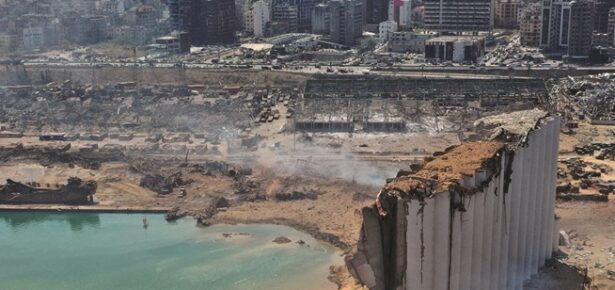
For several decades ‘failed‘ or ‘fragile’ states and their ‘collapse’ have concerned – if not obsessed – governments, intergovernmental organizations, internationally active NGOs, the media, the broader public and academic writing. Often poorly defined, the label has been stuck on a growing number of entities that did not or no longer correspond to dominant definitions of the state that tend to focus on the ultimate control of the means of physical or symbolic coercion and the capacity to implement public policies. The shaky tent thus erected was broad enough to accommodate anything from ‘civil wars’ and other forms of endemic physical violence to economic mismanagement, corruption, and exclusion mechanisms that impoverished or otherwise marginalized large parts of the population. Unsurprisingly, attempts to illustrate such failure invoked examples as different as those of Somalia in the early 1990s and Venezuela under Maduro.
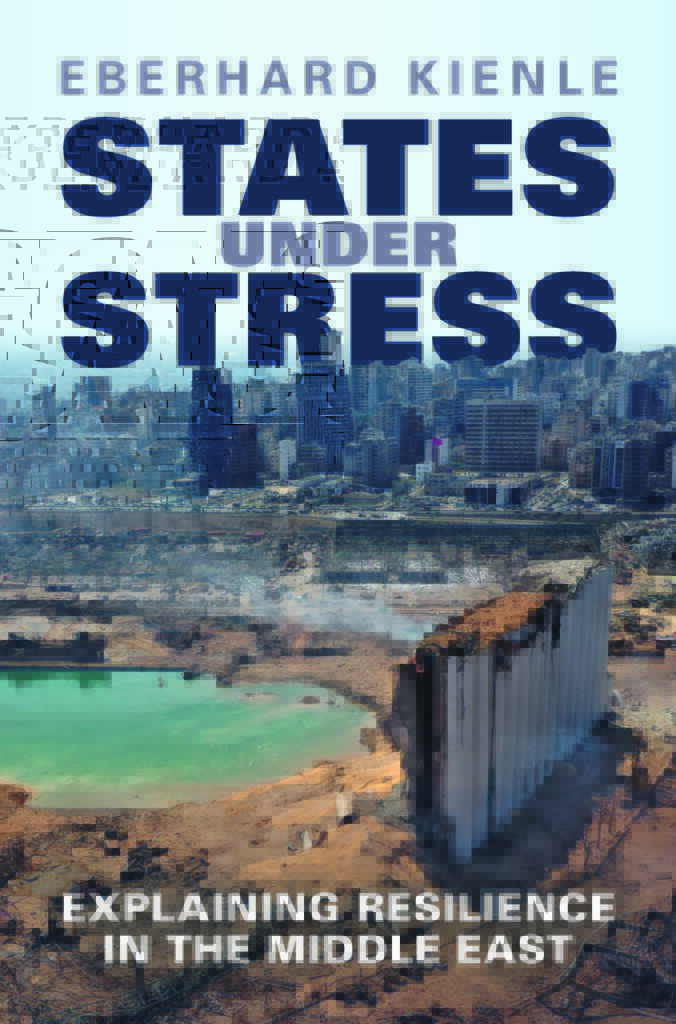
Building on conceptual critiques of state failure and their implications for historical narratives as well as policy recommendations, the volume shifts the attention from what may have been missing or disappeared to what has been there and continued to subsist. It systematically analyses the trajectories of Lebanon, Syria, and Iraq – three internationally recognized states – that from the moment of independence faced endemic as well as acute challenges to their survival as political entities. At moments of extreme stress, their populations were torn apart by violent conflicts while their rulers, if not overthrown, lost the monopoly over the physical and symbolic means of coercion alongside the capacity to implement public policies. Nonetheless, neither the ‘civil war’ that engulfed Lebanon in the 1970s and 80s, nor the armed conflicts that devastated Syria after the repression of the peaceful protests in 2011, nor the 1991 and 2003 US-led attacks on Iraq and subsequent hostilities led to the lasting disintegration of these entities or their (partial) absorption by neighbours. In some instances, institutions identifiable with the state continued to exist and operate while the existing states quietly and inconspicuously remained points of reference for their inhabitants and even for the political projects of contending forces.
The volume offers a detailed explanation for the continuous, if precarious, survival of these entities, emphasizing the importance of formal international recognition and its material corollaries, other resources available to those speaking in the name of the state, institutional arrangements, and societal ties that reduce the effects of rifts among ‘we-groups’, be they built on religious, linguistic or other criteria. Far from specific features of Lebanon, Syria, and Iraq, these factors may well explain the survival of other internationally recognized states facing protracted or persistent or intense stress.
In the process, the volume pinpoints the dangers of assimilating internationally recognized states to substantive definitions – or ideal-types – of the state based on supposedly measurable features such as the monopoly over the means of coercion or the capacity to implement public policies. Rather they should be seen as simple claims to statehood, endorsed or even glorified by other claimants, that only in some cases meet such substantive definitions. Mere homonyms, internationally recognized states come, like the passengers on Noah’s Ark, in all shapes and sizes.

Eberhard Kienle is Professor of Politics at the Centre National de la Recherche Scientifique (CNRS) and Sciences Po Paris. His research focuses on the disintegration of states in t...
View profile >Keep up with the latest from Cambridge University Press on our social media accounts.



Latest Comments
Have your say!