

Products and services


Every policymaker knows the dilemma: should governments trust people to do the right thing, or make sure they do it? The safer option has usually been enforcement. Write the rules, monitor behavior, punish violations. Citizens obey because they have to. Yet most regulators also know something they rarely act on: people tend to follow rules more faithfully when they choose to, not when they are forced.
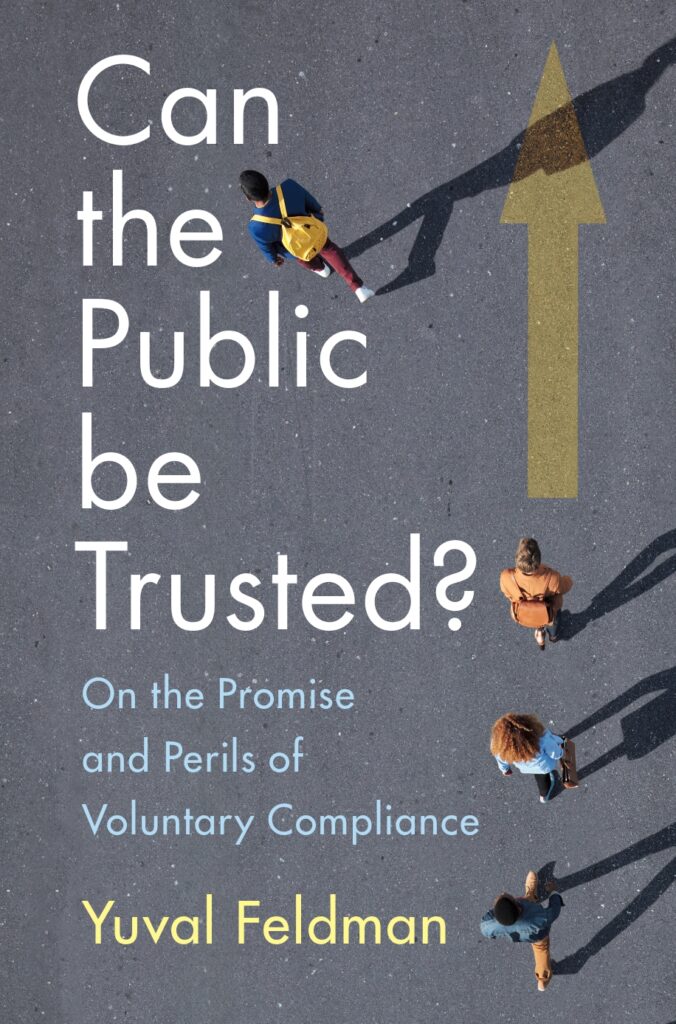
This question lies at the center of my forthcoming book, Can the Public Be Trusted: The Promise and Perils of Voluntary Compliance (Cambridge University Press, 2025). The book explores a deep paradox. Everyone agrees that voluntary compliance produces better, more lasting outcomes, but very few governments are willing to rely on it.
The COVID-19 pandemic made this tension visible. When schools tried to prevent outbreaks, they had two options. They could install temperature scanners at every entrance, guaranteeing control but at high cost and with little trust. Or they could ask parents to confirm each morning that their children were fever-free, saving money and encouraging responsibility but depending on honesty. That small choice captured a much bigger question: when should governments trust the public?
This same dilemma plays out across almost every area of regulation. Environmental agencies must decide whether to rely on companies’ self-reporting or constant inspection. Tax authorities debate how much they can trust voluntary declarations. Data privacy regulators wonder whether transparency and education can replace constant surveillance. Even in workplace safety, consumer protection, and contract enforcement, the line between trusting and controlling remains blurred. The question of how much trust a government can afford is not a narrow administrative concern; it goes to the heart of modern governance.
The book brings together insights from law, psychology, public policy, philosophy, and political science to unpack this question. It draws on decades of research in behavioral economics, social norms, and behavioral ethics, showing how trust, fairness, and legitimacy shape compliance more powerfully than fear or incentives alone. Studies of institutional design reveal that systems which rely only on punishment may secure obedience, but they also risk eroding the very social capital that makes democratic cooperation possible. Psychological research adds that external monitoring can “crowd out” people’s internal motivations by signaling distrust. Philosophical and political theories of legitimacy show that citizens are more likely to cooperate when they see rules as fair and participatory rather than imposed. By connecting these literatures, the book aims to build a broader understanding of how institutions can sustain cooperation without constant coercion.
Voluntary compliance is not about leniency or idealism. It is about understanding what motivates people to follow rules. Coercion can produce quick results, but they rarely last. When citizens feel constantly monitored, they start seeing compliance as a chore rather than a shared civic duty. In contrast, when they feel trusted and respected, they are more likely to internalize the norms behind the rules and act on them even when no one is watching.
Still, trust carries risks. A small minority will always exploit good faith, and regulators understandably fear being taken advantage of. My research takes those fears seriously but argues that the answer is not to abandon trust. It is to design it intelligently, adapting strategies to specific behaviors, institutions, and cultural contexts. Trust-based regulation is not a universal recipe; it works best when compliance touches on moral identity, social fairness, or civic pride—domains where people care about doing the right thing for its own sake.
New technologies may help governments navigate this balance. Data analytics and artificial intelligence could make it easier to distinguish genuine cooperation from deliberate abuse. Used wisely, such tools could support a form of “differentiated trust,” allowing regulators to give most citizens more freedom while focusing enforcement where it is truly needed. But no algorithm can replace the human foundations of trust.
The future of regulation is not about choosing between control and blind faith. It is about learning how to trust wisely, in ways that strengthen both compliance and the democratic fabric that holds societies together.
Keep up with the latest from Cambridge University Press on our social media accounts.




Latest Comments
Have your say!