

Products and services


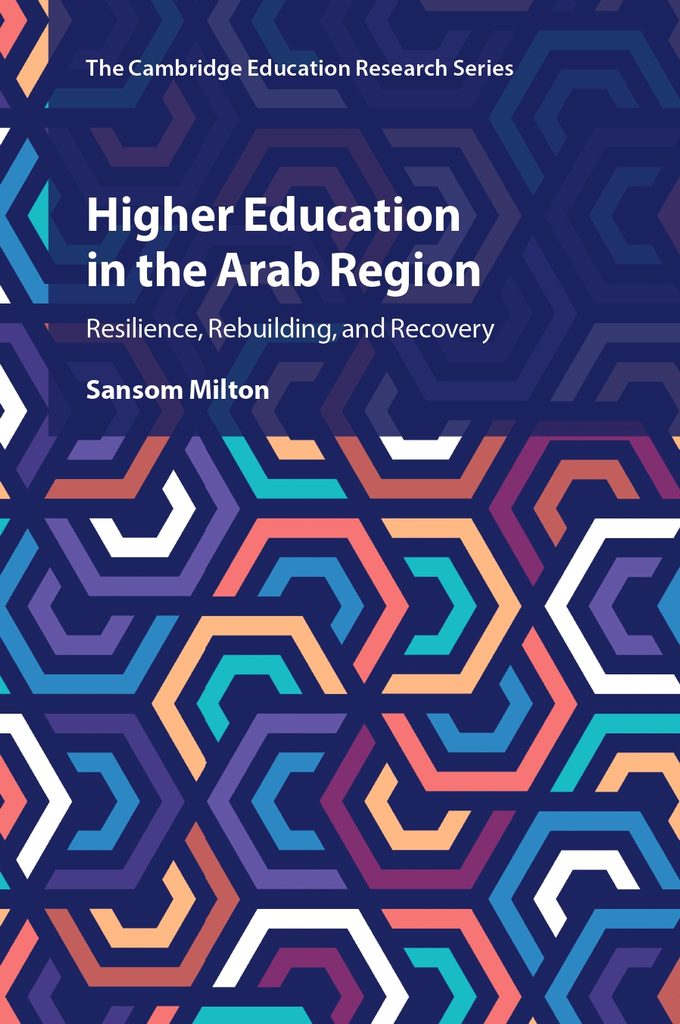
In late 2025, universities across Gaza reopened for in-person classes after two years of war that left 95% of the Strip’s higher education campuses damaged or destroyed. During the war, university leaders formed emergency committees that enabled online classes to resume in May 2024, whilst others taught in makeshift and alternative buildings. Even under the most punishing conditions of genocide and scholasticide, higher education in Gaza continued to function. It is the most dramatic example of a pattern at the heart of my new book, Higher Education in the Arab Region: Resilience, Rebuilding, and Recovery, which finds that higher education in the region has weathered the storm of the most destructive period of conflict in recent decades.
The book documents the experiences of higher education systems in contemporary Arab conflict contexts in terms of their resilience during conflict, strategic rebuilding, and mobilisation in recovery efforts. Drawing on over a decade of research, including hundreds of interviews, it examines Iraq, Libya, Syria, Yemen, and the Gaza Strip. Together these cases reveal the profound physical, human, and institutional impact of war, alongside remarkable perseverance, from Yemeni educators who continued teaching despite not receiving salaries for over five years to students at Benghazi University taking graduation photos in front of their burned-out central building.
Its central argument is that higher education has vast and often untapped potential to function as a pillar of recovery in the conflict-affected Arab states. Universities have preserved the intellectual capital of their societies and contributed directly to rebuilding, from research on sustainability solutions in Gaza to the participation of Syrian universities in reconstruction and the engagement of Iraqi academics in urban planning. Yet this potential has too often been neglected: following the 2003 invasion of Iraq, despite vast funding for post-war reconstruction, higher education received negligible support, and Syria and Yemen later witnessed similar strategic neglect. The rapid reopening of the University of Benghazi and the restoration of the Islamic University of Gaza despite the blockade show that rebuilding is possible under the right conditions, even if those conditions have rarely been present.
The spread of conflict across the region in the 2020s, in particular the war in Gaza and the US-Israeli war on Iran, has encouraged short-term crisis modes of thinking and lowered expectations for long-term recovery. In such moments, the long-term potential of higher education can easily fall out of sight. The book insists that the spread of conflict does not invalidate long-standing arguments for the role of higher education in recovery, since even in the worst period of violence and instability, universities have continued to teach, research, and serve their communities.
This makes the book timely, given the surge of armed conflict, and with it reconstruction needs, worldwide in the 2020s, which has seen the Arab region pushed into region-wide war. It closes by setting out six strategic pillars to guide more effective regional and global responses, from quality higher education and academic freedom to regionalised responses and a collective responsibility to protect and rebuild. Across a region facing the long work of rebuilding, higher education can serve as a pillar of resilience, rebuilding, and recovery, provided it is strategically supported.

Sansom Milton is Senior Research Fellow at the Center for Conflict and Humanitarian Studies in Doha. His research focuses on conflict mediation, post-conflict recovery, and higher ...
View profile >Keep up with the latest from Cambridge University Press on our social media accounts.



Latest Comments
Have your say!