

Products and services


In 2015, a group of Danish and Brazilian researchers gathered in Belo Horizonte for what we jokingly called The First International Workshop on Learning in Practice. We chose that title with a certain sense of irony. Organising an international workshop across continents, languages, academic traditions, and institutional settings seemed ambitious enough. None of us dared to hope it would become the beginning of a collaboration that would continue for more than a decade and eventually result in a book.
Yet that is exactly what happened.
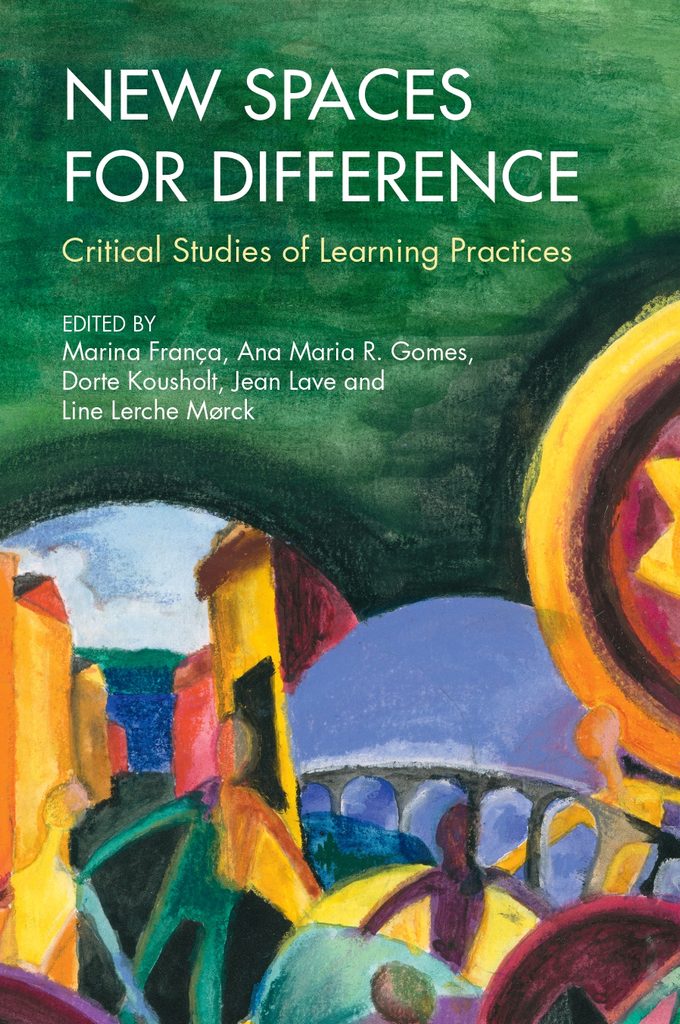
The book New spaces for difference. Critical studies of learning practices grew out of conversations that began in Belo Horizonte, continued in Copenhagen two years later, and then evolved through years of collective writing, discussion, and mutual learning. Looking back, what seems most significant is not only what we learned about learning. It is how the process itself transformed our understanding of what learning can be.
Why start from the margins?
The contributors to the book come from different disciplines, including psychology, anthropology and education, we work in different countries and research very different communities and practices: children navigating school transitions, young people in marginalized neighbourhoods, former gang members, sex workers, musicians, bakery apprentices, indigenous educators, and employees in large organisations.
At first glance, these might appear to be unrelated topics. What brought them together was a shared interest in understanding learning from the perspective of people’s everyday lives.
Too often, learning is understood primarily through formal educational institutions. Schools, universities, and training programmes become the obvious places to study learning. But what happens if we instead begin with people’s participation in everyday social practices? What becomes visible when we take seriously the experiences of people whose lives and communities are often positioned at the margins?
For us, marginality was never simply a category describing particular groups of people. It became a way of asking new questions. How do people create possibilities for participation under difficult conditions? How do differences become resources for collective action and change? What can struggles at the margins teach us about society more broadly?
Learning through difference
When the project started, we shared a common theoretical language inspired by situated learning and social practice theory. We assumed that our similarities would be the main basis for collaboration.
As the years passed, it became increasingly clear that our differences were at least as important as our common ground. Researchers from Brazil, Italy and Denmark approached familiar concepts in different ways. We worked within different intellectual traditions, different university systems, and different social and political realities. These differences sometimes felt like obstacles. Over time, however, we began to see them as opportunities.
Rather than trying to eliminate differences or arrive quickly at consensus, we learned to stay with them. Moments of confusion, disagreement, or uncertainty often turned out to be the most productive. They forced us to slow down, listen carefully, and examine assumptions that otherwise might have remained invisible. We also learned to work across different practices, timelines, tasks, and seasons, and to enrich our collaboration through these differences.
The result was not a harmonised perspective. Our collaboration developed around the idea that differences themselves can be a source of learning.
The challenge of learning together
This insight feels particularly important today.
Across many societies, public debates are marked by increasing polarisation. Differences are frequently treated as problems to be overcome, threats to be managed, or barriers to communication. Academic life is not immune to these tendencies. Researchers are often encouraged to work within established disciplinary boundaries, methodological traditions, and dominant international networks.
Our experience suggests another possibility.
Learning together does not require agreement. It does not require that differences disappear. On the contrary, learning may depend on the conditions and possibilities available to engage seriously with perspectives, experiences, and practices that challenge our own.
This does not mean that all differences are equal or that power relations disappear. Many of the chapters in the book examine inequalities, exclusions, and struggles for social justice. Learning together requires attention to precisely these conditions. Yet it also requires creating spaces where different forms of knowledge can meet without being reduced to a dominant framework or assimilated into hegemonic categories.
A book and an invitation
The book brings together twelve ethnographic studies from Brazil, Denmark, and Italy. Together, the chapters examine learning in schools, families, workplaces, communities, social movements, and urban spaces. They explore learning as participation in changing social practices rather than simply the acquisition of skills or knowledge.
But perhaps the most important message of the book lies beyond any individual chapter.
Learning is not only something that happens within established institutions. It emerges in relationships, in collective struggles, and often in unexpected encounters with difference. It is shaped through participation in everyday life and through efforts to understand perspectives that are not our own.
At a time when many global challenges demand new forms of collaboration across social, cultural, and political divides, the possibility to learn with and from one another may be more important than ever.
This book is therefore not only about learning. It is an invitation to practise learning together.
Keep up with the latest from Cambridge University Press on our social media accounts.


Latest Comments
Have your say!