

Products and services


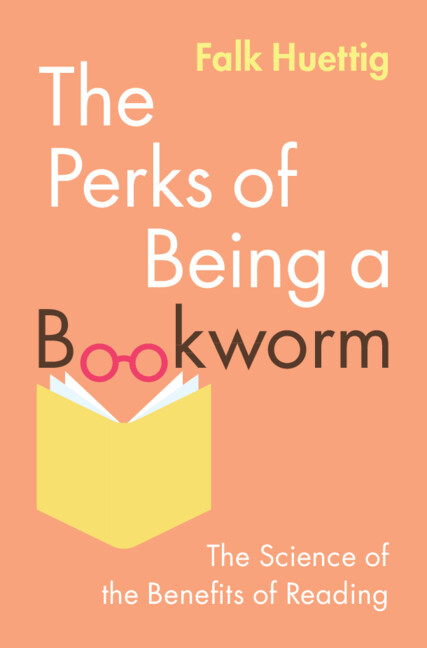
Reading is good for you. Few people would disagree. Yet when we talk about its benefit, we often think first of knowledge: the information that books make available to us. But reading does more than expand what we know. It also changes our mental skills: how we think and “see” the world. The ability to read strengthens a broad range of perceptual and cognitive abilities. Some are directly linguistic, involving how we understand and use language. Others extend far beyond language, changing perception, attention, memory, abstraction, and reasoning. In my new book, The Perks of Being a Bookworm, I describe these benefits, including several that have received relatively little attention, remain underexplored, or are not yet widely recognized.
A distinctive feature of the book is its reliance on experimental evidence, much of it drawn from carefully controlled comparisons between completely illiterate and literate individuals in India. India provides a particularly valuable setting for this research because it combines an extraordinarily rich literary tradition with the continued presence of large populations who have little opportunity to acquire literacy. India’s literary history stretches back thousands of years. Its classical Sanskrit poems and epics are among the great achievements of the ancient world and predate many canonical works of Ancient Greece and Rome. Today, Indian writers continue to make major contributions to world literature, even in English, the language introduced during British colonial rule. Salman Rushdie, Arundhati Roy, Kiran Desai, and Aravind Adiga have all won the Booker prize. At the same time, despite remarkable progress in literacy over recent decades, India remains home to hundreds of millions of people who have not learned to read and write.

It is important to emphasize that illiteracy and low literacy are nothing to be ashamed of. In most cases, the inability to read reflects socioeconomic circumstances, especially poverty, limited educational opportunities, and social exclusion, rather than any personal failing. The notion that illiteracy signals an unsuccessful life, a dysfunctional family, or some ethnic or class-based “deficiency” is a harmful myth that has often been used to marginalize people. Many people who cannot read (well) participate in sophisticated oral cultures, possess extensive knowledge, and lead rich and meaningful lives. Recognizing the cognitive benefits of reading should therefore never become a justification for stigmatizing those who have not had the opportunity to acquire it. But separating literacy from meaningful lives makes the scientific question all the more interesting: if people can lead fulfilling lives without reading, what does literacy add?
The answer is surprisingly broad. When my collaborators and I began this research more than 15 years ago, we expected reading to improve particular skills. What surprised us was the wide range of mental abilities affected by it. Reading fosters abstraction, the ability to move beyond individual experiences and recognize general principles across different situations. This mental capacity is fundamental to abstract intelligence and improves our skill to detect patterns and similarities, approach familiar problems from new perspectives, and engage in higher-level cognition. Some of these effects contribute to the generational increases in IQ scores documented by the Flynn effect in intelligence research.
Reading also enhances visual object recognition including the recognition of human faces, and strengthens visual attention. The repeated eye movements required during reading train the brain to select relevant information more efficiently. Reading thus functions like a kind of cognitive “zoom lens” that sharpens the mental spotlight of attention. The effects extend to memory. Literacy is associated with improvements in both short- and long-term memory and may make memory more resilient. There is also some evidence that regular reading could help slow aspects of age-related memory decline. Reading and writing reshape spoken language as well. Learning an alphabetic writing system teaches people to analyze speech at increasingly fine levels to identify smaller units of sounds within words. Reading may also improve spoken word recognition, although the nature and magnitude of this benefit of reading may depend on the writing system and how consistently its symbols correspond to speech sounds.
Literacy further enhances our ability to anticipate what others are likely to say next, reflecting robust enhancements in linguistic prediction. Reading provides extensive practice in processing explicit representations of ideas, relationships, and arguments. It strengthens deductive reasoning and the ability to draw valid logical inferences. It is important to realize that literacy exists on a continuum: as reading proficiency increases, people become more capable of evaluating arguments, detect logical inconsistencies, questioning claims, and judging whether information is supported by evidence. Advanced literacy therefore provides an important foundation for critical thinking and to spot “fake news”.
Why does reading have such wide-ranging effects? One reason is that reading is an extraordinarily complex activity. What seems effortless to an experienced reader requires the coordination of many perceptual and cognitive processes. Visual information must be extracted from visual symbols; these symbols must be connected to linguistic units; words must be recognized; meanings retrieved; attention allocated; and information integrated with what has already been read. With practice, these processes become increasingly automatic and efficiently coordinated. Avid readers therefore continue to train many mental systems. Reading is not simply a neutral tool for acquiring information. Through repeated practice, it can become part of the architecture of the mind itself, changing how we perceive, understand, remember, and reason about the world.
This makes current declines in reading achievement and reading habits particularly concerning. Across many countries, reading performance has fallen at the same time as people spend less time engaged in sustained reading. We may therefore approach a turning point in the history of literacy. The question is no longer simply whether the written medium will change, but how quickly, and what cognitive consequences that change might bring. Digital media have already transformed how we encounter written information. Generative artificial intelligence will accelerate that transformation. It is tempting to view AI as a serious threat to literacy, perhaps even its final undoing. AI can summarize, explain, and generate text with extraordinary speed. It may preserve some of the linguistic and communicative functions of reading and writing but simultaneously reduce the need for humans to engage deeply with written material. My book shows that reading changes the mind as well as providing information. Outsourcing that activity to AI could have consequences that are easy to overlook. My hope is that The Perks of Being a Bookworm will help readers to understand what is at stake. If we move toward a post-literate world, we lose more than a familiar cultural practice. The challenge, therefore, is not simply to preserve books for their own sake or to resist new technologies. It is to understand what reading gives us as individuals as well as society. The challenge is to find ways to preserve the cognitive benefits of reading while adapting literacy to a rapidly changing technological world.

Falk Huettig is a Senior Investigator at the Max Planck Institute for Psycholinguistics in Nijmegen, Netherlands. He holds honorary professorships at the University of Kaiserslaute...
View profile >Keep up with the latest from Cambridge University Press on our social media accounts.




Latest Comments
Have your say!