

Products and services


There is an old Chinese saying: “When officials drive the people too far, the people have no choice but to resist” (官逼民反,民不得不反).
At first glance, the saying seems to describe a simple conflict between rulers and ordinary people. But its deeper meaning reveals something distinctive about Chinese political culture. Resistance is not primarily understood as a struggle for individual freedom or political rights. Rather, it becomes morally justified when those in power fail to protect and care for the people. In other words, political authority is judged less by how rulers come to power than by whether they govern as benevolent guardians.
This idea is closely connected to the traditional Chinese notion of “parent officials” (父母官). Parents belong to the private sphere, while government officials belong to the public sphere, yet Chinese political culture has long linked these two roles. Just as parents are expected to exercise authority while caring for their children, rulers are expected to govern with both authority and benevolence. Citizens, in turn, are willing to exchange obedience for protection.
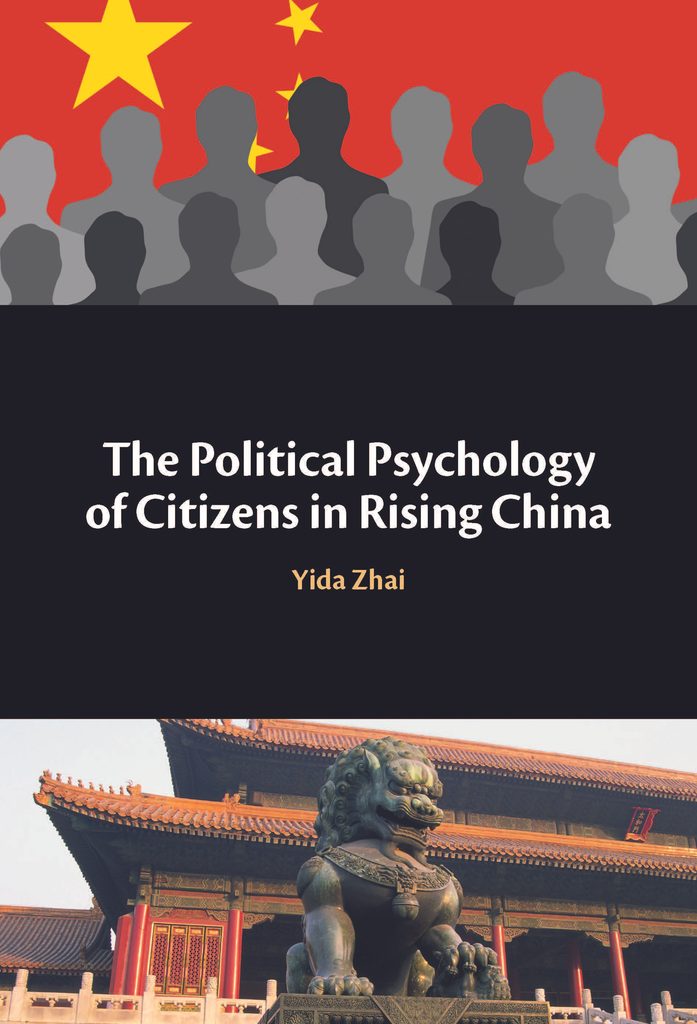
In my book, I describe this way of understanding politics as political guardianship psychology. It is a cultural-political framework for understanding the relationship between the state and its citizens, and it helps explain not only China’s domestic politics but also how Chinese people perceive their country’s role in the world.
Political guardianship psychology has three defining characteristics.
The first is authority. The government is viewed as the legitimate authority responsible for maintaining order and stability, while citizens are expected to respect and cooperate with it. Rather than seeing politics as a constant negotiation between competing interests, this perspective emphasizes the leading role of the state in guiding society.
The second is benevolent guardianship. Political authority is not legitimate simply because rulers hold power. They are expected to protect the people, improve their welfare, and govern with moral responsibility. Legitimacy therefore rests less on elections or constitutional procedures than on whether the government fulfills its responsibilities as a guardian. A government that maintains order, delivers prosperity, and safeguards society earns public support because it is seen as fulfilling its moral obligations.
The third is reciprocity. Guardianship is not a one-sided demand for obedience but a psychological contract between rulers and the people. Citizens are expected to support the government, but the government is equally expected to protect its citizens. When rulers fail to fulfill this responsibility and instead become a source of suffering rather than protection, they lose the moral foundation of their authority. Resistance then becomes legitimate, not because authority itself is rejected, but because the guardian has broken the relationship on which its legitimacy depends.
This reciprocal logic helps explain a recurring pattern throughout Chinese history. The imperial throne was never regarded as the permanent possession of a particular family or bloodline. Political legitimacy rested not on ancestry but on the ability to maintain a claim to benevolent guardianship. When rulers lost this legitimacy and the burdens imposed on the people became intolerable, their authority could be challenged. Others, regardless of their birth or social status, could claim political legitimacy by presenting themselves as capable of restoring order and fulfilling the responsibilities of benevolent guardianship.
These three characteristics continue to shape contemporary Chinese politics. Because the government is viewed as a guardian, citizens place high expectations on its ability to deliver tangible benefits, maintain stability, and improve people’s everyday lives. Economic development, poverty alleviation, anti-corruption campaigns, disaster relief, and public policies are evaluated not only as indicators of government performance but also as evidence of whether the state is fulfilling its responsibilities as a guardian. In this framework, political legitimacy is judged less by the procedures through which leaders acquire power, such as elections, than by whether leaders demonstrate benevolent guardianship.
China’s zero-COVID policy illustrates this dynamic. The policy imposed extraordinary restrictions on everyday life, measures that would have been difficult to sustain for an extended period in many other societies. Yet many Chinese citizens initially accepted these restrictions because they understood them through the lens of political guardianship psychology: the government was presented as fulfilling its responsibility as a guardian by protecting public health and safeguarding people’s lives. In this sense, a highly restrictive policy was interpreted not simply as a limitation on individual freedom, but as an expression of benevolent guardianship. Later, as the social and economic costs of the policy increased and many people came to feel that it no longer served its protective purpose, dissatisfaction emerged. The same political guardianship psychology that encouraged compliance also provided a moral basis for criticism when the government was perceived as failing to fulfill its responsibilities as a guardian.
This framework also helps explain a distinctive feature of Chinese politics: many citizens distinguish between the central government and local officials. Rather than rejecting authoritarian rule itself, people often seek protection from higher levels of government when local authorities fail them. Within China’s hierarchical government system, higher-level authorities are often perceived as more benevolent guardians who can correct local failures, restore fairness, and protect people’s interests.
Political guardianship psychology also extends beyond domestic politics. The close psychological connection between individuals and the national community means that many Chinese people do not view themselves only as individuals; they often understand themselves as members of a broader national community and interpret international affairs through the lens of national identity. Consequently, support for foreign policy often depends on whether the government is perceived as effectively fulfilling its role as a guardian. By presenting itself as the guardian of the nation, the ruling party blurs the distinction between the party, the state, and the national community. As a result, some Chinese citizens may perceive criticism of the authoritarian government as criticism of the nation itself and feel a strong inclination to defend the political guardian. In this context, defending the guardian becomes intertwined with expressions of national identity and collective belonging.
The same psychology also shapes attitudes toward other countries. Rather than seeking an independent interpretation of international affairs, many Chinese people prefer to align their views with those of the government they regard as their guardian. When another country is portrayed as a partner, public attitudes often become more favorable. When it is presented as a threat, negative views can spread quickly. In this way, perceptions of foreign countries are closely connected to how the government frames and presents foreign countries and international events.
Of course, political guardianship psychology does not imply that all Chinese people think alike or that Chinese political culture is unchanging. China has undergone enormous social transformation, and younger generations are increasingly exposed to new ideas about citizenship, rights, and political participation. Like all political cultures, China’s is evolving.
Nevertheless, political guardianship psychology offers a useful way to understand an enduring pattern in Chinese politics. It explains why authority and moral obligations are so closely intertwined, why obedience and resistance can coexist within the same political culture, and why domestic politics and international relations are connected through a shared expectation that the state should act as the people’s guardian. Understanding Chinese politics therefore requires more than examining institutions or political leaders. It also requires understanding the psychological relationship that many people imagine between themselves and the state.

Yida Zhai is an associate professor of Political Science at the University of Tsukuba, Japan. His research interests include political psychology, political sociology, and Asian co...
View profile >Keep up with the latest from Cambridge University Press on our social media accounts.




Latest Comments
Have your say!