

Products and services


For years, the EdTech ecosystem has been moving towards greater maturity. Researchers are producing stronger evidence about what supports learning. Governments are formalising procurement and demanding greater accountability. Educators are asking harder questions about educational value. Investors and philanthropies are increasingly recognising that scale alone is not impact.
For the first time, the scientific community, policy community and market appear increasingly ready for a collective pivot.
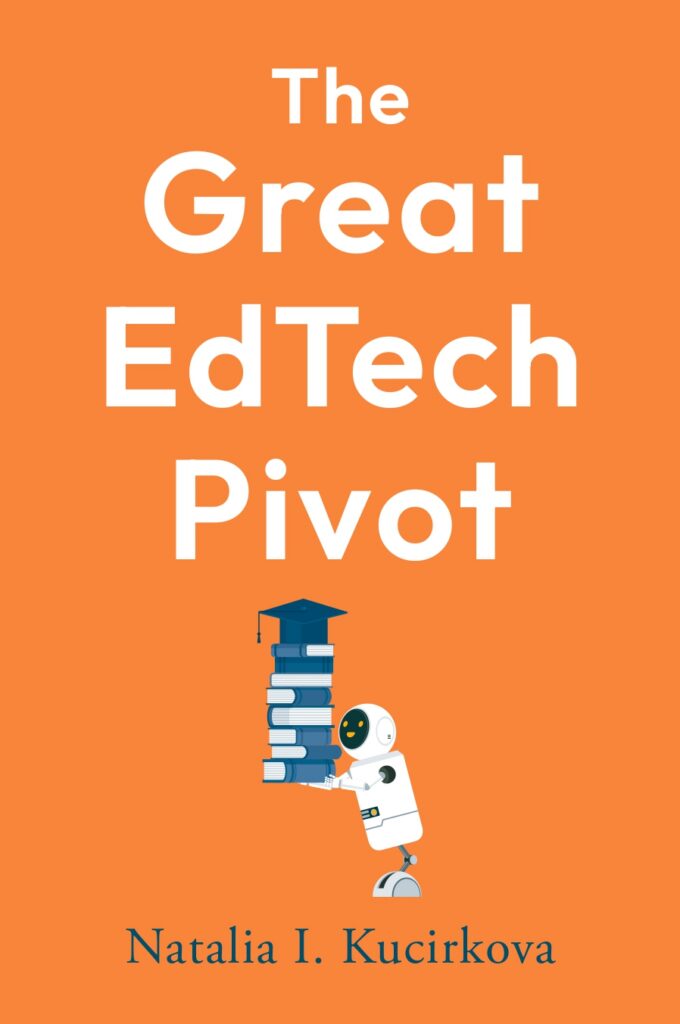
This evolution is central to my book, The Great EdTech Pivot, where I describe the development of the sector through three stages: EdTech 1.0, EdTech 2.0 and EdTech 3.0.
EdTech 1.0 is scale-first. It is driven by rapid expansion, engagement and efficiency. Success is measured through outputs that are easy to count: users reached, minutes on screens spent by the child, quizzes completed and content delivered.
This logic has roots in first digitisation attempts: when computers first entered education, much of the enthusiasm around computer-assisted instruction focused on digitising existing processes — replacing worksheets with on-screen exercises, automating grading and delivering programmed lessons faster in a factory-like model.
The goal was largely to make existing education more efficient, and less to rethink how we learn and teach.
EdTech 2.0 is education-first. It asks different questions: Does the technology improve learning? For whom? Under what conditions?
It is grounded in learning sciences, partnerships with teachers and schools, and iterative evaluation of products based on their insights. Instead of assuming that engagement is evidence of impact, it demands evidence of educational outcomes, that is actual improvement in students’ test scores or skills and abilities.
Across the world, some of the strongest EdTech work has been moving in this direction.
But the opportunity now is to move further.
EdTech 3.0 is ecosystem-first. It recognises that educational technology cannot achieve meaningful, equitable impact through isolated products, pilots and actors working in parallel. It requires collective infrastructure: shared quality standards, consolidated benchmarks, stronger evidence systems and incentive and procurement mechanisms that consistently reward educational value. EdTech 3.0 depends on collective power.
Governments cannot create it alone and neither can researchers, investors, philanthropies, educators or technology companies. The pivot becomes possible when their incentives and capabilities begin to align around the shared goal of improving learning. For that goal, a series of shocks and warning signs — from COVID-19 and deepening literacy and numeracy crises to growing concerns about democratic resilience — have made the same underlying imperative increasingly difficult to ignore: educational technology is essential public infrastructure, and sustained investment in it is no longer optional.
So, optimistically, that alignment is now emerging. But AI is also placing it under pressure.
The current AI wave is accelerating experimentation of new norms across the entire education system. New models, pilots and claims are emerging faster than shared understandings can develop, while institutions or even entire countries, are being encouraged to move quickly and independently. The result is a return to familiar digital innovation patterns: an emphasis on individualised (or “personalised”) learning, rapid scaling and easily measurable outputs, combined with increasingly fragmented approaches in which different actors define quality, and evidence of that quality, on their own terms.
In this environment, we risk being pulled back towards the logic of EdTech 1.0 or even EdTech 0.
The global debate about digitisation, accompanied with mobile phone bans and EdTech backlash, makes the shift especially poignant. What is being rejected is often EdTech 1.0: more technology without sufficient evidence of learning value. And what is advocated for is EdTech 2.0: technology designed around real teaching and learning challenges. But what we now need globally is EdTech 3.0, built on shared infrastructure that allows innovation to serve collective learning.
That is what the next great EdTech pivot is ultimately about: not the technologies we build, but the shared systems, standards, workforce and collective capacity required to ensure that digital innovation serves education for all.

Natalia I. Kucirkova is a professor, researcher, and EdTech strategist shaping the future of learning. As Executive Director of the International Centre for EdTech Impact, she help...
View profile >Keep up with the latest from Cambridge University Press on our social media accounts.




Latest Comments
Have your say!