

Products and services

A few years ago, I started to question the role and status of the human being in the natural realm. Although we know very well that we are animals, we feel that we occupy a special place in nature—at least, so it is in the Western culture. We are part of nature, even though the peculiarity of our rationality and the experience of our freedom might lead one to assume that we are separate from it. In this era of environmental crisis, one might even think that we are enemies: we attack her with pesticides and pollution, she strikes back with tornados, floods and extreme heat.
The history of philosophy can help us acknowledge that we have (wrongly) believed for too long that we are the masters of nature. Studying the works of philosophers of the past helps us comprehend how this idea took shape and evolved over the centuries, and why. However, there is another reason why examining the past is timely. Investigating the intellectual history enables us to discover different conceptions of subjectivity that entertain a different relationship with the nonhuman world.
With these reflections in mind, I began my research in Romantic philosophy. The Schlegel brothers, Novalis, Caroline Schlegel-Schelling and their companions met in Jena at the end of the 18th century and rapidly became the center of a vibrant philosophical exchange—they even had a name for it: symphilosophy, i.e. ‘philosophizing together’. As I read their texts, I felt that I was involved in these philosophical dialogues and had to make their conception of the self my own.
To the Early German Romantics, it was clear that the conception of the self determines our understanding of the relationship between human beings and nature (and vice versa). They recognized the centrality of subjectivity in modernity. The modern self believes herself to be the custodian of concepts and laws that are not influenced by historical and natural conditions: she thinks to be capable of absolute self-ruling. In other words, the modern self portrays herself as the only being on Earth capable of autonomy and sovereignty. Convinced of this illusion, she forgets that she is part of the natural world and sets herself up in opposition to nature.
The Romantics offered an alternative view. Reading their words, we discover a conception of subjectivity deprived of all claims to mastery: conceived as being tangled up in a web of natural and historical forces, the Romantic self cannot aspire to sovereignty or strive to prevail over nature. Nevertheless, she is not doomed to passivity.
If I were asked to choose one thing that I’ve learned from the Romantics, it would be exactly this. Admitting our limits, accepting our interdependence with others and nature requires us to find a balance between the pretention to dominate and the absolute rejection of action. The Romantics taught me that we cannot impose our will and categories on nature and history. Nevertheless, we can negotiate a space for freedom. And we can still imagine a better future for humanity.
Romantic philosophy asks us to set aside many categories we might take for granted. I hope my book will be able to at least invite you, my reader, to accept this challenge. And I also hope to convey the wonder of such a rich thinking. Exploring their philosophy is certainly an adventure, and a very rewarding one.
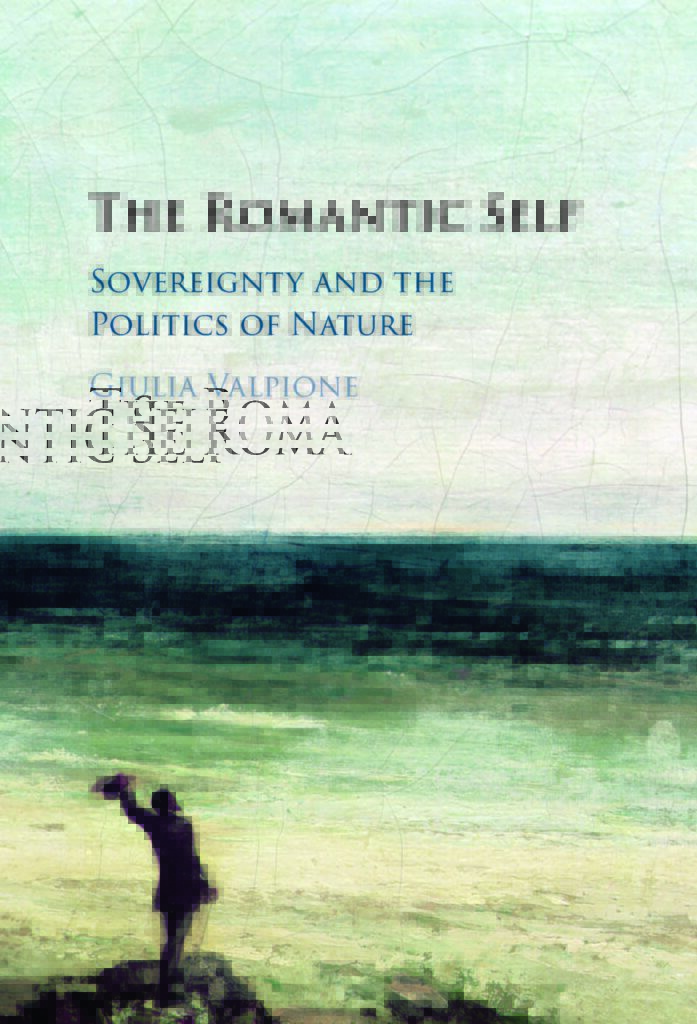

Giulia Valpione is Marie Curie Fellow at the École Normale Supérieure (Paris) and Visiting Scholar at DePaul University (Chicago). She has published extensively on German Romanti...
View profile >Keep up with the latest from Cambridge University Press on our social media accounts.


Latest Comments
Have your say!