

Products and services

One of the enduring assumptions in the study of religion is that belief in the devil emerged as an attempt to explain the existence of evil. Before modern psychology, sociology, or philosophy offered alternative accounts of suffering and human behaviour, so the story goes, Jews and Christians appealed to Satan to explain why bad things happen. The devil functioned as a solution to the problem of evil.
This assumption has shaped not only popular understandings of Christianity but also a great deal of modern scholarship. Histories of philosophy have often treated the devil as a secondary figure whose significance lies chiefly in explaining suffering, temptation, or moral failure. Once those questions began to be answered differently, the devil gradually disappeared from serious intellectual history.
The Problem of the Devil in Cappadocian Thought argues that this narrative is mistaken. By examining a group of influential fourth-century thinkers, the book proposes that the devil was rarely deployed as a comprehensive explanation for evil. Instead, he emerged as a problem in his own right. Questions about his nature, activity, defeat, and ultimate destiny generated sustained theological reflection, not because these authors lacked better explanations for suffering, but because they regarded the devil as a distinct feature of the moral and intellectual landscape.
The implications extend beyond the history of one doctrine. If the devil was not primarily invoked to solve the problem of evil, then modern scholarship has often approached early Christian sources with the wrong set of questions. Rather than asking how belief in Satan explained suffering, we might instead ask what role the devil played within broader accounts of creation, human freedom, salvation, and the moral life.
The fourth-century thinkers explored in this book repeatedly distinguish between evil itself and the devil. Evil arises through the misuse of created freedom and the distortion of the good, not because the devil somehow replaces human agency. Satan tempts, deceives, accuses, and opposes God’s purposes, but he neither creates evil nor compels human beings to sin. This distinction allows late antique thinkers to take both human responsibility and spiritual opposition seriously without collapsing one into the other. The devil is therefore woven into discussions of virtue, prayer, ecclesial life, and human flourishing, rather than functioning as a convenient explanation whenever difficult questions arise.
Recognising this shift also changes how we understand late antique thought more broadly. The devil appears in texts concerned with theological controversy, biblical interpretation, pastoral care, political crisis, and Christian formation. His presence is not confined to ascetic literature. Instead, it reveals how deeply questions of spiritual opposition were integrated into wider theological reflection.
The book therefore invites readers to reconsider a familiar narrative. Rather than asking what the devil explains, it asks what explaining the devil reveals about early Christian thought. In doing so, it offers a fresh perspective not only on fourth-century Christian thought but also on the categories through which modern scholarship has interpreted the intellectual history of Christianity.
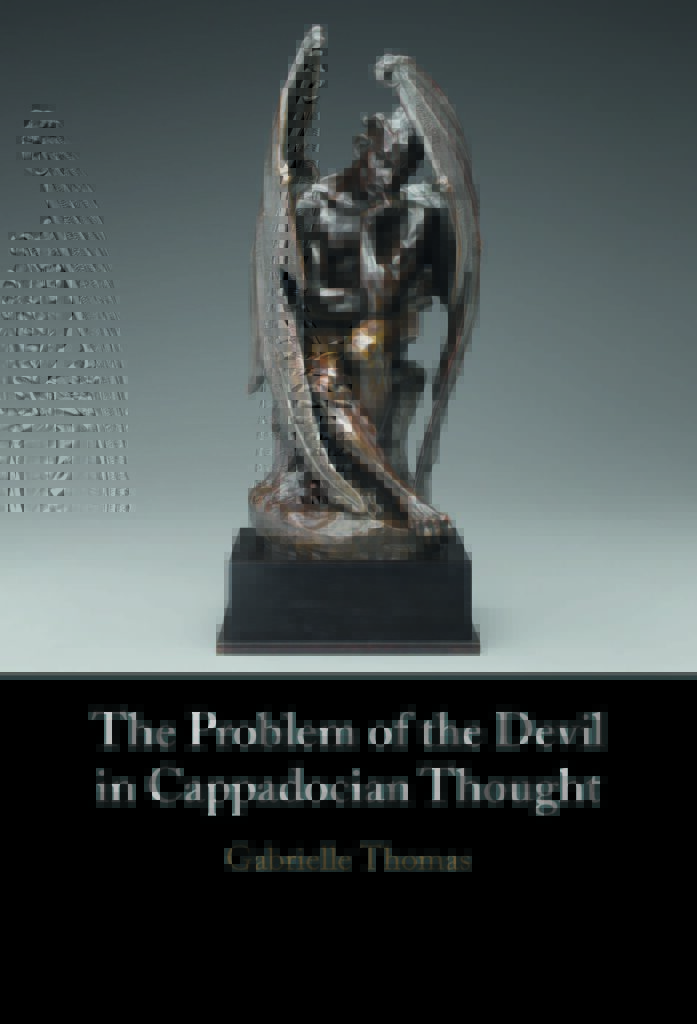

Gabrielle Thomas, an Anglican priest, is Dean and President of Berkeley Divinity School at Yale and Professor of Early Christian, Anglican, and Theological Studies at Yale Divinity...
View profile >Keep up with the latest from Cambridge University Press on our social media accounts.


Latest Comments
Have your say!