

Products and services

While a university student, by chance I took an elective course in glassblowing. One of the first things I remember is learning how to hold the heavy metal blowpipe. Against the soundtrack of a loud and blisteringly hot furnace – similar to what the ancient Romans who invented glassblowing likely experienced – I was introduced to the traditional practice of shaping hot glass without ever touching it. It is a process that requires intense concentration from beginning to end, with the glass itself an often mercurial partner. I was hooked!
Since then, this and other experiences – such as bronze casting, Coptic bookbinding, glass cutting, throwing clay on the wheel and more – gave rise to myriad questions about the history of these art forms, the complexity and nuance of craft/design and what work and life were like for ancient makers in practice. I was especially curious about what could be known about late Antique-era craftspeople. They seemed to labour in anonymity in production processes that were ephemeral to begin with, concealed intentionally or seemingly lost to time. What could be discovered about these craftworkers’ actions and identities, specifically their degree of agency, mobility, status, and gender? What was the actual business side of craftwork and corresponding socio-economic relations in workshops and with consumers? Was there a culture of specialization or instead multi-media skills and networks of cross-craft? There was also an interesting element of objects designed for intentional multisensory engagement and the recycling/repurposing of materials and tools. I became especially intrigued by what could be gleaned from unfinished craft objects. Initial research only led to gaps in the historical record and to further mysteries rather than answers. While there is a (relative) wealth of information about makers during the dynamic period of late Antique history, surprisingly no book until now has been devoted to late Roman craftworkers.
The methodology employed in The Roman Craftworkers of Late Antiquity: A Social History of Glass Production and Related Industries investigates and emphasises late Antique processes through a combination of interdisciplinary approaches involving artefactual, epigraphic and textual analysis. The result is a fuller perspective, helping to show how anonymous craftworkers at this time lived, worked and were distinct from those that came before and after them. In so doing, a history is presented for contemporary artists that traces the lineage of creative makers back to a period before the (arguably contrived) art/craft divide of the Renaissance.
Aside from an interest in low-tech or no-tech approaches to today’s problems, especially concerning production and the handmade, more attention is rightfully being given to unnamed and uncredited assistants in the modern world and antiquity. This book contributes to those areas by presenting a diverse array of late Antique craftworkers whose contributions have previously been overlooked. It demonstrates how despite their low-status positions, these workers’ skills were an essential and defining element in the production of this art.
As a glassblower myself and not merely an historian of art, craft and labour, I approach late Antique craftworkers and their craftwork from the point of view of a maker as well as a scholar. I hope that my personal experience gives me unique insight and empathy in a way that will make this important topic – and these important lives – more accessible and enlightening to readers.
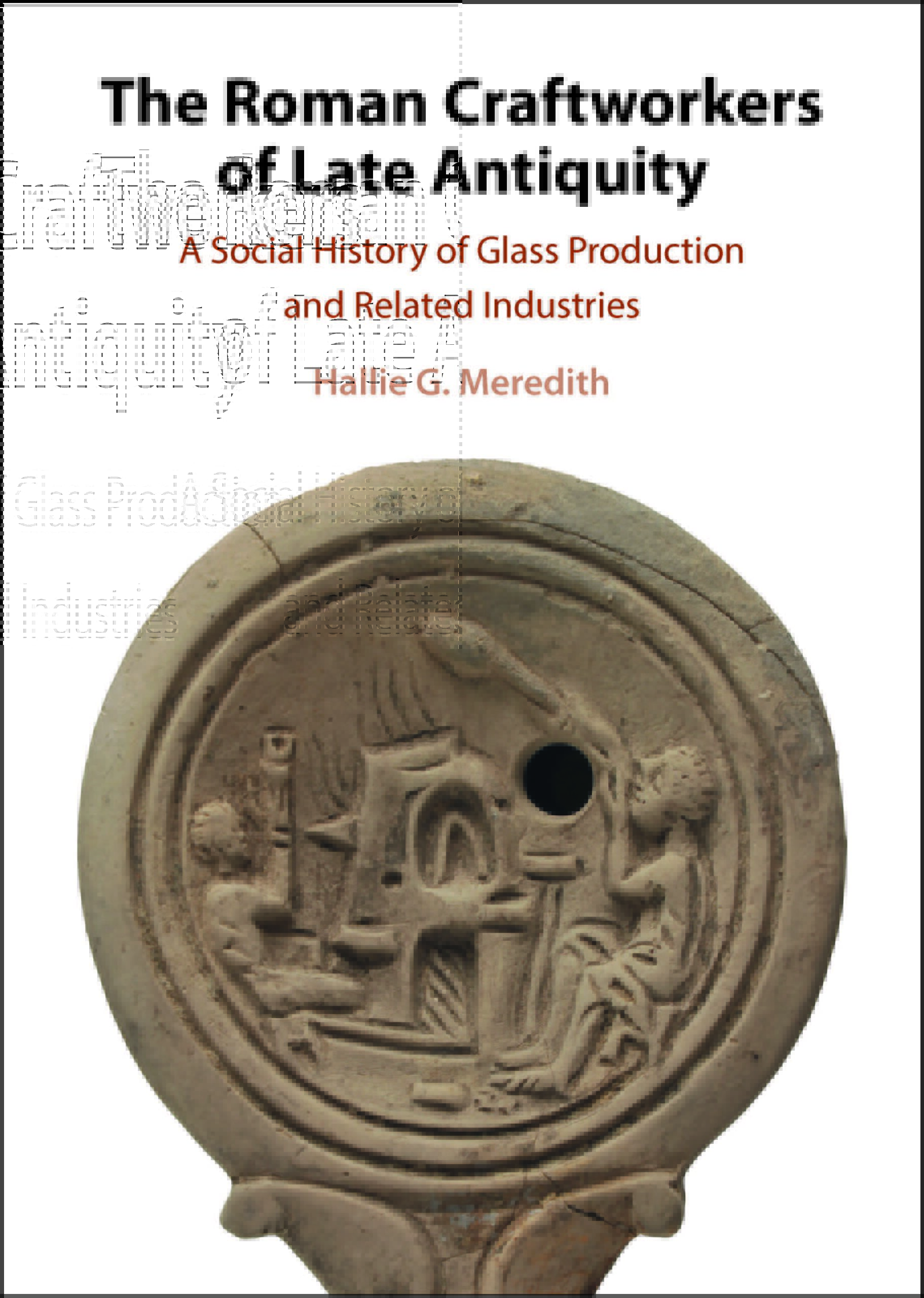
The Roman Craftworkers of Late Antiquity by Hallie G. Meredith

Hallie G. Meredith is an Associate Professor in the Department of Art at Washington State University. She is a former glassblower, and her most recent book is Word Becomes Image: O...
View profile >Keep up with the latest from Cambridge University Press on our social media accounts.


Latest Comments
Have your say!