

Products and services

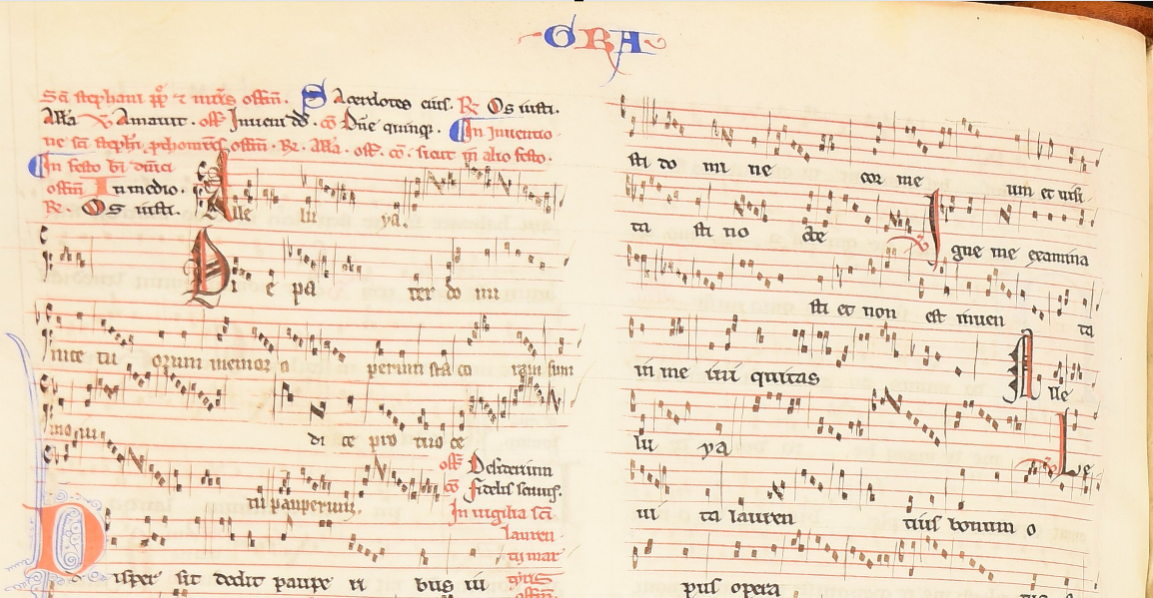
Alleluia Pie pater dominice in the Dominican exemplar manuscript Rome, Santa Sabina, XIV L 1, f. 353v
A new chant had been composed for St Dominic’s feast day. The scribe was stumped. He had been hired to copy the text of the first manuscript of the newly authorised Dominican liturgy; he knew that a new chant should be inserted here, but he did not know or have access to its words. He left a space and completed the section, before passing it to a professional music notator. The notator, too, was in the dark, skipping over the unknown chant. The text, Alleluia Pie pater dominice, was eventually copied by an unknown scribe who was brought in specifically to supply the missing chant: their work does not feature anywhere else in the manuscript. They may have been one of the friars at the Dominican priory of St Jacques in Paris. The accompanying melody was still needed; this was inserted by another notator who had been employed elsewhere in the manuscript. Finally, this section of the book was returned to the first scribe, who checked everyone’s work and made small corrections to the text and notation. St Dominic’s feast day could now be celebrated with an alleluia fitting for the saint.
This vignette introduces the two key themes explored in The Making of the Dominican Liturgy and its Chant: the physical making of the manuscripts, and the conceptual making of the liturgy they contained. Founded in 1216, the Dominican order soon established its own practices for daily worship, but in the mid-thirteenth century decided to revise and ‘unify’ these liturgical practices. This was achieved through the dissemination of various ‘exemplars’: manuscripts which acted as a blueprint for the liturgy for centuries to come. However, while medieval Dominican legislation reported that revision was required for ‘uniformity’, close study of the surviving manuscripts reveals that the revision was one of improvement, rather than simply unification: much uniformity had already been achieved before the revision commenced. Instead, the agenda was more complex, prioritising an alleviation of liturgical duties (for example through reducing the solemnity of certain feasts or removing melodic repetition), an internationalisation of the saints whose feasts were celebrated, and the selection and/or composition of appropriate chants, such as the Alleluia for St Dominic, from a patchwork of sources.
Amendments made to the first exemplar before copying had been completed are testament to liturgy as a living, changing practice. The continual desire to update, innovate, and localise did not end with the completion of the manuscript: as early as the 1260s, new feasts were added to the Dominican calendar, and the trend continued. In 1397 legislation was drafted that forbade the addition of new feasts other than those instituted by the Apostolic See, but this was never approved: there was therefore both a desire for fixity but also the recognition that any such prohibition would be unworkable. Correctness and uniformity were clearly important to the order, but also were difficult, perhaps impossible, to achieve fully. Nevertheless, while the three surviving exemplars reflect the Dominican liturgy at one single point in time, they have also served as touchstones for generations of future editors of Dominican liturgical books.
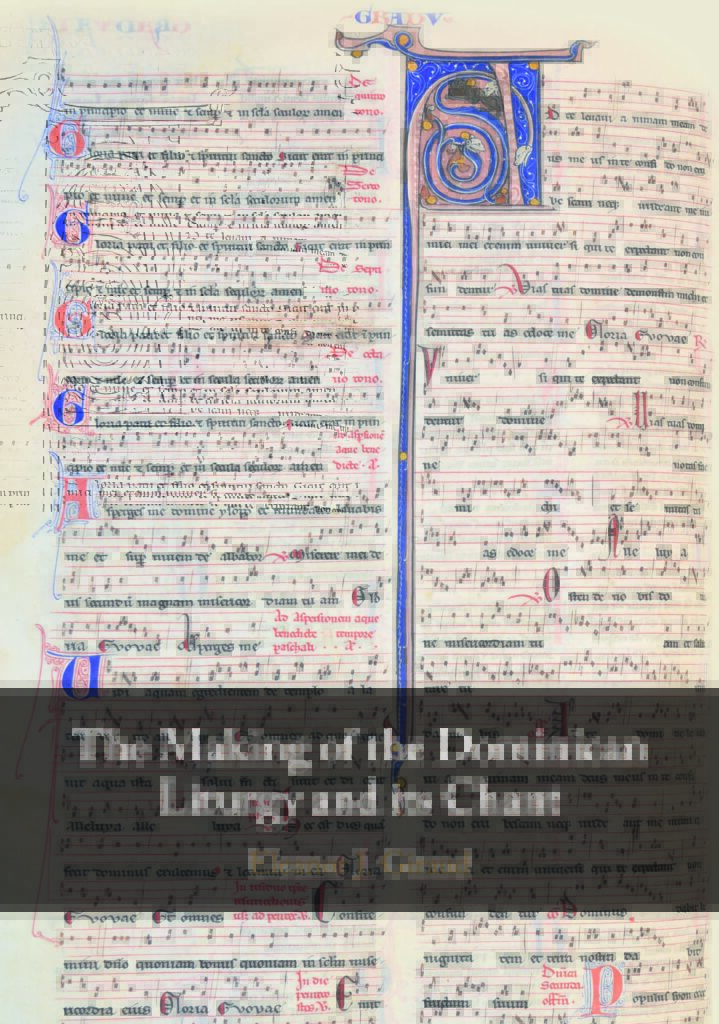
The Making of the Dominican
Liturgy and Its Chant by Eleanor J. Giraud
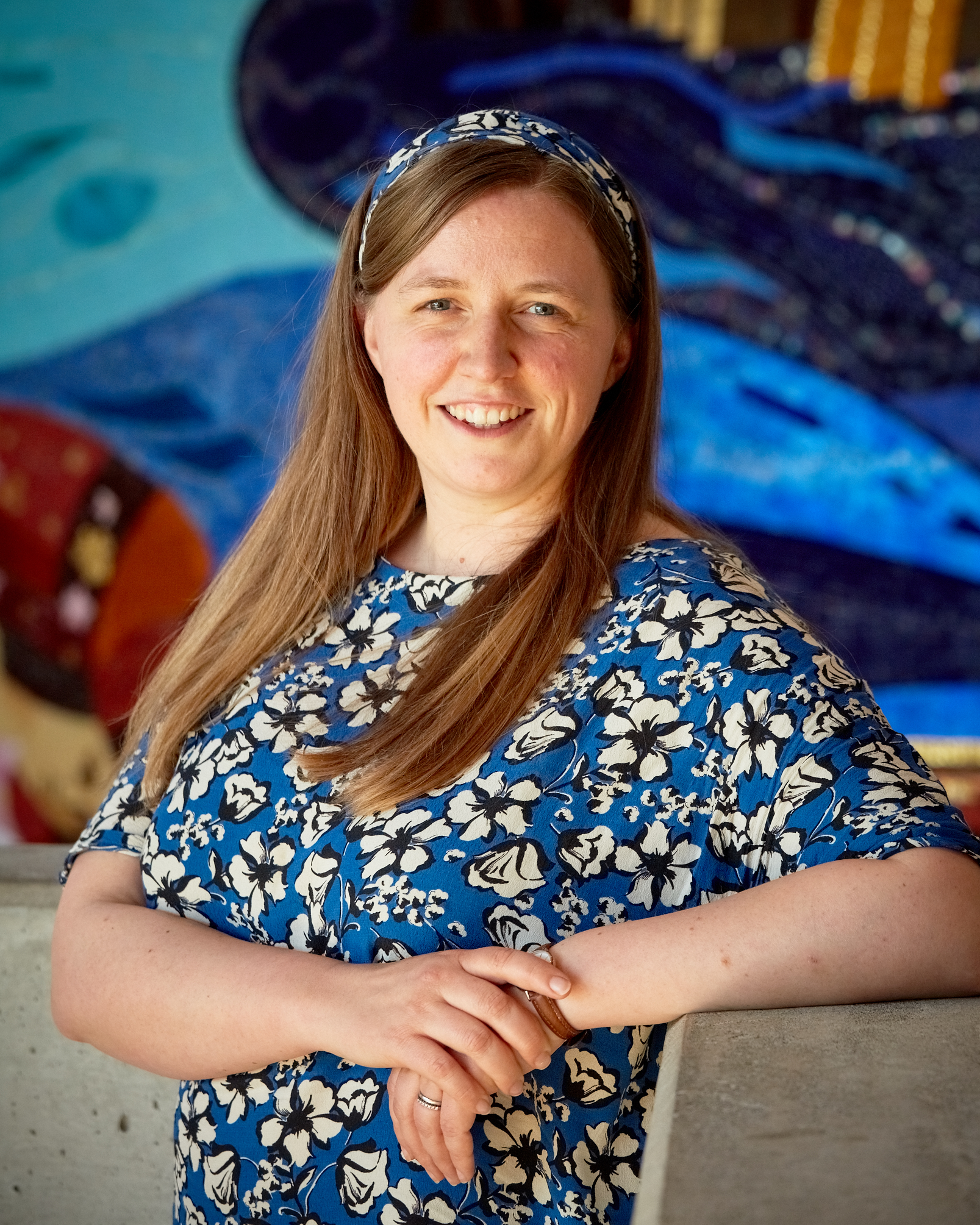
Eleanor J. Giraud is Associate Professor of Ritual Chant and Song at the Irish World Academy of Music and Dance, University of Limerick. She has coedited A Companion to the English...
View profile >Keep up with the latest from Cambridge University Press on our social media accounts.



Latest Comments
Have your say!