

Products and services

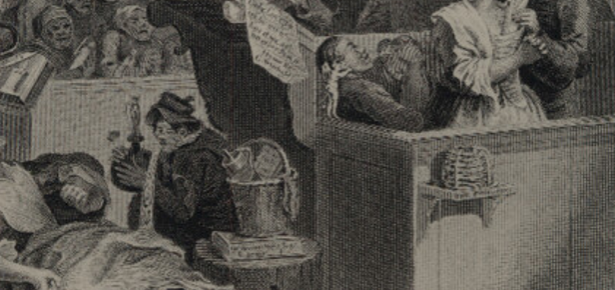
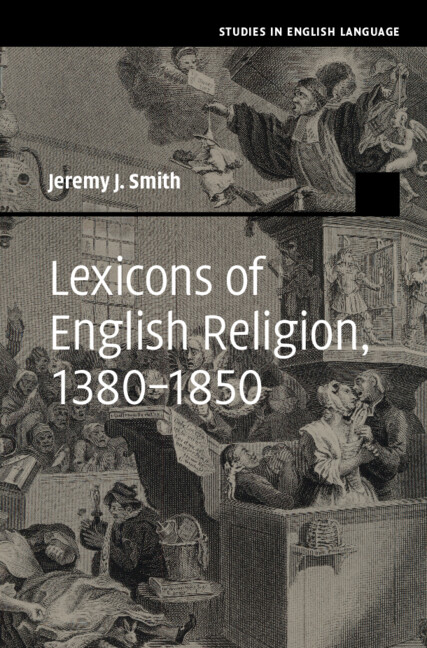
Many years ago I developed an amateur interest in British ecclesiastical history, brought about particularly by reading on holiday Diarmaid MacCulloch’s astonishing biography of Thomas Cranmer (1996); and I thought it would be fascinating to link this interest with my professional work in English historical linguistics and philology, thus contributing to what David Crystal and others have called theolinguistics. Were there patterns of language in relevant texts that could be explained through correlation with religious beliefs and practices?
I feel strongly that simply describing a pattern without any attempt at explanation – as some scholars have argued – is rather frustrating. Although some patterns are undoubtedly random, it has always seemed to me perverse to ignore obvious correlations between linguistic behaviours and socio-cultural contexts. Obviously in the code-breaking of past texts one can be mistaken – given evidential limitations that is always the case, as in any historical discipline – but I still think it is missing something important not even to try.
As a ‘proof of concept’ I investigated two curated corpora, both dating from the 1560s. One consisted of texts written by ‘godly’ Protestants, all published by the same radical printer. The other – my control corpus – consisted of pamphlets produced by men who had fled Elizabeth I’s England to become Jesuits, keen to bring England back to what they conceived to be the true Catholic faith. Analysis of the two corpora quickly revealed distinct preferences in their lexicons, preferences that, I thought, hadn’t been sufficiently interrogated before.
At this point I happened to discuss my project with David Jasper, who as well as being a distinguished literary historian is also a prominent theologian and Anglican priest, and his kind interest encouraged me to continue. Further generous support came from other friends, notably in Finland, Spain and Sweden, and from colleagues on Glasgow’s Historical Thesaurus of English and Sheffield’s Linguistic DNA research-programmes.
The outcome is something that is much larger, in terms of coverage, than I had originally planned. I’ve therefore undertaken a set of linked case-studies, choosing writers and text-types illustrating moments of significant socio-cultural transition over almost five centuries. The cast of characters includes heretical Lollards, earnest Calvinists, eirenic Arminians, radical Fifth Monarchists, fervent Quakers, philosophical latitudinarians, enthusiastic Methodists, solemn Tractarians, convinced evangelicals and inspired speakers in tongues. Elizabeth I and Oliver Cromwell appear, as do Jane Austen, George Herbert, Lucy Hutchinson, William Langland and Samuel Taylor Coleridge. My survey ends in the middle of the nineteenth century, just before the publication of Charles Darwin’s On the Origin of Species in 1859. The book thus moves from the period when western Christendom began to break apart through to the moment when, for many western Europeans, theological explanations for the world began to lose their all-encompassing cogency.
Why should cracking the codes of these people, whose ideologies may seem obsolete, be of interest? I guess my justification lies in what C. S. Lewis once called ‘an enlargement of our being’. We don’t have to agree with such past perspectives on how the world works. But, by being reminded how intelligent people — people, after all, like us – saw the world, we are also reminded that our own viewpoints are themselves conditioned by our socio-cultural circumstances: a necessary and, I’d argue, enlightening experience.

Jeremy J. Smith is Senior Research Fellow and Professor Emeritus, University of Glasgow, and Honorary Professor, University of St Andrews. Recent publications include Transforming ...
View profile >Keep up with the latest from Cambridge University Press on our social media accounts.


Latest Comments
Have your say!