

Products and services


The English language has travelled a long way from its origins on an obscure but fertile North Atlantic island, cobbled together with the various tongues of a series of invaders from mainland Europe and Scandinavia. Colonisation has transported English across the globe, creating distinct varieties in every region from America to India, South Africa to Australia. And cultural imperialism – driven by Christian missionaries, the marketing might of Western film and music industries, enabled by the ubiquitous reach of the world wide web – has taken the language to parts of the earth the empire-builders never knew existed.
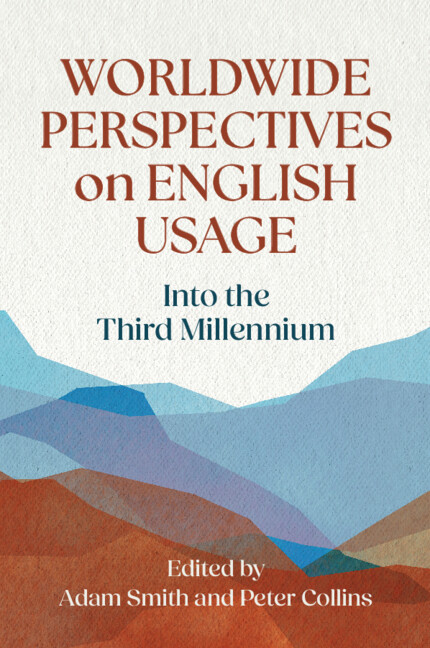
So how can we get to grips with this thing that has undergone so many adaptations and mutations? Early codifiers of English like Samuel Johnson regretted the unrestrained growth of the language, its “wild exuberance”, and prescriptive commentators of the 19th and 20th century, such as H.W. Fowler, sought to impose rules and regulations that would, they hoped, help to set standards and streamline communication. Our new book, Worldwide Perspectives on English Usage: Into the Third Millennium, is part of a more recent tradition, one that embraces the rich diversity of English and attempts to describe the language as it spreads and evolves, using empirical methods to demonstrate how it is – not should be – used.
We have chapters on how English is developing new norms in Australia, Canada, Hong Kong, India, South Africa and Sri Lanka. Different instruments for standardisation are explored, from style guides to dictionaries, along with the role of the editor in accepting or resisting language change in writers and speakers from various backgrounds. Gradual diachronic shifts are analysed alongside recent seismic upheavals brought about by technological innovations in the form of social media and artificial intelligence. The impact of social and political movements is reflected in studies on gender-fair pronouns and the influence of migrant languages on English.
The theme and content of this book has been inspired by the work of Emeritus Professor Pam Peters in the fields of lexicography, corpus research, and world Englishes – amongst others. The innovative use of corpus data in one of her landmark achievements, The Cambridge Guide to English Usage, is discussed in Chapter 1 of this work, with a fully revised edition of it to appear later this year.Without the good will and admiration generated by Pam’s intellectual rigour and curiosity, as well as her generous support for linguists in Australia and across the world, there would not have been such a diverse and distinguished community of scholars ready and willing to contribute. We, the editors of this book, have both benefited hugely from Pam’s enthusiasm and nurturing guidance through a range of collaborative projects – in corpus building, dictionary making, countless publications – all in pursuit of greater understanding of the wonderful world of Englishes.

Adam Smith is a Senior Lecturer within the Department of Linguistics at Macquarie University, Sydney. He has researched and published extensively in the area of language variation ...
View profile >Peter Collins is an Honorary Professor in Linguistics at University of South Wales, Sydney, and former editor of the Australian Journal of Linguistics. His primary area of research...
View profile >Keep up with the latest from Cambridge University Press on our social media accounts.



Latest Comments
Have your say!