

Products and services

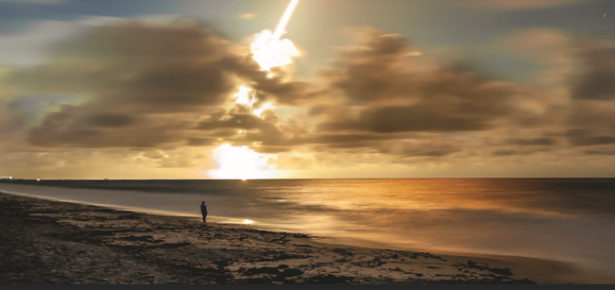
Human-built spacecraft have visited every single planet in our solar system, as well as several comets and asteroids. We have landed robotic spacecraft not only on Venus and Mars but also on Titan, the largest moon of Saturn. Spacecraft have dived down close to the Sun’s surface and others have escaped the solar system, flung out into the vast, dark emptiness of interstellar
space. From these ambitious missions we have not only learned much about the origin of our solar system and the processes that shape it, but we have also started to understand our home planet in a broader astronomical context.
We now know that our solar system is just one out of thousands in our galaxy. In fact, we can say with confidence that most stars harbour at least one planet. We are not unique. But we are are also not typical. The first planets discovered outside of our solar system were of a completely unexpected nature, not predicted by our models that were confidently built on the single example
of our solar system. Since then, a plethora of discoveries has forced us to rethink our theories of how planets form and evolve. If this has taught us anything, it’s that reaching out into the cosmos challenges our deepest assumptions and forces us to reassess the confidence in conclusions drawn on limited data.
In the coming decades we will doubtless continue to learn much from astronomical observations of distant objects from ever more sophisticated telescopes. But the missions to the planets in our solar system have shown that we will discover so much more from in situ exploration than can do from just remote sensing. Will in situ exploration of planets around another star ever be possible?
After it had visited Jupiter and Saturn in the early 1980s, the Voyager 1 spacecraft continued on into interstellar space. If it were flying directly towards our nearest stellar neighbour, Proxima Centauri (4.25 light years away), Voyager 1 would take 77 thousand years to get there. If we want to send a robotic spacecraft to the nearest stars, it will have to move much faster. To get to
Proxima Centauri within 50 years, it will have to move at 8.5% the speed of light, 1500 times faster than Voyager 1.
Chemical rockets can never achieve anything close to this speed. We must instead look to nuclear fusion rockets, as these provide much higher energy densities. Even a simple fusion reactor, let alone a rocket, is still some way off, but humanity is working on it, and one day we’ll get there. A different approach to achieving high speeds is not to use a rocket at all, but instead to propel a low mass reflective sailcraft with a high power laser. The requirements of such a system are extreme, needing lasers, optical arrays, and sail materials that are far beyond anything currently available. But here too, the research and development made towards developing such a system will have numerous benefits and applications, and not just for astronomy. It’s not just fast propulsion we need to do in situ science at another star. Protecting the spacecraft against high speed particle impacts in the interstellar medium, navigating autonomously without the help of signals from the Earth, getting enough power along the way in the cold darkness of
space, far from any star, and finally transmitting data back to Earth from the distant planet; these are all enormous challenges for which we currently do not have the solutions. Yet we know how to get there. Physics tells us these are solvable problems, and engineering already points the way to some solutions. Many of the requirements seem far fetched when viewed as a whole, but just as evolution didn’t jump from a bacterium to a brain in one step, so can technology develop in a series of smaller steps. Precursor missions at lower speeds to the outer solar system can test propulsion methods and communication technologies, and can sample interstellar space to better understand the hazard its particles will present to our future spacecraft.
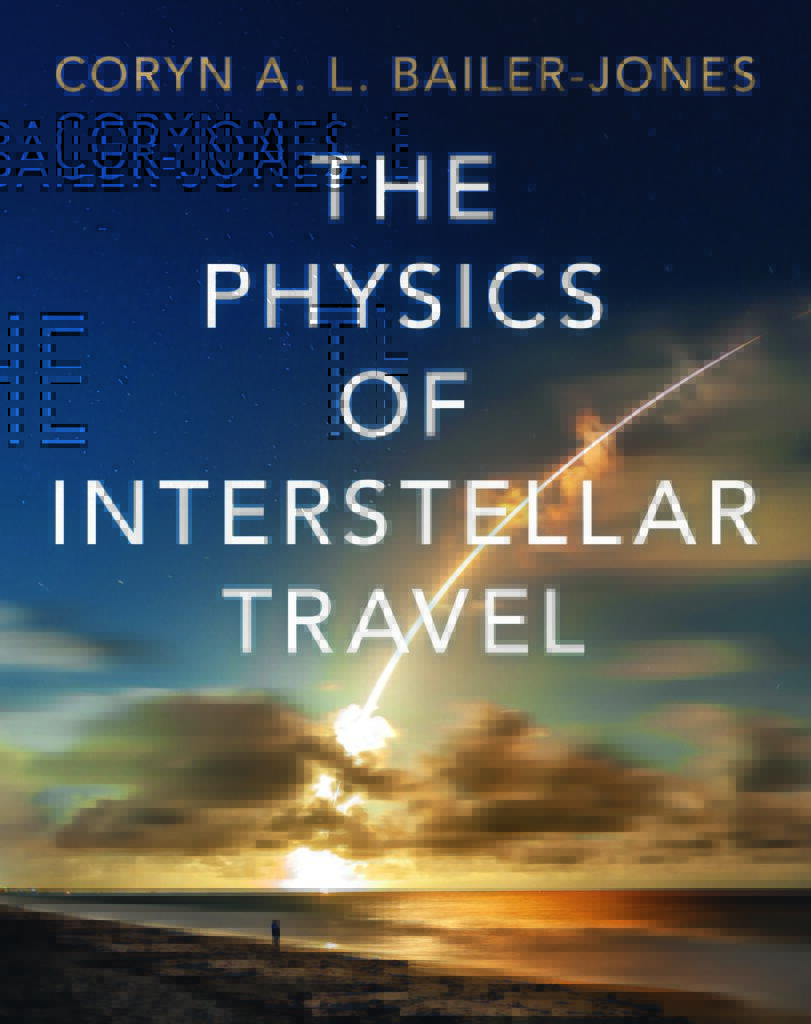
The Physics of Interstellar Travel is the first undergraduate-level textbook to address all of these issues. It uses a wide range of topics in physics to examine the problem of getting an uncrewed spacecraft to the nearest stars within a human lifetime and sending data back to the Earth. It focuses on what we do with solid, existing physics – wormholes, hyperspace, and co. are not involved. The book synthesises the surprisingly extensive literature that has been published on this topic, and as such will also appeal to professionals. What’s more, the book has been published under an open access creative commons license in addition to the conventional printed format, so you can download it for free. Further material is available on the author’s website (https://www.mpia.de/homes/bailer-jones/pit.html)
Whether we, as a society, will want to pursue uncrewed interstellar travel in the name of science and discovery, or whether the opportunity cost of doing so is too large, is something that others must decide. It won’t be done tomorrow, but we can take the steps toward it today.

Coryn A. L. Bailer-Jones is a staff member at the Max Planck Institute for Astronomy in Heidelberg where he does research on stellar and Galactic astrophysics. He teaches physics a...
View profile >Keep up with the latest from Cambridge University Press on our social media accounts.



Latest Comments
Have your say!