

Products and services


In a moment, I’m going to tell you about my book.
But before I do that, I’d like to ask you to perform a quick intellectual exercise: think of something that, in your view, is really terrible. It could be a movie, or a song, or a political outlook, or even a person-as long as it’s something toward which you feel very negatively.
Now, I’d like you to consider the following fact: huge numbers of people feel exactly the opposite about this thing as you. This idea or movie or song or person, they insist, is actually amazing. It is appealing, it is desirable, it is great.
We are confronted with this reality of what we might call “disagreeing Others” on a near-constant basis in our everyday lives, and the more strongly we feel about the issue at stake, the more strongly this confrontation provokes in us an almost inevitable question: how can they possibly disagree with me? How can they find something appealing which is so obviously unappealing?
The confrontation with such different perspectives, in other words, creates in us an intellectual pressure for explanation. Somehow, we must explain why these people seem to hold preferences and outlooks so greatly divergent from our own, when our preferences and outlooks are, of course, so obviously plausible and right.
Ancient Jews were, of course, no different. Though committed to the worship of the Israelite God and insistent upon the senselessness of “idolatry,” ancient Jews were surrounded by people who worshiped all sorts of other gods instead-Baal, Aphrodite, Mercury, and more-and did so precisely through the reverence of statues. How did ancient Jews explain to themselves why all of these other people (indeed, the vast majority of the human race) engaged in practices which, to the Jews themselves, seemed utterly ridiculous and unappealing? Or, as the Epistle of Jeremiah, a Jewish text from around the 3rd century BCE, stated the problem: “How then can one fail to see that these are not gods?”
In my book, The Portrayal of Pagan Worship in the Hebrew Bible and Ancient Judaism, I explore one answer which ancient Jews gave to this question: that, in fact, though the “pagans” publicly worshiped these gods and declared their loyalty to them, even they themselves must have known, on some level, that these gods were powerless. Throughout the Jewish literature of the Second Temple and rabbinic periods, this same accusation appears again and again-in Hellenistic literature and in Rabbinic, in legal texts and in narrative, in prose and in poetry: those who worshiped Other gods and revered their statues did so only for show-out of some secret ulterior motive for money or sex, perhaps, but certainly not out of any sincere piety.
Why, then, according to ancient Jews, did people think so differently from them about God and the gods? The answer: they didn’t. Despite appearances to the contrary, even those who seem to disagree with us must know, in their heart of hearts, that we are right.
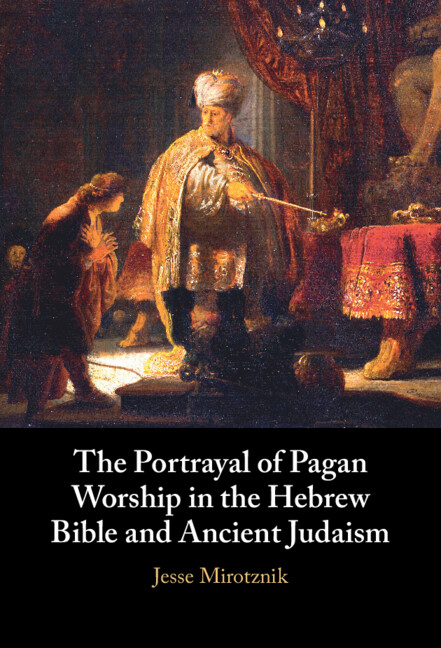
The Portrayal of Pagan Worship
in the Hebrew Bible and Ancient
Judaism by Jesse Mirotznik
Keep up with the latest from Cambridge University Press on our social media accounts.



Latest Comments
Have your say!