

Products and services

Just two years ago, many political elites and policy experts in the United States and other Western countries concluded that the Chinese model of development had failed as China’s economic growth faltered amid the real estate crisis, mounting local government debt, and rising youth unemployment. They denounced Xi Jinping’s concentration of autocratic power, his crackdowns in Xinjiang and Hong Kong, and the tightening of ideological control over schools and the media.
Within only two years, however, the “China model” has returned to fashion among many Western political and business leaders. China’s “engineering state,” with its relentless focus on building things, is now praised as superior to a Western “litigious culture” that argues too much and builds too little. Liberal advocates of a new growth agenda cite China’s high-speed rail and infrastructure development as examples of a “build, build, build” ethos that the United States should emulate, often overlooking the extensive literature linking this model to China’s severe overcapacity and debt problems—problems that Beijing itself has acknowledged and has been trying to address. After visiting China, German Chancellor Friedrich Merz remarked that he was struck by how hard people work in China and admonished his fellow Germans for being obsessed with “work-life balance and a four-day week” that jeopardize the country’s productivity and prosperity.
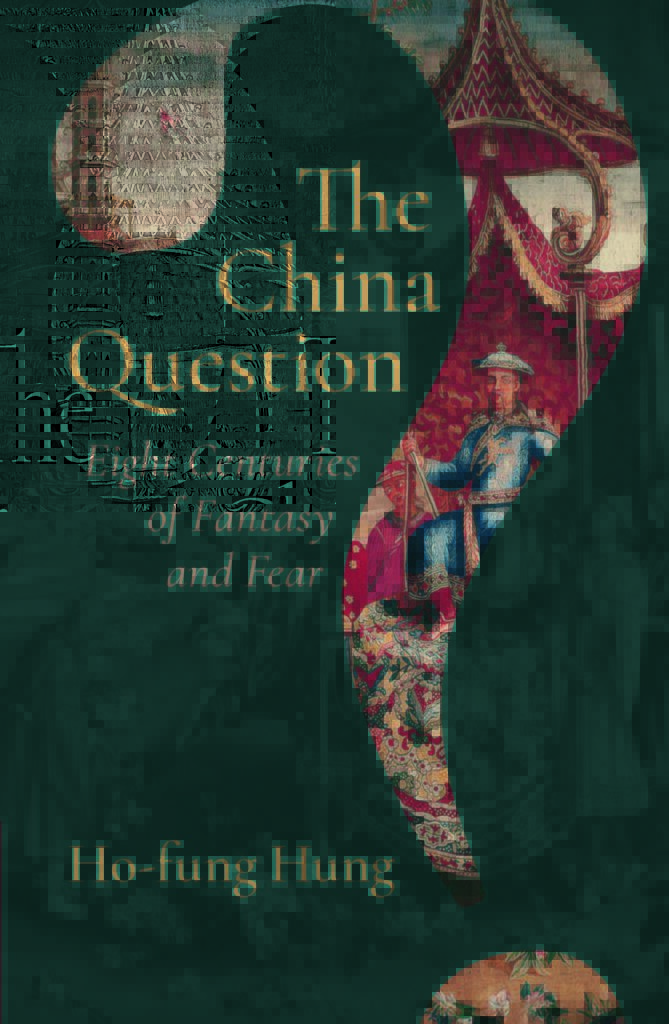
This dramatic reversal has occurred despite no fundamental change in China’s political or economic trajectory. It illustrates a recurring pattern explored in my book: for centuries, Western views of China have swung between two extremes. At one extreme, China is portrayed as the antithesis of the West and an existential threat; at the other, it is celebrated as a superior model that the West should emulate. Such shifts have often reflected political anxieties within Western societies more than changes within China itself. The latest swing has been fueled by widespread dissatisfaction among many Western elites with the second Trump administration, making China an attractive symbolic alternative despite its economic difficulties and increasingly authoritarian political system.
A similar reversal occurred in the nineteenth century, as discussed in the book. Late Enlightenment thinkers such as Kant and Hegel dismissed China as stagnant and despotic, but Romantic intellectuals reacting against industrial modernity soon idealized China as a repository of lost spirituality and moral purity. James Legge, a Scottish missionary and Oxford’s first Professor of Chinese, argued that ancient China had preserved a monotheistic belief in Jehovah within the Confucian classics. Influenced by the Romantic Orientalist Friedrich Max Müller, whose theories about the Indo-European “Aryan” heritage later contributed to the adoption of the ancient Indian swastika as an Aryan symbol in Europe, Legge further suggested that China embodied a purer morality derived from God from which Europe itself could learn. Ironically, this idealization emerged in the aftermath of the Opium War, when China was falling apart and many reform-minded Chinese intellectuals, including Legge’s collaborator Wang Tao, were questioning Confucian orthodoxy as an obstacle to China’s survival.
As my book argues, simplistic idealizations and simplistic demonizations of China reinforce one another. Both rest on ahistorical and essentialist assumptions that obscure the complexity and contradictions of Chinese development. Although contemporary China studies contain plentiful nuanced scholarship, the Chinese party-state has increasingly promoted idealized narratives of the “China model” through its propaganda apparatus and tightly controlled academic institutions. Such narratives help fuel the most naïve fantasy about China among Western elites. These are the challenges we must overcome if we are to continue the de-Orientalization of Western knowledge of China and foster more sensible China policies grounded in a historically informed and multifaceted understanding of the country rather than in fantasy or fear.
Ho-fung Hung is Henry M. and Elizabeth P. Wiesenfeld Professor in Political Economy in the Department of Sociology and Nitze School of Advanced International Studies, Johns Hopkins...
View profile >Keep up with the latest from Cambridge University Press on our social media accounts.


Latest Comments
Have your say!