
Products and services

Whether it’s the recent Ebola crisis in Africa or the ongoing conflict in the Middle East and war in Ukraine, the International Federation of Red Cross Red Crescent (IFRC) is there, alongside the International Committee of the Red Cross (ICRC), and national Red Cross and Red Crescent Societies. The symbol of the Red Cross is an iconic one, globally recognised as representing a highly reputable and trustworthy humanitarian organisation.
You have probably heard of Henry Dunant who, with other Genevans, formed the ICRC in 1863, but what do you know of the IFRC? Did you know that it was once called the League of Red Cross Societies, that it was formed in 1919 in the aftermath of World War One by American Henry Davison, and today represents 191 Red Cross and Red Crescent national Societies around the world?
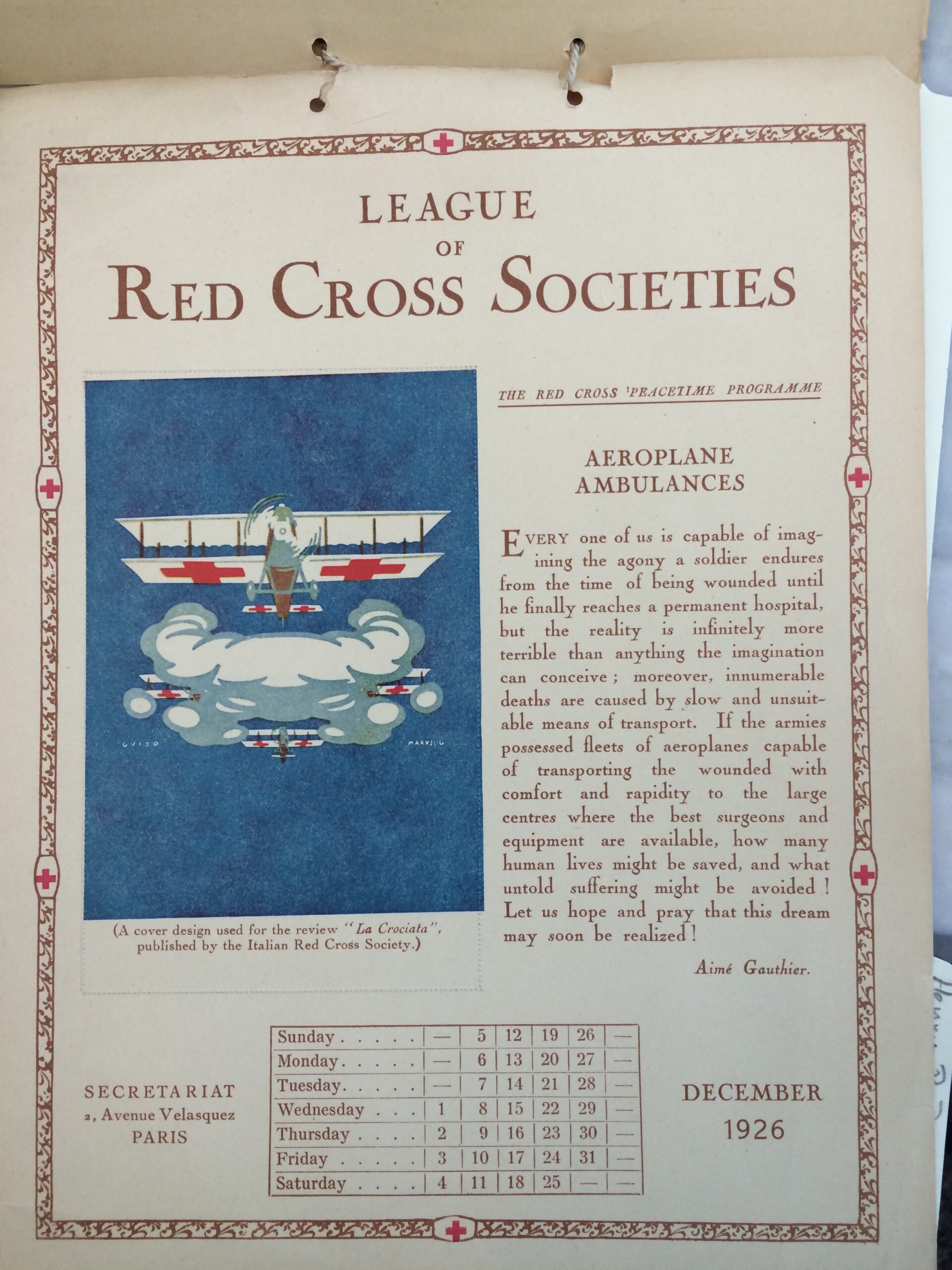
Image Credit: League of Red Cross Calendar, The Red Cross Peacetime Programme, 1926, Box 11, Henry Davison Papers, NARA.
Resilient Humanitarianism is the first independent study of the League of Red Cross Societies from 1919 to 1991. As the world’s largest humanitarian and volunteer network, the IFRC has always focused on peacetime activities which is different from the ICRC whose mandate is to alleviate suffering in times of war.
Researched and written by four authors from Australia and the United Kingdom through an Australian Research Council Discovery grant, the book explores the origins of the League, how it evolved from 1919 into one of the major humanitarian, public health, and relief organisations of the twentieth century. The various themes covered in the book extend from global public health and relief operations to voluntary blood transfusion, the professionalisation of nursing, the Junior Red Cross, and the environment and climate change.
Investigating largely unknown, but significant actors, the case studies in the book shed new light on the League’s activities in Latin America and Europe, Southeast Asia, and the Horn of Africa through a focus on global health initiatives, the complexity of its networks during the Second World War, and its role in the provision of relief and disaster management.
This book is a highly topical and exhaustive study of a global humanitarian organisation that will be of interest to anyone curious about how international bodies are formed and survive through time, and who initiates change and leads them. It is also a masterclass in co-operative co-authorship, using a ‘one voice’ methodology. This involves close collaboration, trust and agreement of all authors, one that has grown organically out of existing collaborations. Historians are generally solitary workers but in this case an interdisciplinary team of senior and emerging scholars has worked through the Covid-pandemic and other interruptions, to produce a sweeping history of the Red Cross and Red Crescent movement and global humanitarianism through the twentieth century. Resilient Humanitarianism is a book for our times, one that will help us to navigate current and future humanitarian crises by understanding the past.
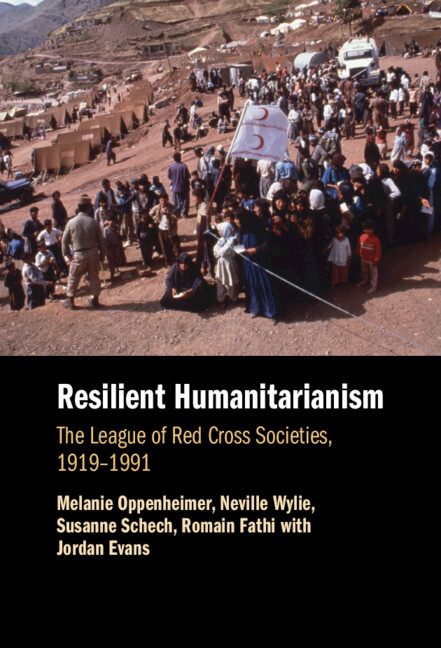
Resilient Humanitarianism
by Melanie Oppenheimer, Neville Wylie, Susanne Schech and Romain Fathi.

Melanie Oppenheimer is Honorary Professor of History at The Australian National University and Emeritus Professor at Flinders University and author of All Work, No Pay: Australian ...
View profile >Neville Wylie is Professor of International History at the University of Stirling and author of Barbed Wire Diplomacy: Britain, Germany, and the Politics of Prisoners of War 1939â€...
View profile >Susanne Schech is Emeritus Professor of Geography at Flinders University and author of Culture and Development: A Critical Introduction (2000). Her research contributes to critical...
View profile >Romain Fathi is Associate Professor in History at the Australian National University and an affiliated researcher at the Centre d'Histoire de Sciences Po. He is author of The Red C...
View profile >Keep up with the latest from Cambridge University Press on our social media accounts.


Latest Comments
Have your say!