

Products and services

The United States entered World War II ill-prepared. This was typical—to avoid preparing for war until it occurred. At that point, herculean efforts were exerted, industry and resources were mobilized, huge sums appropriated, and an overwhelming military juggernaut was built, trained, and deployed. It would take time, but the country’s latent power would ensure success—eventually.
This questionable model held during the 1930s. America did not want war, so the nation looked the other way as Hitler came to power and began his aggression: we had our own problems.
The nation’s air arm was in poor shape. The Air Corps was part of the Army, and the General Staff, composed largely of ground officers, determined force structure, doctrine, organization and funding. Groundmen saw aviation’s job as supporting the infantry.
Yet, by Pearl Harbor, the US had two very good heavy bombers—the B-17 and B-24. Although very few in number, tens of thousands would soon be built. Our standard pursuit planes, however, were inferior to those of other belligerents. What caused that seemingly illogical force structure when national policy emphasized defense?
The dichotomy is usually attributed to the offensive-minded doctrine of the Air Corps emphasizing strategic air attack.
Although doctrine played a role in determining force structure, there were other factors involved, such as the role of commercial aviation. From the beginning, some imagined large aircraft carrying people and goods from one city to another. Airline companies grew quickly during the 1920s, due largely to their mission of delivering the mail. Events like Lindbergh’s flight of 1927 stirred public interest. Despite the Great Depression, air traffic grew. The airlines needed large, safe, dependable long-range aircraft—the same attributes needed in military bombers.
Obstacles to flight like weather were overcome, and new types of instruments, compasses, altimeters and navigation aids were built. In 1929, Jimmy Doolittle, took off, flew, and landed without ever seeing outside his own cockpit. “Blind flying” was born, and this revolutionized air travel.
Technology was overarching; without it, there was no flight. Engineers developed more powerful engines leading to the need for high performance gasoline. Aircraft became monoplanes built of metal and they had retractable landing gear and enclosed cockpits. They grew larger. These traits favored the bombers the airliners so closely resembled. Indeed, through the 1930s, the bomber increased in performance until it outpaced that of the fighter plane. The B-17 of 1935 was the epitome of this development.
The key to a successful business model was economy and efficiency, long range, better fuel mileage, and a more comfortable ride. Air travel ballooned.
The system for procuring aircraft for the Air Corps was also a major factor in determining force structure. Funds were tight, and the ground officers in control wanted medium-sized aircraft to support ground operations. Although fearing the implications of the B-17, they welcomed the development of twin-engine aircraft for ground support—the kind flown by the airlines.
Due to the national policy of isolation, long-range military aircraft were seen as unnecessary. With the nation still in the throes of the Depression, low-risk, efficiency and a sizable market dominated the thinking of aircraft builders. Nonetheless, the drift towards war in Europe meant that Britain, France, Sweden, China and others, needed aircraft, and that provided a boom for the US aircraft industry.
Although starting slowing, American airpower grew dramatically during the war and became a decisive force.
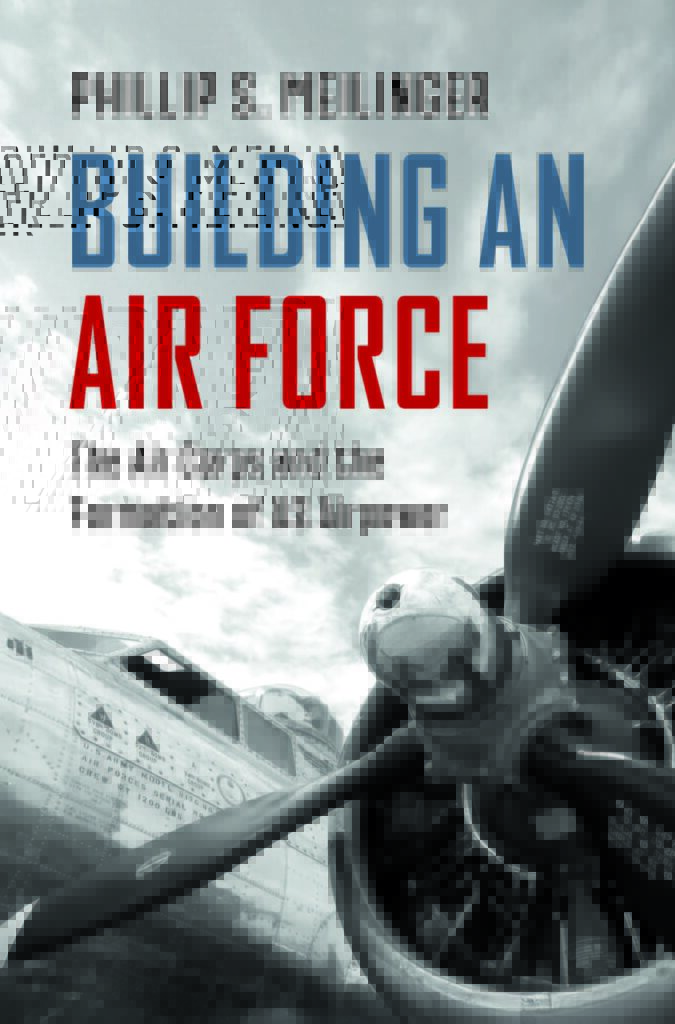

Phillip S. Meilinger is a retired USAF colonel and independent scholar. He flew C-130s, was an action officer in the Pentagon, and taught at the Air Force Academy, Naval War Colleg...
View profile >Keep up with the latest from Cambridge University Press on our social media accounts.


Latest Comments
Have your say!