

Products and services


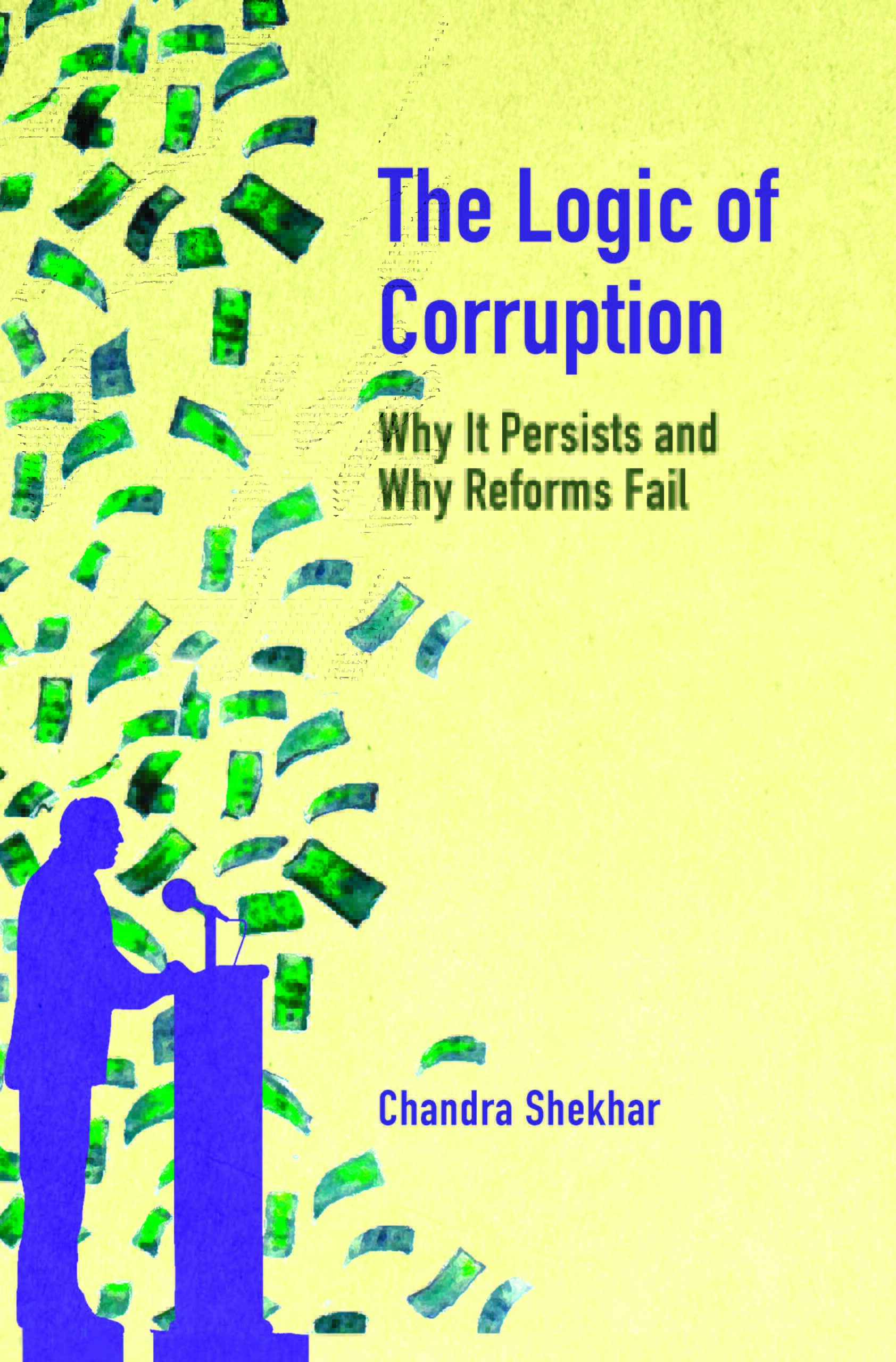
Corruption is everywhere. From senior politicians and bureaucrats to street-level bureaucrats, and from the richest countries to the poorest, corruption remains widespread, and efforts to fight it keep falling short. Global surveys show that corruption levels have not changed over the past decade, despite new laws, anti-corruption agencies, and public pressure. Politicians and bureaucrats come and go, but corruption remains. Why?
The standard answer to the question of why corruption persists is that corrupt officials are bad actors; they are greedy individuals who accept bribes when they can get away with it. Design better incentives, improve inspection, strengthen judicial infrastructure, punish the wrongdoers, and corruption should decline. However, this explanation falls short in reality. Corruption remains high in most of the world, especially in developing countries. This book argues that the standard answer wrongly identifies the problem. Drawing on seven years of fieldwork with three major state bureaucracies in India’s largest state, Uttar Pradesh—the police, environmental regulation, and public works—the book shows that corruption does not occur as isolated instances of individual bad actors. It is a system, and it operates through a mechanism that anti-corruption reforms consistently miss.
The key insight: corruption at the top creates corruption at the bottom
Not all corruption is the same. This book categorizes corruption into grand and petty forms. Grand corruption is the corruption of senior officials, such as senior politicians, senior bureaucrats, ministers, and department heads, who make major policy decisions. Petty corruption is the corruption of street-level bureaucrats, such as police constables, inspectors, and junior engineers, who implement state policies. These two forms are usually considered as separate phenomena as if they occur in isolation and as if the occurrence of one has no impact on the occurrence of the other.
The book shows otherwise: grand and petty corruption are causally linked through a mechanism that I refer to as the informal market for public office. This informal market represents social exchanges between senior officials and street-level bureaucrats. Senior officials, either senior politicians or senior bureaucrats depending on the specific department, allocate desirable assignments to street-level bureaucrats in exchange for bribes, political influence, and personal connections. Upon participation in the market for public office, street-level bureaucrats consider rent extraction from the public not as wrongdoing but as a legitimate way to recover the cost of securing and maintaining their assignment. In this way, grand corruption of senior officials in the transfers and postings of street-level bureaucrats creates institutional conditions that normalize petty corruption at the street level.
Why this matters for reform
Anti-corruption reforms often take a Weberian view of bureaucracy. They assume that senior officials will allocate assignments based on merit and take appropriate disciplinary action against street-level bureaucrats if they engage in rent extraction. However, when corruption of street-level and senior officials are linked, as this book demonstrates, these reforms are unlikely to succeed. Senior officials have little incentive to take action against their subordinates if they themselves are the beneficiaries of corruption. When such linkages exist, addressing street-level bribery leaves the informal market for public office intact, so the pressure on street-level bureaucrats to extract bribes never goes away. Similarly, prosecuting a senior official removes only one player, leaving the structure unchanged. Therefore, unless the market for public office is dismantled, the system of corruption reproduces itself and corruption continues.
This is not simply a story about India. As the book argues, the logic of corruption is not about individual morality. It is about the system of corruption that is organized around the market for public office and links the grand corruption of senior officials and petty corruption of street-level bureaucrats. Focusing on individual actors would not suffice. What we need is the dismantling of the market for public office so that corruption is no longer a rational choice for both street-level and senior officials.

Chandra Shekhar is Postdoctoral Fellow at the London School of Economics and Political Science. His research interests are the political economy, critical theory, ethics, and philo...
View profile >Keep up with the latest from Cambridge University Press on our social media accounts.


Latest Comments
Have your say!