

Products and services

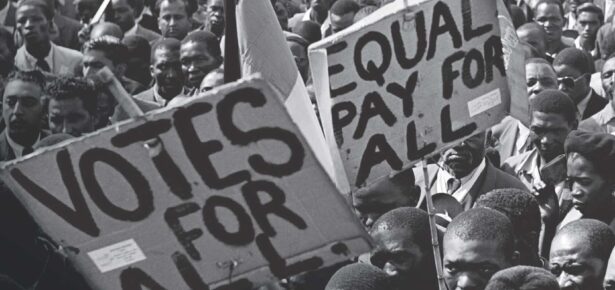
Should every human being, regardless of their class, gender, sexuality, race, religion and origin be entitled to certain basic economic, social and cultural human rights such as adequate renumeration for their work, decent housing and access to food? Not everyone seems to think so. In 2007, the liberal journal The Economist asserted that “food, jobs and housing are certainly necessities but no useful purpose is served by calling them ‘rights’.” Titled “Stand up for your rights,” the article was sub-headed: “The old stuffy ones, that is: newer ones are distractions.” It was 2007, and the financial crisis and subsequent economic crisis with austerity and severe cutbacks to peoples’ rights across many countries were luring on the horizon.
My new book In Defense of Economic and Social Human Rights: An Intellectual History, 1940 to the Present, is an intellectual history of economic and social human rights from the onset of World War II until the present day. It is a history of how past historical actors fought to uphold these rights, and how this advocacy related to their views on distributive justice. The book examines a broad range of human rights advocates ranging from political scientists to international jurists, from writers to development economists, from educational economists to popes, and from postcolonial political leaders to philosophers. Each advocated for human rights in specific and significant ways.
The book is a contribution to the historiography of international economic and social human rights, and to debates om the historical interrelationships between inequality, neoliberalism, and human rights. It highlights specific examples of human rights advocacy and notions of redistributive justice going hand in hand, emphasizing that human rights advocates consistently raised concerns about material inequality. Featuring a series of fascinating thinkers connected with the United Nations, it offers up a mapping of key arguments made in defense of these rights, tracing them through three different phases and the historical forces that shaped their trajectory.
From about 1940 until the early 1960s, human rights advocates attempted to internationalize economic and social human rights. Their key arguments for doing so were that such rights would be necessary for respecting the intrinsic value of human dignity, well-being, and democracy; that they would help correct arbitrary injustices, and give everyone some share in societal progress; that they would help secure peace; that they were equal in importance to civil and political rights; and that they were in fact possible to secure effectively in the light of resource availability. From the 1960s until the mid-1970s, international economic and social human rights gained an unprecedented normative-legal legitimacy. From this new plateau, human rights advocates criticized a broad range of global inequalities. However, from the mid-1970s to the present day, human rights advocates saw a downturn in developments far less conducive to cementing an effective international regime of economic and social human rights than what they had envisioned in earlier decades. The 2007 The Economist article illustrates an important point about this history of economic and social human rights: Despite the continual efforts of many, these rights have been hobbled by bad press, confusion, and de-prioritization, and been kicked down the road to be dealt with later.
It has been said that ours is an age of human rights triumphalism. From the perspective of international economic and social human rights specifically, it is not. It has also been claimed that human rights advocacy was largely disconnected from critiques of material inequality, especially from the 1970s onwards. This book brings forward a different perspective: the main human rights advocates featured in this book were critical of a broad range of inequalities, including material inequalities. They were concerned with global and international justice and redistributive justice. Theirs was a long and continuing struggle to try to lift international economic and social human rights onto a level-playing field while pivotal historical changes took place around them: the Global Cold War, decolonization, the 1970s shift towards neoliberal globalization, the early 1980s stalemate in North–South dialogues, and the end of the Cold War as we knew it. Engaging with the newest historical scholarship and building a bridge to political philosophy as well as global inequality studies, In Defense of Economic and Social Human Rights aims to facilitate a much-needed novel and nuanced history of rights – rights we should still consider defending today.
https://pure.au.dk/portal/en/persons/idecoc@cas.au.dk

CHRISTIAN OLAF CHRISTIANSEN is Professor of Intellectual History at Aarhus University. His research brings historical perspective to urgent issues like the role of business in Amer...
View profile >Keep up with the latest from Cambridge University Press on our social media accounts.




Latest Comments
Have your say!