

Products and services

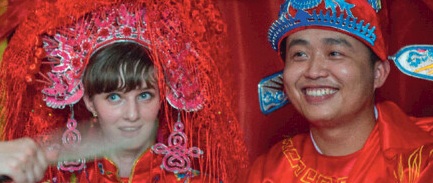
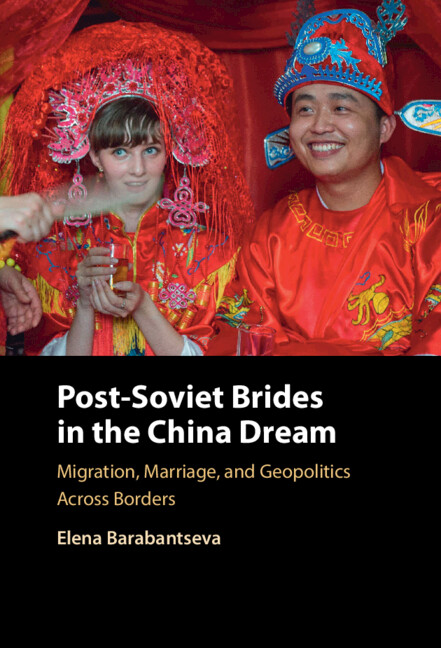
In Post-Soviet Brides in China Dream, I look at marriages between Chinese men and post-Soviet Slavic women and how they have come to be seen in China as an ideal type of transnational love and a pathway to the “China Dream.” I also look at what actually happens in people’s everyday lives behind that image. The book explores the gap between glossy media stories about these relationships and the reality of navigating laws, cultural norms, expectations and rapid social changes.
The project began with a striking contradiction. In the 2010s, I came across media reports about a so-called “Russian brides village” in Northeast China. According to these stories, local men who had gone to Russia for work were returning with Russian wives. The coverage was lavish: these unions were described as a “local legend,” praised for their beauty and happiness, and framed as a bridge between two countries.
In August 2016, I travelled to the village expecting to find a community shaped by such marriages. Instead, I found that no Russian–Chinese families lived there at all. Yet the idea of the village was still alive online and in popular imagination. During my visit, I also learned that the village had been used as a filming location for the TV drama Northeast Love Story (2012). This detail changed how I understood what I was observing in the field. The “Russian brides village” no longer looked like a real social phenomenon, but more like something shaped and sustained by media.
I then looked at other TV dramas and a film produced over the past three decades of China-Russia relations since the collapse of the Soviet Union in 1991. A clear pattern emerged. Russian women and Chinese men are repeatedly shown as naturally suited to each other, with relationships presented as harmonious and complementary. In this way, the Russian wife-Chinese husband couple has become a kind of ideal model of ‘international love’ in China’s popular imagination. Even Baidu Baike, China’s online encyclopaedia, illustrates “transnational love” exclusively with the description and images of Chinese–Russian family.
But there is a gap between these stories and the reality on the ground. I describe this gap, drawing on Umberto Eco’s idea of hyperreality, as a situation where images and stories become more real than reality itself – where an imagined version of life stands in for the real thing. The representations are not just entertainment. They shape ideas about romance, migration, and national progress. At the same time, the lived reality is much more complicated, shaped by immigration rules, unequal rights, and everyday practical challenges.
The book draws on life story interviews with women married to or in relationships with Chinese men, analysis of immigration laws, media materials, and visual ethnography of a ‘group wedding’ on the China-Russia border.
At its core, the book argues that marriage and migration are key sites where geopolitical and intimate projects meet. Looking at this intersection helps reveal how gender, family, race, and national identity are tied to China’s broader vision of the ‘China Dream.’

Elena Barabantseva is a Professor of Chinese International Politics at the University of Manchester....
View profile >Keep up with the latest from Cambridge University Press on our social media accounts.




Latest Comments
Have your say!