

Products and services


Many people these days talk about vulnerability: children, the elderly, and those who are poor are all described as vulnerable. During the pandemic, protecting the vulnerable became the guiding principle of public health policy which has translated into every practices. But what exactly is vulnerability and why should we care about it?
Another subject many people care about is equality in society. Yet what does it mean for people to be equals and what does it mean to treat each other as such? Does equality imply equal access to resource, or equal respect, or something else again? And, in particular, what does it mean to be equals when we are possibly differently vulnerable in some aspects of our lives?
The main argument of this book is that we need to take vulnerability seriously when thinking about equality in society. While much political philosophy has discussed the nature of equality in the past, this book takes vulnerability as the necessary starting point for our reflections on equality. To do so, vulnerability is taken as both, a shared characteristic of all human beings, and a distinctive feature of some people’s lives. For instance, two chapters investigate the vulnerability of elderly and poor members of society, who are subjected to economic conditions that cause vulnerability. In contrast to these external factors influencing vulnerability, some other chapters discuss what the authors call ‘ontological’ vulnerability – the kind of vulnerability that is genuine to being human. Considering ontological vulnerability raises questions of equality, for instance when thinking about inequality in vulnerability. How should we think about equal relations, say, when people are asymmetrically vulnerable? What does it mean to treat each other as equals in relationships of dependency and care? What are our individual obligations in such relationships, and what are the obligations of the state? After all, the state is first and foremost called upon to show equal respect to all its members. Moreover, the state is called upon to address individual vulnerability, and certainly to refrain from creating conditions of vulnerability that may further increase inequality. Precisely when taking vulnerability as a fundamental building block of thinking about the promise of equality, protecting against vulnerability is an integral part of the tasks of the state.
These questions are taken up in the chapters of this book. As with all good collections in philosophy, not everyone agrees – which, to our mind, shows the pertinence of this book. The book is also timely, because how to relate to each other as equals, and what it means to be equals, are fundamental and enduring questions of political philosophy. Vulnerability and Relational Equality argues to rethink equality in light of our common vulnerability.
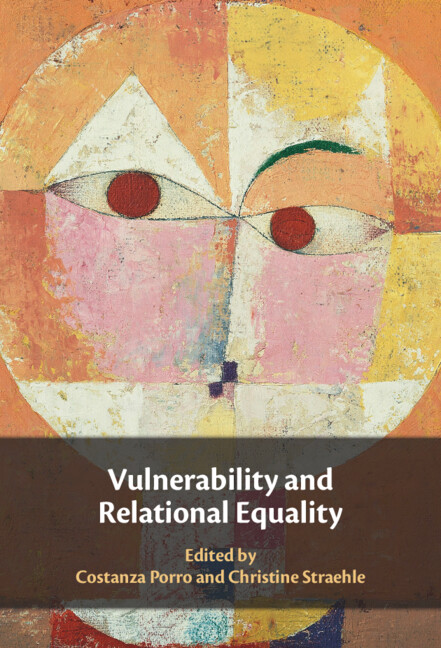
Vulnerability and Relational Equality
by Costanza Porro and Christine Straehle

Costanza Porro is a Lecturer in Political Philosophy at Lancaster University. She has published a number of articles and book chapters on theories of equality, the ethics and polit...
View profile >Christine Straehle is Professor for Practical Philosophy at the University of Hamburg and Professor for Ethics at the University of Ottawa. She has edited or co-edited several volu...
View profile >Keep up with the latest from Cambridge University Press on our social media accounts.



Latest Comments
Have your say!