

Products and services


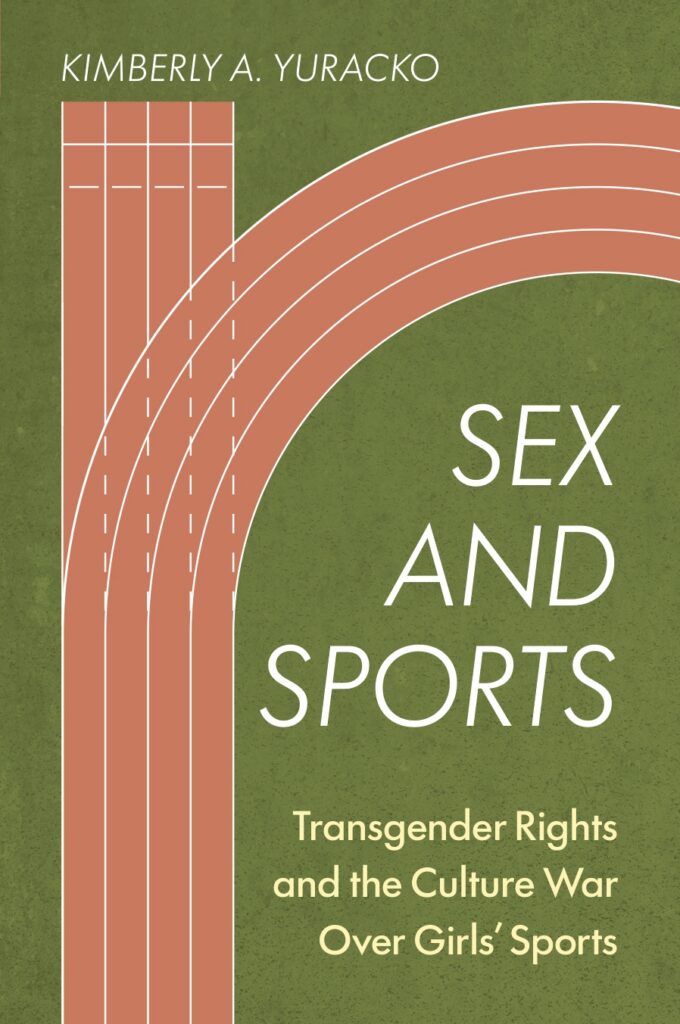
In recent years, few issues have been as socially and politically fraught and divisive as the question of whether transgender girls should be permitted to participate in girls’ sports. In the United States, the political left and right have staked out opposite though equally absolutist positions. The left argues that transgender girls are girls and that transgender girls will die if they are excluded from girls’ sports. The right argues that transgender girls are biological boys and that girls’ sports will die if transgender girls are included. The stakes are high and the vitriol even higher. In my book, Sex and Sports, I criticize the absolutism on both sides and examine the legal, medical and ethical issues raised by transgender girls’ inclusion in girls’ sports.
The issue could not be more timely. Currently before the United States Supreme Court are two cases challenging state laws that categorically bar transgender girls from participating in girls’ sports. In ruling on these cases, the Supreme Court will need to decide whether the laws violate statutory or constitutional prohibitions on sex discrimination.
As a matter of legal doctrine, the answer is not clear. Title IX of the Education Amendments of 1972 permits sex segregation in sports but says nothing about how transgender individuals should be classified. The Supreme Court held in 2020 that discrimination based on transgender status in employment–where transgender employees were engaged in the same conduct as non transgender employees–was a form of sex discrimination. The Supreme Court was explicit, however, that its holding said nothing about how transgender individuals should be assigned or treated in sex-segregated contexts. The Equal Protection Clause permits sex-based classifications only when the classification is substantially related to an important state interest. Courts have struggled with the question of whether categorical exclusion of transgender girls from girls’ sports is substantially related to the state’s interest in fair play. And, if transgender girls cannot be categorically excluded from girls’ sports, can cisgender boys?
The current Supreme Court cases will not settle the issues. This is true for reasons both legal and political. Even if the Court upholds categorical bans as legally permissible, they will not be required. If the Court strikes down categorical bans, more limited ones will still be in play. States will continue to have leeway to pass laws permitting (or requiring) various degrees of inclusion—laws that will themselves invariably be challenged. At the federal level, Congress may choose to amend Title IX so as to make its demands with regard to transgender girls’ inclusion in girls’ sports explicit—a change which would then itself be subject to constitutional challenge.
Ultimately, and over time, judges, legislators and voters will need to decide how eligibility rules should be drawn. My book provides a framework for thinking about what society should require by focusing on what is at stake. Organized sports are associated with three primary types of benefits. The basic benefits of sports are the physical and psychological ones that athletic participants get from athletic endeavors. The special benefits of sports are the distinct set of goods—sometimes tangible sometimes not—that go to the small group of winners. The group benefits of sports are those that non participants get in the form of role-modeling and increased self-esteem from seeing those with whom they socially identify rewarded and celebrated. Although the benefits of sport attach to all levels of play, they attach to different levels in different degrees. At the early childhood and recreational levels, the basic benefits predominate as both the reason and the reward for play. At more elite levels, the special and group benefits of sports become more pronounced. Sex and Sports suggests how, at each level of play, eligibility rules should be drawn so as to maximize the benefits of sports for girls and women—both transgender and cisgender—recognizing that under some circumstances the interests of the two groups will in fact diverge.

Kimberly A. Yuracko is Judd and Mary Morris Leighton Professor of Law at Northwestern Pritzker School of Law. She has written extensively about sex discrimination in sports, educat...
View profile >Keep up with the latest from Cambridge University Press on our social media accounts.




Latest Comments
Have your say!