

Products and services

Human beings think, speak, and write in metaphors. Those metaphors change as cultures do; people use them to respond to and reshape the world. Indeed, neuroscientists and literary scholars alike have explored how we build the world with metaphors and other figurative language. The present era is undergoing a massive metaphorical transformation, as computer technology has introduced (one might say “installed”) a new vocabulary: we now speak of “rebooting” the cause for social justice, or “clicking”on a problem. These metaphors do not simply express human experience and identity; they compose them by framing and forming them in language.
Early modern England (1500-1700) had its own pervasive set of metaphors. Although someone familiar with Shakespeare’s plays might assume the dominant metaphors came from the theater—“all the world’s a stage,” after all!—by far the most significant and widespread metaphor came from books and related text technologies: cover, page, headline. Bound, volume, spine. Folio, quarto, octavo. Book of nature, art of printing, a taste of a book. Set forth for all to see, read you like a book, a fool in folio.
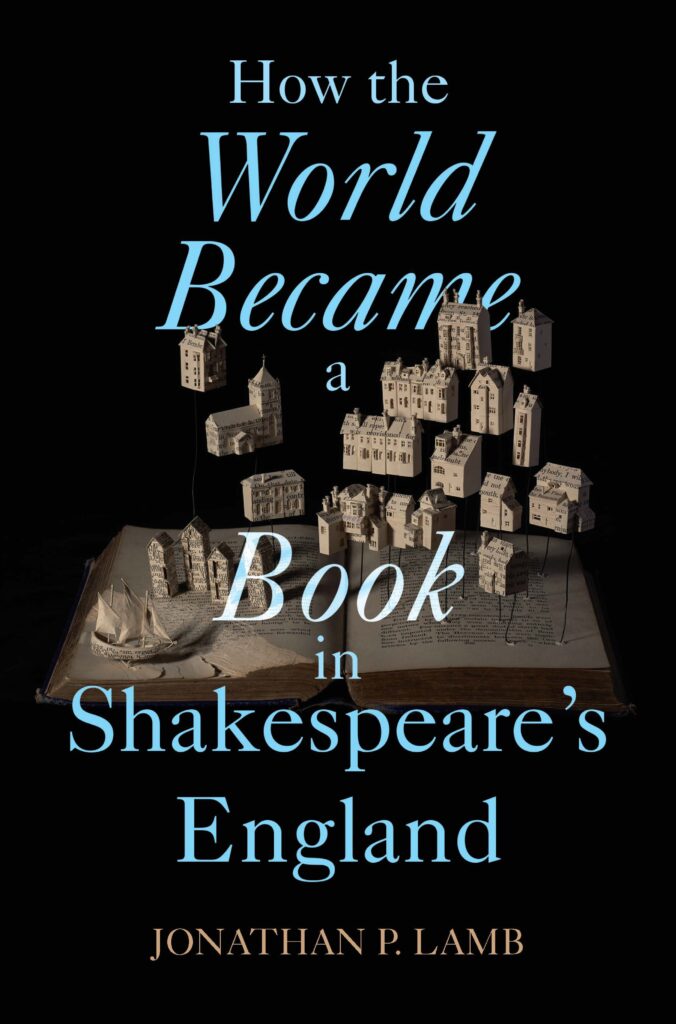
Early modern England abounded in such “bookish” words and phrases, most of which were inherited from earlier traditions and media or imported from other cultures. Playwrights and poets used this lexicon to make new kinds of art. Pamphleteers appealed to books to stage political attacks. Preachers formulated theological arguments using metaphors of page and binding. Scientists claimed to leaf through the Book of Nature. Always rhetorically situated and rarely systematic, this lexicon did not merely offer a linguistic tool; it created a broad conceptual resource for writers and readers. How the World Became a Book in Shakespeare’s England argues that books gave early modern writers the language to describe and reshape the world around them. At a scale and range far beyond what scholars have imagined, this language expressed and, in turn, gave form to religious, political, racial, scientific, and literary questions that remain relevant today.
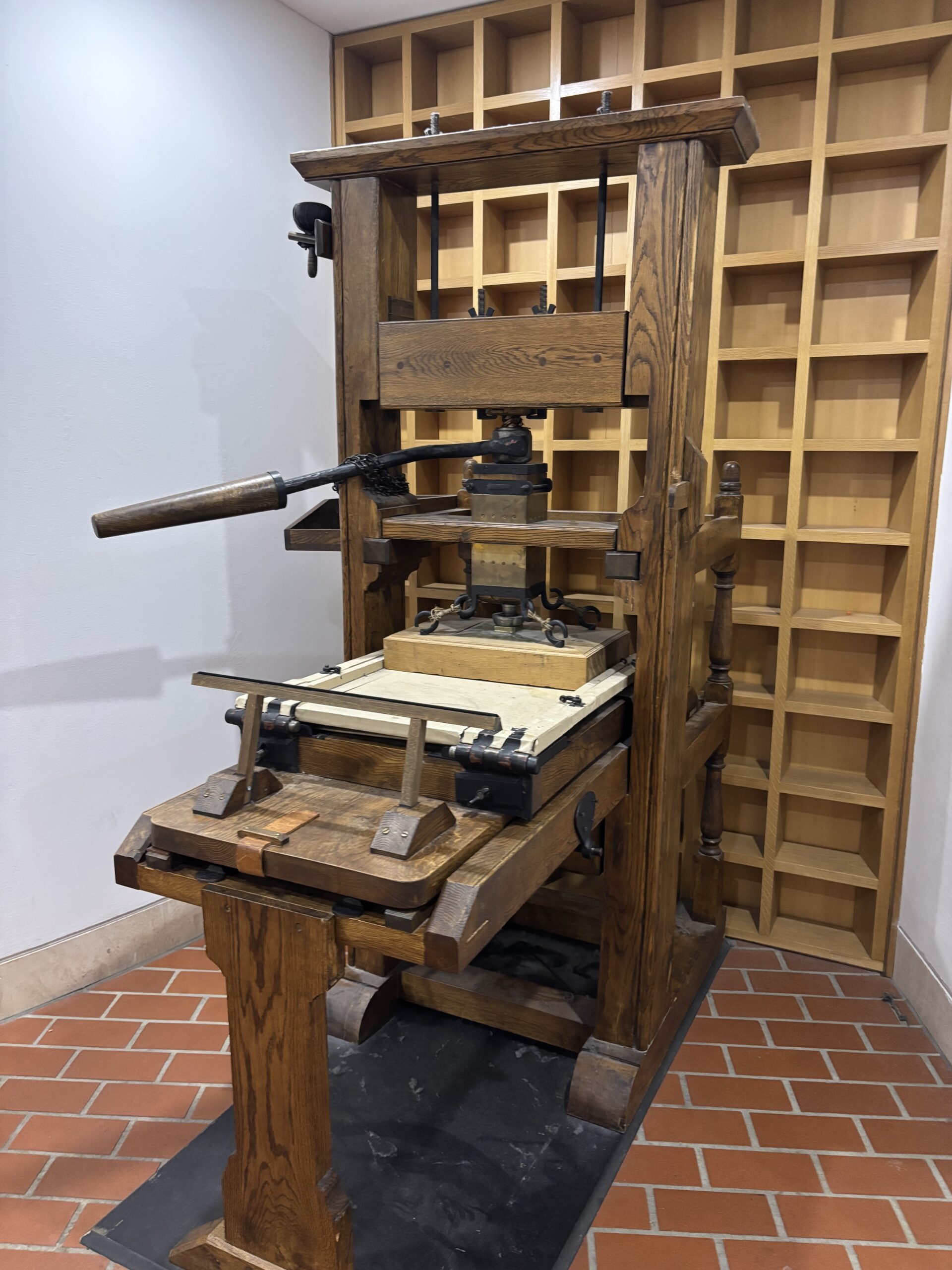
Scholars of book history and early modern English literature have long affirmed and debated the impact of printing technology on culture. They often invoke exemplary claims and concepts, such as John Foxe’s portrayal of the press as a divine gift or Francis Bacon’s grand statement that the press, along with gunpowder and the magnetic compass, would remake the world. This conventional knack for working from illustrative examples requires a certain imaginative extrapolation, by which canonical writers speak for all of English culture.
Rejecting extrapolation and exemplarity in favor of expansiveness and inclusivity, this book is the first to explore the lexicon of the book in rigorous detail and to describe its transformative power. How the World Became a Book in Shakespeare’s England asks, how did the widespread vocabulary of books, printing, and related text technologies (e.g., paper, ink, and letters) shape the way people think about the world? How did the shared rhetoric of books become a reflex of the imagination? If it is true that the press had an impact on consciousness, what were the extent and qualities of that impact? This study looks not only to the material records but also to the linguistic and rhetorical ones. It traces how the descriptive codes emerging from printed books, which were themselves gathered from the figurative and material terms of other languages and earlier cultures, fostered ways of thinking and, in turn, gave writers language to negotiate their responses to the print medium. Instead of debating how the world became modern, this book shows how it became bookish.

Jonathan P. Lamb is Professor of English at the University of Kansas and an award-winning scholar and teacher of Shakespeare, Renaissance literature, and book history. He is the au...
View profile >Keep up with the latest from Cambridge University Press on our social media accounts.



Latest Comments
Have your say!