

Products and services

A trip to the theatre, these days, often involves additional purchase. Theatre merchandise (‘merch’) is sold in a related shop or kiosk, so that attending a performance might involve also buying a t-shirt, a mug, a toy, a CD. Some canny productions also ‘product place’ the merch in the production itself, meaning that material goods which might seem to be ancillary are actually part of the show.
My book is on early modern merch that was product placed in and around plays by Shakespeare, Jonson, Marlowe and others: theatre ballads. It argues that broadsheet ballads – big floppy folio pages containing the words to songs that were to be sung in, or about, or after the play – were sold outside playhouses to audiences before and after the show.
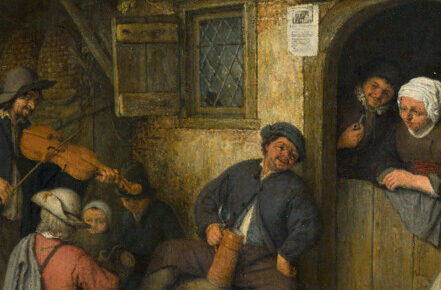
Its first half is on the process of manufacturing and selling broadsheet ballads. It focuses on the ‘balladmongers’, as ballad merchants were called, who gathered around playhouse doors to sing and sell their songs. Robert Greene, in 1592, calls balladmongers ‘unsufferable’ because they loiter ‘singing of Ballets and songs at the doors of such houses where plays are used [i.e. put on]’. By entertaining the people waiting to go into the theatre, balladmongers prevented restless queues from becoming bored and starting fights, while simultaneously introducing music and sometimes plots and themes from the play to come. Raised on stools to be more visible, balladmongers resembled actors on tiny stages except that, unlike the actual actors in the playhouse, who were hale, pale and male, they were culled from the dispossessed – men and women with disabilities, migrants, beggars.
The following chapters investigate the way theatre ballads were printed, published and written, with chapters on two leading playmakers (as playwrights were more usually known) who were also balladmakers (ballad writers): Shakespeare and Jonson. It shows that playmakers were often their own balladmakers, because writing ballads was so (comparatively) easy: ballads were designed to fit already-known tunes, and required no special collaboration with a musical composer.
The second half of Ballad Business consists of case-studies of theatre ballads from a range of early modern authors, theatres and times. There are chapters on in-play ballads, which are the ballads sung, and so product-placed, inside a play, like ‘Get you Gone’ in Shakespeare’s Winter’s Tale or ‘Youth, Youth’ in Bartholomew Fair; about-play ballads, which are ballad-summaries of plays, like the ballads of Titus Andronicus, The Spanish Tragedy and Arden of Faversham; and after-play ballads, also known as ‘jigs’, like ‘Hey ho the wind and the rain’ after Twelfth Night.
Collectively, the book asks for a reassessment of both plays and ballads. As ballads were met with on the way into and out of the theatre, their music and sellers were quintessential aspects of performance. And given that ballads could be carried into the theatre, their extra information, including when to join in, and how a stage-song’s narrative continued, added to performance: they constituted play paratexts. Taken home after performance, they turned to advertisements and mementos; if hung up as performable wall-decoration they could shape the home while reshaping the memory of what the play itself had been. But theatre ballads also thrived in their own rights, as ballads amongst ballads; though the first, and often only parts of plays to be published, ballads sometimes outlasted their plays entirely, continuing to be printed and performed decades after ‘their’ dramas had rotated out of repertory – geographically, too, they could be bought, sold, sung and preserved miles away from the theatre that had spawned them. Thus, while this book argues that ballads add to our understanding of plays, it shows that they were in some ways the more stable and permanent art form, and that plays were their paratexts. It asks that orality and print, entertainment and sale, music and speech, paratext and text, authorship and genre, be reconsidered in the light of the separate yet intertwined categories of play and theatre ballad.
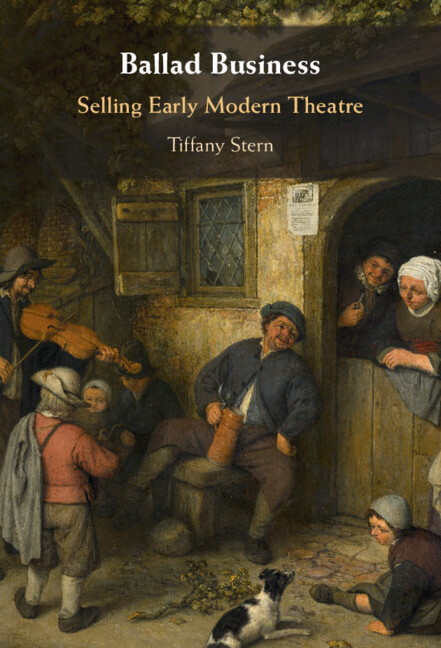
Ballad Business by Tiffany Stern
Tiffany Stern, FBA, is Professor of Shakespeare at The Shakespeare Institute, University of Birmingham. Her previous books include Rehearsal from Shakespeare to Sheridan (2000), Ma...
View profile >Keep up with the latest from Cambridge University Press on our social media accounts.



Latest Comments
Have your say!